A new global interest-rate tightening cycle is coming into view as major central banks respond to renewed inflation pressure, rising energy costs and growing concerns that price increases could remain elevated for longer than previously expected.
The shift has become particularly visible this week. The U.S. Federal Reserve raised its benchmark interest rate on Sept. 16, the European Central Bank increased rates the previous week, and the Bank of Japan followed on Sept. 18 with another increase. The Bank of England, meanwhile, kept rates unchanged but signalled that persistent inflation could eventually require further action.
The developments mark a significant change from the expectations earlier this year that major economies were moving toward easier monetary policy.
The Fed has reopened the door to more increases
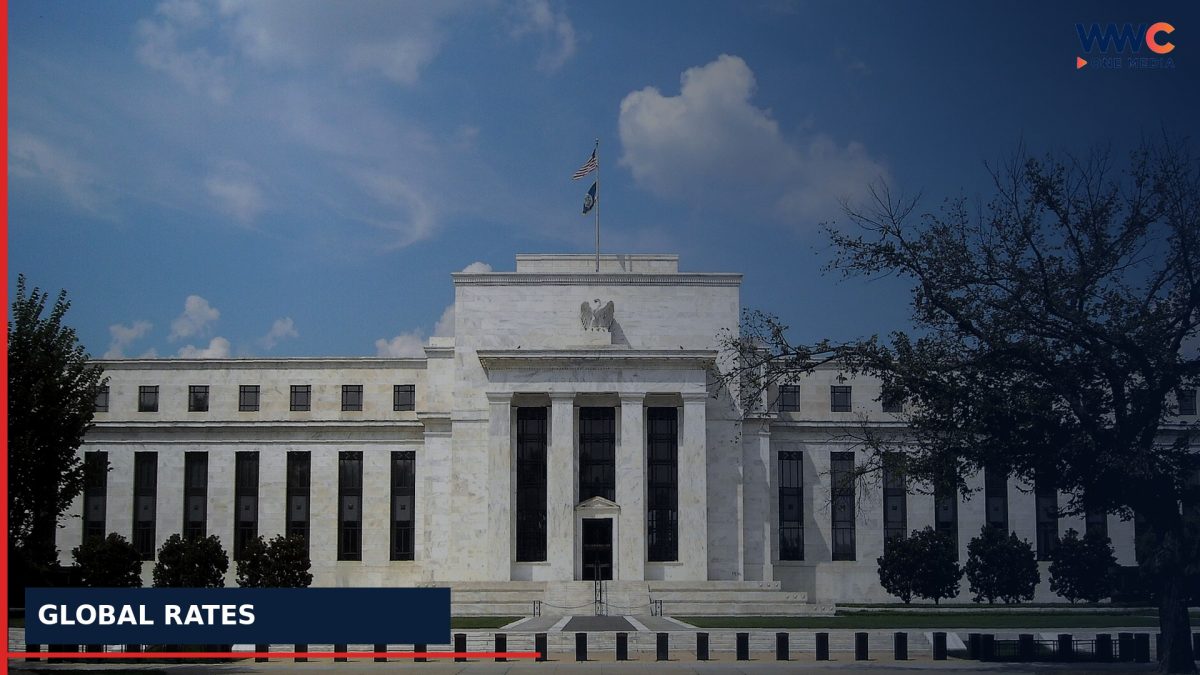
The Federal Reserve raised its target range by 25 basis points to 3.75%–4.00% on Sept. 16 in a unanimous 12-0 decision.
The central bank said inflation remained elevated and that the latest move was intended to support a more timely return to its 2% inflation objective.
More importantly for financial markets, the Fed’s updated projections indicated that policymakers still see room for another increase this year.
Reuters reported that 16 of the 18 Fed policymakers projected at least one additional quarter-point hike by the end of 2026.
That does not mean another increase is guaranteed. Monetary policy remains dependent on incoming inflation, employment, financial and economic data.
But the message is clear: the U.S. central bank is no longer operating on the assumption that inflation will simply fade away.
Japan joins the tightening shift
The Bank of Japan added another major piece to the global picture on Friday.
The BOJ raised its policy rate from 1.00% to 1.25%, its highest level in 31 years. Governor Kazuo Ueda said the central bank’s policy phase had changed, with greater emphasis now being placed on preventing inflation from overshooting its 2% target.
The move is significant because Japan spent decades operating with exceptionally low interest rates as policymakers fought deflation and weak price growth.
The BOJ also left the door open to additional increases. Ueda said the bank would not rule out consecutive hikes or even larger moves if inflation risks intensified.
Europe faces its own inflation dilemma
The European Central Bank has also moved toward tighter policy.
The ECB raised its policy rate to 2.50% from 2.25% in September, its second increase of the year. Policymakers have warned that higher energy prices could make inflation more persistent. Euro-zone inflation was reported at 3.3% in August, according to Reuters.
But ECB officials have also cautioned against assuming that higher oil and gas prices automatically mean a long series of rate increases.
ECB Vice President Boris Vujcic told Reuters that monetary-policy decisions would depend on a much broader range of economic indicators rather than energy prices alone. He also warned that prolonged high energy costs could eventually weaken household spending and economic growth.
That creates a difficult balancing act for policymakers: raising rates can help contain inflation expectations, but tighter financial conditions can also weigh on economic activity.
The Bank of England is watching closely
The Bank of England left its policy rate unchanged this week but adopted a more cautious tone about the inflation outlook.
Reuters reported that Governor Andrew Bailey and other policymakers indicated that rates could need to rise if the Middle East conflict and associated energy-price pressures persist. Financial markets have subsequently priced in the possibility of several increases over the coming year, although those market expectations are not commitments from the central bank.
The distinction matters.
Markets can rapidly change their expectations when oil prices, inflation data or central-bank statements change. Actual monetary policy decisions come later and are based on policymakers’ assessment of the economy.
Oil has become the critical wildcard
Much of the renewed inflation concern comes back to energy.
The continuing conflict involving Iran and the wider Middle East has disrupted expectations around energy supplies and pushed oil and gas prices higher. Reuters reported that oil futures had moved above US$100 a barrel, while investors were also facing unusually high uncertainty over future supply conditions.
Higher energy prices can affect economies in several ways.
They directly increase household and business costs, while also raising transportation, manufacturing and production expenses. If those increases become embedded in wages and broader pricing decisions, inflation can become more persistent.
That is precisely the scenario central banks are trying to prevent.
But the world is not moving in one direction
Despite the increasingly hawkish signals from several major developed-market central banks, it would be misleading to describe the global economy as already entering a universal rate-hiking cycle.
Brazil provides a clear example.
Brazil’s central bank cut its benchmark interest rate by 25 basis points on Sept. 16, marking its fifth consecutive reduction, as signs of weaker economic activity became more pronounced.
Australia, meanwhile, has raised rates three times this year to 4.35%, according to Reuters, with policymakers continuing to assess whether additional tightening may be necessary.
The result is a highly fragmented monetary-policy landscape.
Some central banks are tightening.
Some are holding.
Others are cutting.
And all are watching the same increasingly unpredictable combination of inflation, energy prices, economic growth and geopolitical risk.
What higher rates could mean for households and markets
A sustained period of higher interest rates would have consequences well beyond central-bank meeting rooms.
Higher rates generally increase borrowing costs for households and companies. Mortgage payments, business financing and other forms of credit can become more expensive, while governments face higher costs when refinancing debt.
Financial markets can also react quickly.
Reuters reported that global bond yields have climbed sharply as investors have raised their expectations for inflation and interest rates, with some government bond yields reaching levels not seen in many years.
For investors, the key question is therefore no longer simply whether inflation is rising.
It is whether higher inflation becomes persistent enough to force central banks to keep rates elevated for longer.
The next phase could depend on what happens to energy prices
The biggest uncertainty is how long the energy shock lasts.
If oil and gas prices retreat, some of the pressure on inflation could ease. That could allow central banks to slow or stop additional tightening.
If energy prices remain elevated and begin feeding into wages, services and broader consumer prices, policymakers could face pressure to raise rates further.
The ECB’s Vujcic has already warned that persistently high energy costs could squeeze household incomes and spending, potentially weakening economic growth even as inflation remains elevated.
That is the uncomfortable possibility facing policymakers: higher inflation at the same time as weaker growth.
For now, the evidence points toward a world in which the era of rapidly falling interest rates cannot be taken for granted.
The Federal Reserve has resumed tightening. The ECB has raised rates. Japan has moved to its highest policy rate in three decades. Britain is keeping the possibility of further increases open.
But whether these moves become the beginning of a genuinely broad global rate-hiking cycle—or remain a temporary response to an energy-driven inflation shock—will depend heavily on what happens next.
And that is where the next major test begins: can energy prices come back down before today’s inflation shock becomes tomorrow’s entrenched price problem?