
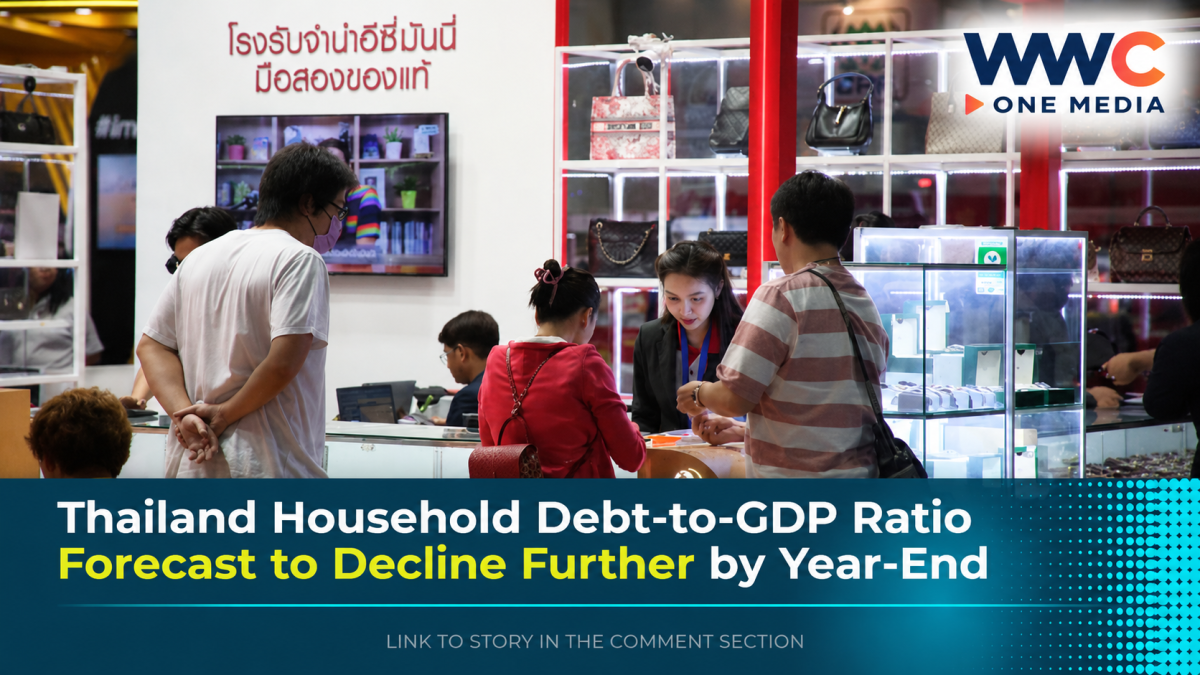
Thailand’s household debt-to-GDP ratio is expected to decline further by the end of 2026, although economists warn that the fall does not necessarily mean household finances are improving.
The ratio stood at 85.9 per cent of GDP in the first quarter, its lowest level in six years. It is forecast to fall to around 84 per cent by the fourth quarter if the economy expands by 2.5 per cent this year.
The forecast comes as household debt itself continues to rise. A survey by the University of the Thai Chamber of Commerce found that average household debt reached 794,945 baht in 2026, up 7.3 per cent from the previous year and the highest level recorded since the survey began in 2009.
Total household debt could reach between 16.5 trillion and 16.6 trillion baht by the end of the year.
The decline in the debt-to-GDP ratio is therefore being driven partly by economic growth and weaker borrowing rather than a broad improvement in households’ ability to repay their debts.
SCB Economic Intelligence Center has described the trend as “constraint-driven deleveraging”, with banks becoming more cautious about extending credit and households reducing new borrowing because of high living costs and tight financial conditions.
At the same time, some households are turning to alternative sources of credit, including savings cooperatives, pawnshops and informal lenders.
The household debt survey found that 91.8 per cent of respondents were in debt, although this was lower than 95.1 per cent in 2025.
Credit cards were the most common form of borrowing, followed by personal loans for consumption, vehicle loans, business loans and housing loans.
Average monthly debt repayments also increased to 21,935 baht, up more than 8 per cent from the previous year.
The survey showed that many households continue to face difficulties managing their finances. More than two-thirds of indebted respondents reported having missed payments or defaulted during the previous year.
Economists have warned that the lower debt-to-GDP ratio should therefore be interpreted cautiously. A reduction in the ratio can occur when GDP grows faster than household debt, even if the amount of debt remains high.
Thailand’s household finances are also being affected by weaker income growth, elevated living costs and tighter lending standards. These factors could continue to limit household consumption and economic activity.
SCB EIC previously projected that the household debt-to-GDP ratio could fall to between 83.5 per cent and 84.5 per cent by the end of 2026.
The Bank of Thailand’s latest data show household loans remaining above 16 trillion baht, underscoring the scale of the debt burden despite the gradual decline in the ratio.
The latest figures suggest that Thailand is making progress in reducing the household debt ratio, but the underlying debt burden remains a significant challenge. The key issue will be whether households can strengthen their incomes and repayment capacity while gaining access to sustainable forms of credit.




Leave a Reply