
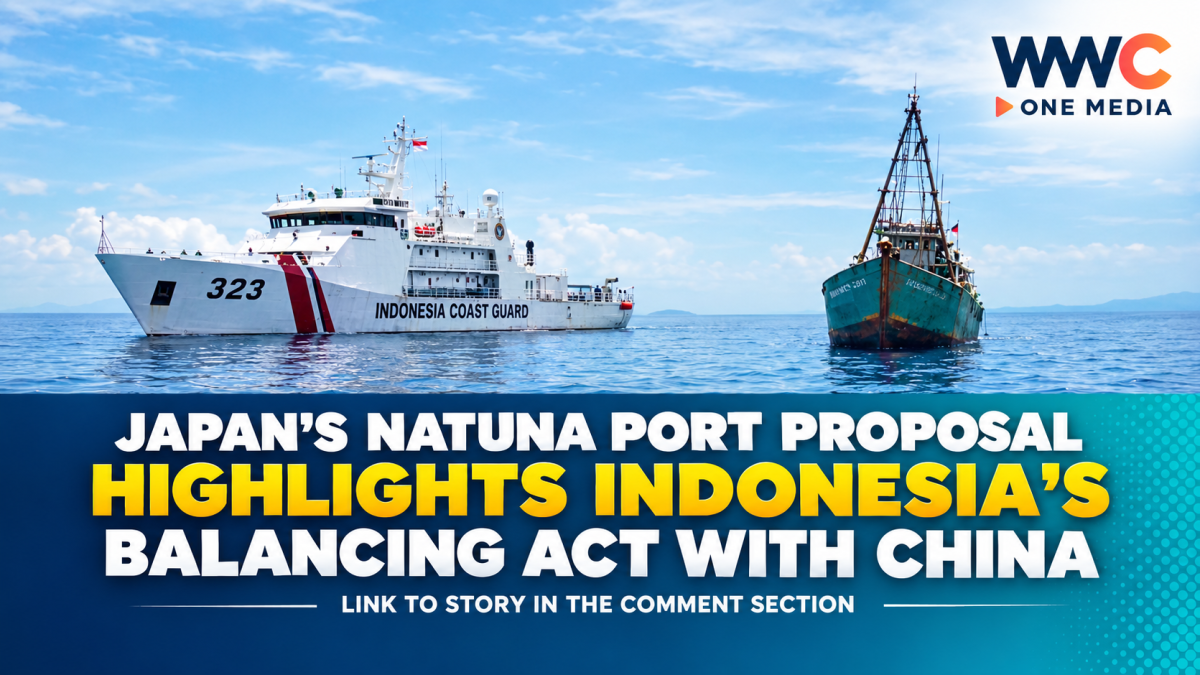
Japan’s proposal to help upgrade fishing ports in Indonesia’s Natuna Islands is highlighting Jakarta’s efforts to strengthen maritime security while maintaining its broader relationship with China.
Tokyo is considering using official development assistance to improve selected fishing ports so they can accommodate patrol vessels and support maritime activities in more areas. The proposal is part of Japan’s growing security cooperation with Indonesia as tensions continue in the South China Sea.
Japan and Indonesia have been expanding their defence relationship through cooperation on defence equipment, intelligence sharing and military exercises in strategically important waters.
The Natuna Islands are particularly significant because of their location near the southern part of the South China Sea. Indonesia maintains sovereign rights over its exclusive economic zone around the islands, while Chinese vessels have periodically operated in the area.
Jakarta does not recognise China’s expansive claims in the South China Sea and has previously protested the presence of Chinese coastguard and fishing vessels in waters around the Natunas.
At the same time, Indonesia has sought to maintain strong economic and diplomatic relations with Beijing. China is an important trading and investment partner, with Chinese companies involved in major infrastructure, industrial and energy projects in Indonesia.
The proposed Japanese port improvements therefore illustrate the balancing act facing Jakarta. Analysts cited by the South China Morning Post said the initiative should not automatically be interpreted as Indonesia joining Japan in an effort to contain China.
Instead, the port upgrades could give Indonesia greater capacity to monitor and protect its maritime interests while allowing Jakarta to continue pursuing its longstanding policy of strategic autonomy.
For Japan, the initiative would strengthen maritime cooperation with a major Southeast Asian country without requiring the establishment of an overt Japanese military presence in the Natuna Islands.
The proposal comes as Tokyo expands its security partnerships across Southeast Asia. Japan has increasingly sought cooperation with regional governments on maritime security as competition between major powers intensifies.
Indonesia has also been strengthening its own presence around the Natuna Islands, including through patrols and improvements to maritime infrastructure.
The area is important not only for security but also for Indonesia’s fishing and energy industries. The North Natuna Sea contains significant fisheries resources and offshore oil and gas potential, making continued access and maritime surveillance important to Jakarta.
China has said in the past that its fishing vessels operate in what it considers traditional fishing grounds, while Indonesia maintains that activities within its exclusive economic zone must comply with Indonesian law and international maritime rules.
The differing positions have created recurring tensions, although Jakarta has generally sought to manage disputes without allowing them to overshadow its wider relationship with Beijing.
The Japanese port proposal adds another dimension to that approach. It could provide Indonesia with additional maritime infrastructure and security capabilities while leaving Jakarta room to maintain economic engagement with China.
As competition over the South China Sea continues, the Natuna Islands are likely to remain an important test of Indonesia’s ability to protect its maritime interests while maintaining relationships with both China and other major regional partners.




Leave a Reply