
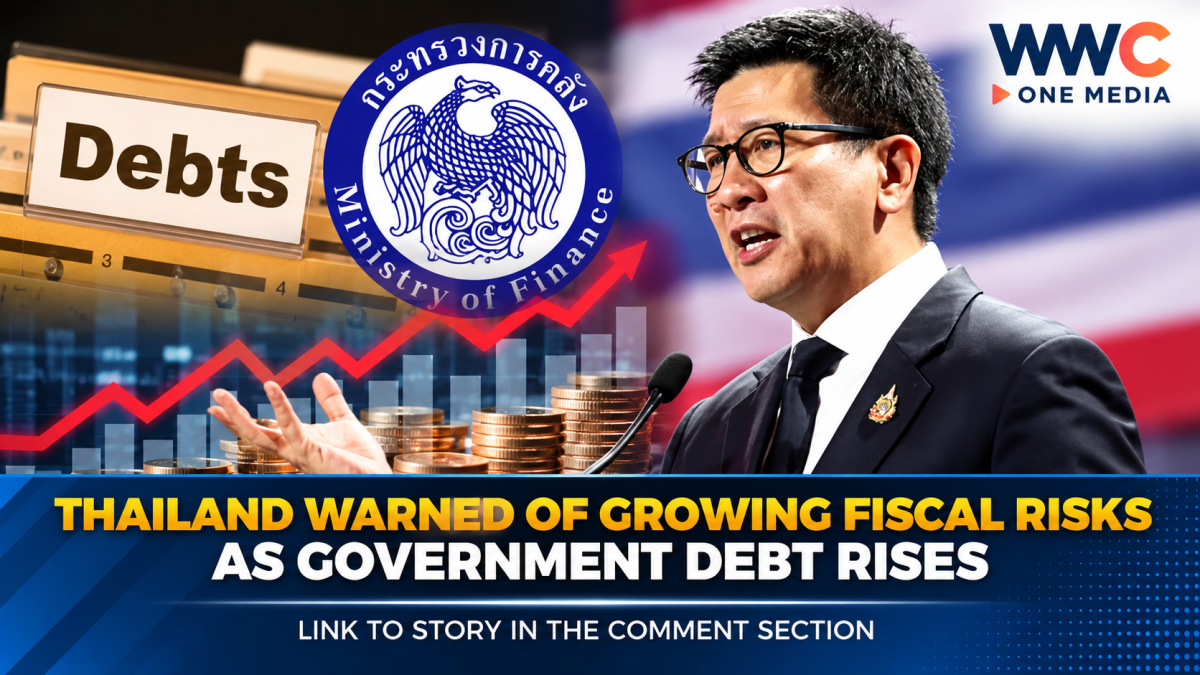
Thailand is facing increasing pressure on its public finances as limited fiscal space, rising debt and persistent budget deficits leave the government with less room to respond to future economic shocks.
Officials and economists have warned that the country’s fiscal position needs closer management as government spending remains high while economic growth continues to face challenges.
Thailand’s public debt has risen significantly in recent years. The International Monetary Fund estimated that public debt reached about 64.8% of GDP at the end of fiscal 2025, while the government continues to operate with sizeable budget deficits.
The country’s public debt ceiling is currently set at 70% of GDP, leaving a relatively narrow buffer before the statutory limit is reached.
Thailand’s fiscal constraints have also become more pressing because economic growth remains modest. Weak household consumption, high household debt and subdued private-sector activity have limited the pace of the recovery.
The National Economic and Social Development Council has warned that Thailand’s remaining fiscal space is limited and could prove insufficient if the country faces another major economic crisis.
The agency has suggested tighter budget management over the next two to three years, including reductions in unnecessary government expenditure and greater efforts to improve the efficiency of public spending.
Another concern is the growing cost of servicing government debt. Rising payments of interest and principal could place additional pressure on future budgets, potentially leaving fewer resources available for infrastructure, social programmes and other public priorities.
The government is also expected to face pressure to broaden its revenue base. Improving tax collection and bringing more economic activity into the formal system could help strengthen government finances without relying solely on additional borrowing.
Thailand’s fiscal position has been further complicated by the need to support the economy through government spending and financial assistance programmes. While such measures can provide short-term support, continued deficits can gradually reduce the government’s ability to respond to future downturns.
The IMF has described Thailand’s overall risk of sovereign debt stress as moderate, while warning that continued increases in public debt could weaken the country’s fiscal anchor and increase vulnerability to adverse shocks.
For the government, the challenge is to maintain economic support while preventing debt and financing costs from rising to levels that constrain future policy options.
Thailand is therefore under growing pressure to strengthen fiscal discipline, improve public-sector efficiency and create more sustainable sources of revenue before its limited fiscal space becomes an even greater constraint.




Leave a Reply