
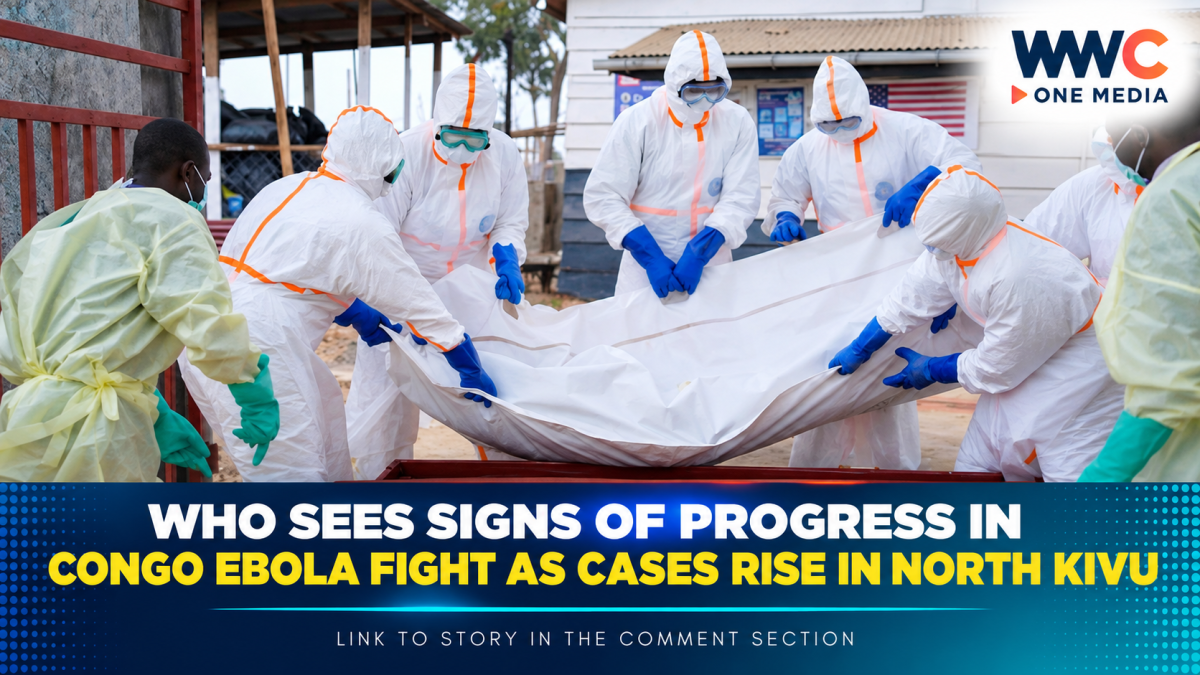
The World Health Organization has reported encouraging signs in the fight against an Ebola outbreak in the Democratic Republic of Congo, while warning that infections are rising rapidly in parts of the country’s eastern region.
WHO Director-General Tedros Adhanom Ghebreyesus said transmission was declining in the most affected parts of Ituri province, where health authorities have intensified efforts to identify cases and trace contacts.
South Kivu province has also reported no new cases since May, according to Tedros.
However, the wider outbreak continues to spread. More than 7,200 cases and over 3,500 deaths have been reported across seven provinces, according to the WHO.
North Kivu has emerged as a particular concern. Tedros said the number of weekly cases there had nearly doubled over the past two weeks, increasing from around 100 to more than 200.
The outbreak is being caused by the Bundibugyo virus, a less common species of Ebola. The current outbreak began in May and has become the largest recorded outbreak of Bundibugyo virus disease.
WHO officials said the situation remains complicated by population movement, insecurity and displacement, which can make it harder for health teams to identify infections and trace people who may have been exposed.
Maria Van Kerkhove, WHO’s director for epidemic and pandemic management, said there were reasons for cautious optimism but stressed that the response would require sustained efforts.
Health authorities have expanded surveillance, testing, contact tracing and other measures to contain transmission. Increased surveillance could also lead to more cases being detected in the coming weeks.
More than 3,000 healthcare and frontline workers have received Merck’s Ervebo vaccine as part of efforts to protect people working on the response. However, the vaccine is licensed for the Zaire species of Ebola, and its effectiveness against the Bundibugyo virus remains uncertain.
WHO said research is being prepared to assess the vaccine’s effectiveness against the strain responsible for the current outbreak. Vaccine candidates specifically targeting Bundibugyo virus are also being studied.
The outbreak has placed significant pressure on Congo’s healthcare system, particularly in areas affected by conflict and displacement. Limited access to healthcare and difficulties reaching affected communities have complicated efforts to detect cases early and interrupt transmission.
WHO continues to assess the outbreak as a serious public health threat, while advising against restrictions on travel or trade with affected countries.
Although declining transmission in parts of Ituri and the absence of new cases in South Kivu provide some positive indications, health authorities continue to face a significant challenge as infections rise in North Kivu and the outbreak remains geographically widespread.



Leave a Reply