
AI IS CHANGING EDUCATION—BUT HUMANITY MUST REMAIN AT THE CENTER
As artificial intelligence rapidly changes the way students learn, teachers work and knowledge is produced, educators are facing a fundamental question: What should schools teach when machines can increasingly provide the answers?
A key message emerging from a recent education conference is that the answer should not simply be more technology.
Instead, education in the AI era should place greater emphasis on cultivating humanity—including critical thinking, empathy, ethics, creativity, judgment and the ability to build meaningful relationships.
The argument reflects a growing international debate over how schools and universities should adapt to increasingly capable AI systems.
THE VALUE OF EDUCATION IS NO LONGER JUST INFORMATION
AI can already generate text, summarize information, translate languages, analyze data and assist with many academic tasks.
That creates a challenge for traditional education systems that have often placed significant emphasis on memorization, information retrieval and producing standardized answers.
The World Economic Forum has similarly argued that AI is changing the value of human skills, with qualities such as judgment, agency and the ability to work with others becoming increasingly important in an AI-driven economy.
The implication is not that knowledge has become irrelevant.
Rather, students may need to become better at questioning information, evaluating evidence, making decisions and applying knowledge responsibly.
AI SHOULD SUPPORT TEACHERS—NOT REPLACE THE HUMAN ROLE
International organizations are increasingly emphasizing a human-centered approach to AI in education.
The OECD’s 2026 work on digital education stresses the importance of designing AI systems to augment human connection rather than replace it.
UNESCO has likewise warned that the rapid adoption of AI in education must address issues including inequality, human creativity, ethics and responsible use.
That means the goal is not necessarily to keep AI outside classrooms.
Instead, schools can teach students how to use AI responsibly while ensuring that teachers remain central to mentorship, discussion, evaluation and the development of social and emotional skills.
CRITICAL THINKING MAY BECOME EVEN MORE IMPORTANT
One of the biggest educational challenges created by generative AI is the ease with which students can obtain polished answers.
That makes it increasingly important for students to understand how an answer was reached, whether it is accurate and what evidence supports it.
AI systems can produce convincing but incorrect information, meaning students cannot simply accept machine-generated responses at face value.
Education therefore has an important role in teaching students to question, verify and reason.
A recent discussion on higher education in the AI era similarly emphasized that universities need to teach students how to think, not simply what to know, with critical thinking, curiosity and judgment becoming increasingly important.
ETHICS AND EMPATHY CANNOT BE OUTSOURCED
Another major concern is that technological competence alone is not enough.
Students will eventually enter workplaces and societies where AI systems influence hiring, healthcare, finance, government services, media and everyday decision-making.
They therefore need to understand questions such as:
- Is an AI-generated decision fair?
- Who is responsible when an AI system makes a mistake?
- How should personal data be protected?
- When should humans override an automated decision?
- How can technology be used without deepening inequality?
UNESCO’s current work on AI ethics and education similarly emphasizes responsible AI use and the need to help learners and institutions make informed decisions about how these technologies are designed and deployed.
HUMAN SKILLS COULD BECOME THE NEW ADVANTAGE
The rise of AI does not necessarily mean that technology and humanity are opposing forces.
Instead, education could increasingly focus on developing people who can work effectively with AI while retaining distinctly human strengths.
That includes creativity, collaboration, communication, empathy, ethical judgment and the ability to understand complex social situations.
The emerging model is therefore less about choosing between humans and machines and more about determining what humans should remain responsible for when machines become increasingly capable.
THE CLASSROOM OF THE FUTURE MAY LOOK VERY DIFFERENT
AI could help teachers personalize learning, automate some administrative work and provide students with additional educational support.
But technology alone cannot determine what a student values, how a community should respond to a difficult problem or what constitutes a responsible decision.
Those remain fundamentally human questions.
Education leaders are consequently being pushed to rethink what success in school should mean in an age when information is increasingly abundant and instantly accessible.
The challenge is no longer simply preparing students to compete with machines.
It is preparing them to use powerful machines without losing the qualities that make them human.
THE BIGGER EDUCATION QUESTION
The AI revolution is forcing schools and universities to reconsider the purpose of education itself.
If artificial intelligence can increasingly retrieve information and generate answers, the classroom may have to place greater value on the things technology cannot fully replace: curiosity, character, empathy, judgment, creativity and human connection.
That is the deeper message behind the call to cultivate humanity in education.
AI may become one of the most powerful tools ever introduced into learning—but the ultimate goal of education remains the development of people, not machines
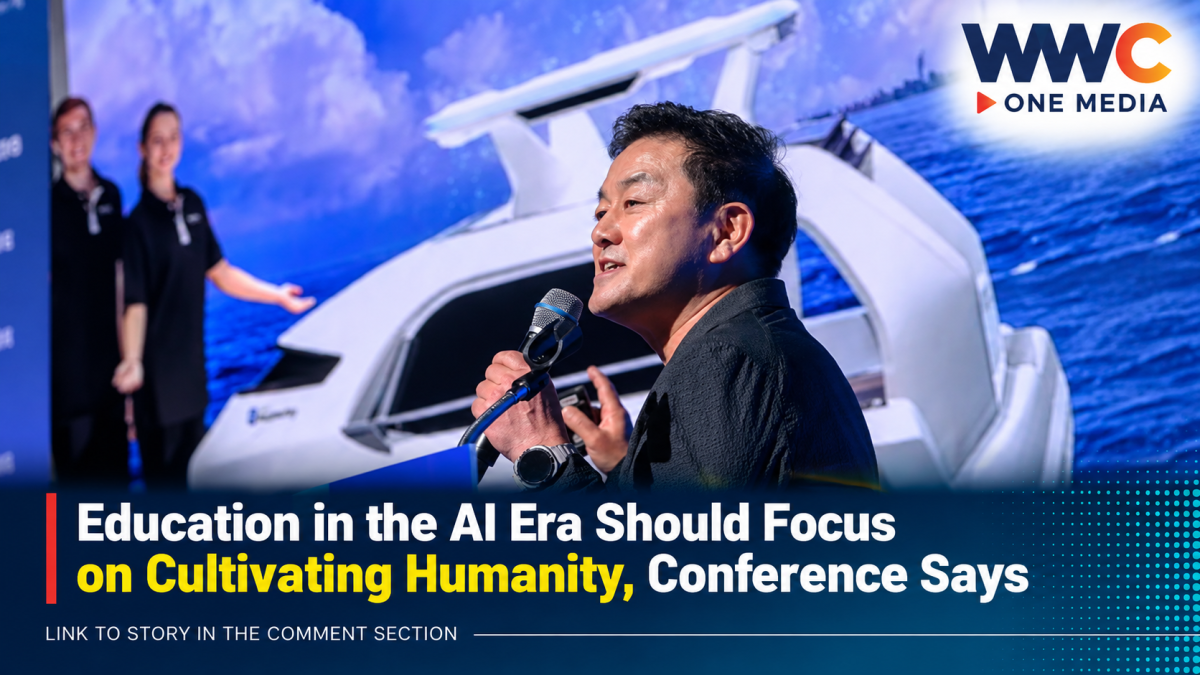
Education in the AI Era Should Focus on Cultivating Humanity, Conference Says
SEO Headline: Education in AI Era Must Cultivate Humanity, Critical Thinking and Ethics, Conference Hears
SEO Meta Description: As artificial intelligence transforms classrooms and workplaces, education leaders are calling for a stronger focus on humanity, critical thinking, ethics and human connection.
AI IS CHANGING EDUCATION—BUT HUMANITY MUST REMAIN AT THE CENTER
As artificial intelligence rapidly changes the way students learn, teachers work and knowledge is produced, educators are facing a fundamental question: What should schools teach when machines can increasingly provide the answers?
A key message emerging from a recent education conference is that the answer should not simply be more technology.
Instead, education in the AI era should place greater emphasis on cultivating humanity—including critical thinking, empathy, ethics, creativity, judgment and the ability to build meaningful relationships.
The argument reflects a growing international debate over how schools and universities should adapt to increasingly capable AI systems.
THE VALUE OF EDUCATION IS NO LONGER JUST INFORMATION
AI can already generate text, summarize information, translate languages, analyze data and assist with many academic tasks.
That creates a challenge for traditional education systems that have often placed significant emphasis on memorization, information retrieval and producing standardized answers.
The World Economic Forum has similarly argued that AI is changing the value of human skills, with qualities such as judgment, agency and the ability to work with others becoming increasingly important in an AI-driven economy.
The implication is not that knowledge has become irrelevant.
Rather, students may need to become better at questioning information, evaluating evidence, making decisions and applying knowledge responsibly.
AI SHOULD SUPPORT TEACHERS—NOT REPLACE THE HUMAN ROLE
International organizations are increasingly emphasizing a human-centered approach to AI in education.
The OECD’s 2026 work on digital education stresses the importance of designing AI systems to augment human connection rather than replace it.
UNESCO has likewise warned that the rapid adoption of AI in education must address issues including inequality, human creativity, ethics and responsible use.
That means the goal is not necessarily to keep AI outside classrooms.
Instead, schools can teach students how to use AI responsibly while ensuring that teachers remain central to mentorship, discussion, evaluation and the development of social and emotional skills.
CRITICAL THINKING MAY BECOME EVEN MORE IMPORTANT
One of the biggest educational challenges created by generative AI is the ease with which students can obtain polished answers.
That makes it increasingly important for students to understand how an answer was reached, whether it is accurate and what evidence supports it.
AI systems can produce convincing but incorrect information, meaning students cannot simply accept machine-generated responses at face value.
Education therefore has an important role in teaching students to question, verify and reason.
A recent discussion on higher education in the AI era similarly emphasized that universities need to teach students how to think, not simply what to know, with critical thinking, curiosity and judgment becoming increasingly important.
ETHICS AND EMPATHY CANNOT BE OUTSOURCED
Another major concern is that technological competence alone is not enough.
Students will eventually enter workplaces and societies where AI systems influence hiring, healthcare, finance, government services, media and everyday decision-making.
They therefore need to understand questions such as:
- Is an AI-generated decision fair?
- Who is responsible when an AI system makes a mistake?
- How should personal data be protected?
- When should humans override an automated decision?
- How can technology be used without deepening inequality?
UNESCO’s current work on AI ethics and education similarly emphasizes responsible AI use and the need to help learners and institutions make informed decisions about how these technologies are designed and deployed.
HUMAN SKILLS COULD BECOME THE NEW ADVANTAGE
The rise of AI does not necessarily mean that technology and humanity are opposing forces.
Instead, education could increasingly focus on developing people who can work effectively with AI while retaining distinctly human strengths.
That includes creativity, collaboration, communication, empathy, ethical judgment and the ability to understand complex social situations.
The emerging model is therefore less about choosing between humans and machines and more about determining what humans should remain responsible for when machines become increasingly capable.
THE CLASSROOM OF THE FUTURE MAY LOOK VERY DIFFERENT
AI could help teachers personalize learning, automate some administrative work and provide students with additional educational support.
But technology alone cannot determine what a student values, how a community should respond to a difficult problem or what constitutes a responsible decision.
Those remain fundamentally human questions.
Education leaders are consequently being pushed to rethink what success in school should mean in an age when information is increasingly abundant and instantly accessible.
The challenge is no longer simply preparing students to compete with machines.
It is preparing them to use powerful machines without losing the qualities that make them human.
THE BIGGER EDUCATION QUESTION
The AI revolution is forcing schools and universities to reconsider the purpose of education itself.
If artificial intelligence can increasingly retrieve information and generate answers, the classroom may have to place greater value on the things technology cannot fully replace: curiosity, character, empathy, judgment, creativity and human connection.
That is the deeper message behind the call to cultivate humanity in education.
AI may become one of the most powerful tools ever introduced into learning—but the ultimate goal of education remains the development of people, not machines.



Leave a Reply