
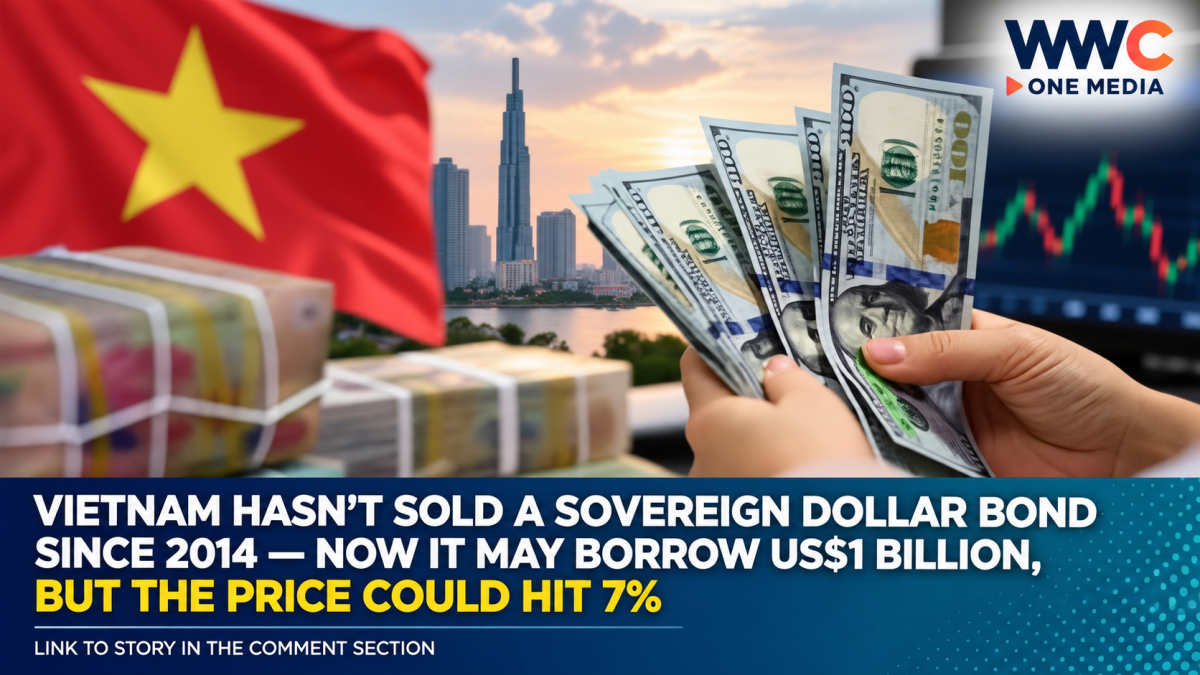
HANOI — Vietnam is weighing a return to the global sovereign bond market for the first time in more than a decade, potentially raising as much as US$1 billion in dollars as the country searches for new ways to finance its ambitious infrastructure and economic-growth drive. But the timing comes with a catch: borrowing overseas is considerably more expensive than it was the last time Hanoi tapped international investors.
Vietnam’s Ministry of Finance has been discussing possible terms with international investment banks, according to four people familiar with the talks cited by Reuters. Among the proposals is a 10-year US-dollar sovereign bond worth about US$1 billion. Another foreign lender has suggested a deal of between US$500 million and US$1 billion carrying a coupon of roughly 7%.
No final decision has been made, and the discussions should not be interpreted as confirmation that a sale will proceed. Vietnamese officials are assessing whether the benefits of accessing international capital outweigh the cost of borrowing at a time when global bond yields have surged amid inflation concerns, high oil prices and tighter financial conditions.
If Hanoi ultimately goes ahead, however, it would mark Vietnam’s first major offshore sovereign bond sale since 2014—and could become an important test of how global investors price one of Southeast Asia’s fastest-growing economies.
Why Vietnam Needs More Money Now
The potential bond sale comes as Vietnam embarks on one of the region’s most ambitious economic expansion programs.
The Communist Party has formally set a target of at least 10% average annual GDP growth from 2026 through 2030, while aiming to lift GDP per capita to about US$8,500 by 2030. The government also wants total social investment to average roughly 40% of GDP during the period.
Infrastructure is central to that strategy.
S&P Global Ratings said earlier in 2026 that Vietnam’s growth ambitions are being supported by hundreds of large infrastructure projects launched with an estimated combined value of around US$200 billion. These include transportation, logistics and other projects designed to remove bottlenecks and strengthen Vietnam’s position as a major manufacturing and export hub.
That enormous capital requirement is one reason Hanoi is looking beyond its traditional sources of funding.
Vietnamese banks have long carried much of the burden of financing domestic expansion. But credit has been growing faster than deposits since at least 2021, increasing pressure on the banking system to find additional funding.
Reuters reported in August that foreign banks were increasingly stepping in to provide hard-currency loans to Vietnamese lenders as the country’s rapid-growth strategy created a funding crunch. The gap between loans and deposits was approaching US$77 billion, according to the report.
A sovereign dollar bond could therefore do more than finance government projects. It could also diversify the country’s funding sources and reduce some of the pressure on domestic banks.
But Dollar Money Is No Longer Cheap
The biggest obstacle may be price.
Vietnam’s most recent international sovereign bond sale came in 2014, when Hanoi raised US$1 billion through 10-year dollar bonds carrying a 4.8% annual coupon. Investor demand was enormous: orders reportedly reached US$10.6 billion, more than 10 times the amount offered.
A proposed coupon of around 7% today would represent a very different financing environment.
Vietnam has already raised more than US$9 billion equivalent through its domestic government-bond market this year, according to Reuters, with 10-year debt carrying an average coupon of about 4.2%, up from 3.1% a year earlier. Domestic dong debt and international dollar debt are not directly comparable because they carry different currency, market and investor risks, but the gap illustrates why officials are carefully examining the economics of an offshore transaction.
The global backdrop has also become significantly tougher. The benchmark U.S. 10-year Treasury yield crossed 5% on September 14, its highest level since 2023, as markets confronted inflation concerns, elevated oil prices and expectations that interest rates could remain high.
That matters because U.S. Treasury yields form a critical reference point for dollar-denominated borrowing around the world. When Treasury yields climb, emerging-market governments typically have to offer investors even higher returns.
Vietnam’s Credit Story Has Improved
Vietnam nevertheless approaches the market with a stronger credit profile than it had during its previous offshore issuance.
Moody’s in May changed Vietnam’s sovereign outlook from stable to positive while affirming its Ba2 rating, citing improvements in institutional quality, governance and the country’s medium-term credit profile.
S&P rates Vietnam BB+ with a stable outlook, while Fitch also has the country at BB+, meaning Vietnam remains below investment-grade territory but is relatively close to that threshold.
Hanoi has been seeking an upgrade to investment grade from at least one major rating agency by the end of the decade. A successful return to the international bond market could help establish a fresh sovereign benchmark for Vietnamese companies seeking dollar financing of their own.
Private-sector borrowers are already heading offshore.
VPBank signed a US$1.44 billion foreign loan in June, while Vingroup issued a US$350 million five-year bond carrying a 5.75% coupon in Vienna in April. Vingroup has also planned a Korean-won bond offering worth roughly US$338 million equivalent, according to Reuters.
A Bigger Shift May Be Underway
Perhaps the most important part of the story is what the possible sovereign bond says about Vietnam’s broader financial strategy.
For years, Hanoi maintained relatively tight control over foreign borrowing and relied heavily on domestic financing. Public debt also remains comparatively modest: Reuters estimates it was around 37% of GDP last year, giving the government more fiscal room than many emerging-market peers.
But Vietnam’s 10% growth ambition requires capital on a scale that domestic banks alone may struggle to provide.
Authorities have already raised the ceiling on private-sector foreign borrowing to US$6.1 billion for 2026, from US$5.5 billion in 2025, and the limit could be increased again if demand remains strong.
That suggests the proposed sovereign bond is not an isolated financing exercise. It may be part of a wider shift toward tapping international capital more aggressively as Vietnam attempts to transform roads, railways, airports and industrial infrastructure fast enough to sustain its economic ambitions.
The calculation, however, is delicate.
Borrow overseas now, and Hanoi gains access to another large pool of capital while easing pressure on its banks. Wait, and global interest rates might eventually fall—but critical infrastructure financing could be delayed.
For Vietnam, the question is therefore no longer simply whether international investors would buy its debt.
The harder question is how much Hanoi is willing to pay today to finance the growth it wants tomorrow.




Leave a Reply