
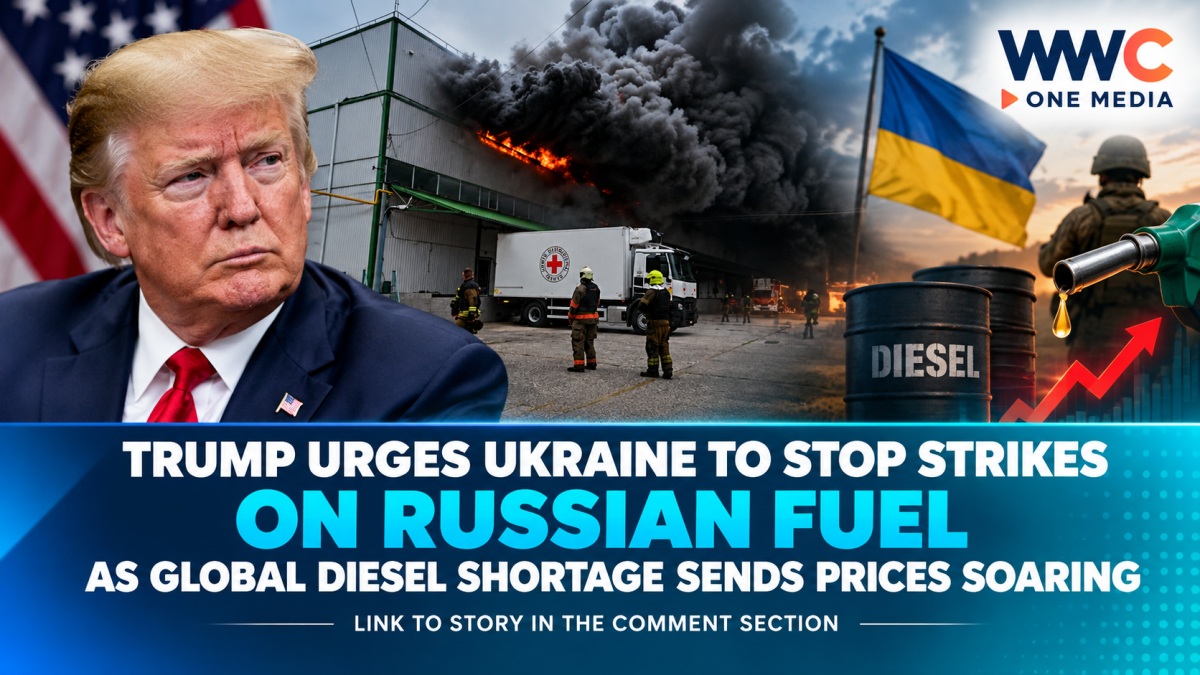
US President Donald Trump has called on Ukraine to stop attacking Russian oil refineries and other diesel infrastructure, arguing that the strikes are contributing to a worsening global fuel shortage.
Trump made the appeal to Ukrainian President Volodymyr Zelenskyy on Sept 13 as diesel prices in the United States climbed above US$6 a gallon, reaching a record average level.
The intervention puts Washington’s position on Ukraine’s campaign against Russian energy infrastructure under fresh scrutiny, as the war increasingly intersects with a global energy crisis.
Trump blames Ukrainian strikes for diesel shortages
Trump said Zelenskyy should stop targeting Russia’s diesel production and distribution infrastructure because the attacks were contributing to fuel shortages beyond Russia.
Ukraine has increasingly used long-range drones to strike Russian refineries, oil depots and other energy facilities, seeking to disrupt Moscow’s ability to generate revenue and supply fuel for its military.
The attacks have damaged Russian refining capacity and contributed to shortages of gasoline and other fuels inside Russia.
Trump argued that the consequences are now being felt internationally as global diesel supplies remain under severe pressure.
US diesel prices hit a record
The president’s comments came after US diesel prices surpassed US$6 per gallon on average.
The surge has raised concerns across industries that rely heavily on diesel, including trucking, agriculture, construction and logistics.
Higher diesel costs can also feed into consumer prices because fuel is a major expense in transporting food, manufactured goods and other products.
The latest price shock is occurring against a much broader energy disruption linked to the conflict involving the United States and Iran and instability around major Middle Eastern shipping routes.
Energy analysts say the global diesel squeeze cannot be attributed to Ukrainian attacks alone.
Russia’s refineries have become major Ukrainian targets
Ukraine has significantly increased attacks on Russian oil infrastructure in recent months.
Kyiv views the refineries as legitimate military and economic targets because Russia uses petroleum products to support its armed forces and because oil revenues remain crucial to financing the war.
The campaign has damaged several major refineries and forced Russia to reduce or temporarily halt operations at some facilities.
The disruption has contributed to domestic fuel shortages, particularly in parts of Russia, prompting Moscow to take measures to protect supplies.
Russia has also adjusted its fuel-export policies in response to the shortages.
Moscow welcomes Trump’s intervention
The Kremlin welcomed Trump’s call for Ukraine to stop attacking Russian diesel infrastructure.
Russian officials have argued that strikes on economic infrastructure threaten civilian interests and should end.
At the same time, Moscow has pointed to instability in the Persian Gulf as a major reason for the current disruption in global energy markets.
The Kremlin’s support for Trump’s appeal gives Moscow another opportunity to argue that Ukrainian attacks are worsening the economic consequences of the war far beyond the battlefield.
Ukraine says Russia must stop attacking its infrastructure
Kyiv has defended its campaign against Russian energy facilities by pointing to Russia’s continuing attacks on Ukrainian infrastructure.
Ukrainian officials have argued that Russia cannot expect Kyiv to stop striking Russian energy targets while Russian forces continue attacking Ukraine’s power grid and other critical infrastructure.
President Volodymyr Zelenskyy has indicated that Ukraine could pause attacks on Russian critical infrastructure if Moscow agrees to stop targeting Ukrainian infrastructure as well.
That would require a formal arrangement rather than a unilateral Ukrainian halt.
Global shortage has multiple causes
Although Trump has singled out Ukrainian attacks, the current diesel shortage has several overlapping causes.
The biggest pressure comes from disruptions to global oil and refined-fuel supplies caused by the wider Middle East conflict.
The effective disruption of major shipping routes through the Strait of Hormuz has restricted the movement of crude oil and petroleum products, while instability around the Red Sea has created additional risks for commercial shipping.
Russia is also a major producer and exporter of refined petroleum products, meaning damage to its refineries can further tighten global supplies.
The combination has created a particularly difficult environment for diesel markets.
Trump faces a delicate balancing act
Trump’s intervention highlights the increasingly complicated relationship between US efforts to support Ukraine and Washington’s concerns over energy prices.
The United States has continued to back Ukraine against Russia, but rising fuel costs are becoming a domestic political problem.
Diesel prices affect transportation and agricultural costs directly, meaning a prolonged surge could add to inflationary pressure at a politically sensitive time.
Trump is therefore pushing for measures that could ease pressure on global fuel markets even if they potentially reduce one of Ukraine’s most important tools for economically damaging Russia.
Strikes are putting pressure on Moscow
For Ukraine, attacks on Russian refineries offer a way to impose costs on Moscow without directly targeting Russian troops on the battlefield.
The strategy has already created significant problems for Russia’s domestic fuel market.
Repeated attacks have forced Russian authorities to restrict fuel exports and consider additional measures to stabilise supplies.
Reducing refinery capacity also threatens government revenues and complicates Russia’s ability to supply fuel to its military.
Halting the campaign could therefore give Moscow time to repair damaged facilities and restore production.
A new dilemma for Ukraine
Trump’s demand puts Zelenskyy in a difficult position.
Ukraine is under pressure from its most important ally to help stabilise global energy markets, but Kyiv sees Russian energy infrastructure as a critical component of Moscow’s war effort.
A unilateral halt could reduce pressure on Russia while doing little to guarantee that Moscow would stop attacking Ukrainian infrastructure.
A reciprocal agreement, however, could provide both sides with a limited reduction in attacks on critical energy facilities.
For now, there is no confirmed comprehensive ceasefire covering energy infrastructure.
Energy crisis adds another layer to the war
The dispute demonstrates how the Russia-Ukraine war is increasingly affecting global markets far beyond the battlefield.
Refinery attacks, shipping disruptions and geopolitical tensions are all contributing to tighter fuel supplies and higher prices.
For consumers, the immediate concern is the cost of diesel and the inflationary pressure that follows.
For Ukraine, the stakes are much higher: attacks on Russian energy infrastructure remain one of the few ways Kyiv can directly impose economic pain on Moscow at long range.
Trump’s call to stop those attacks therefore represents more than an argument over fuel prices. It is another sign that the global energy crisis is beginning to shape the strategic choices being made in the Russia-Ukraine war.




Leave a Reply