
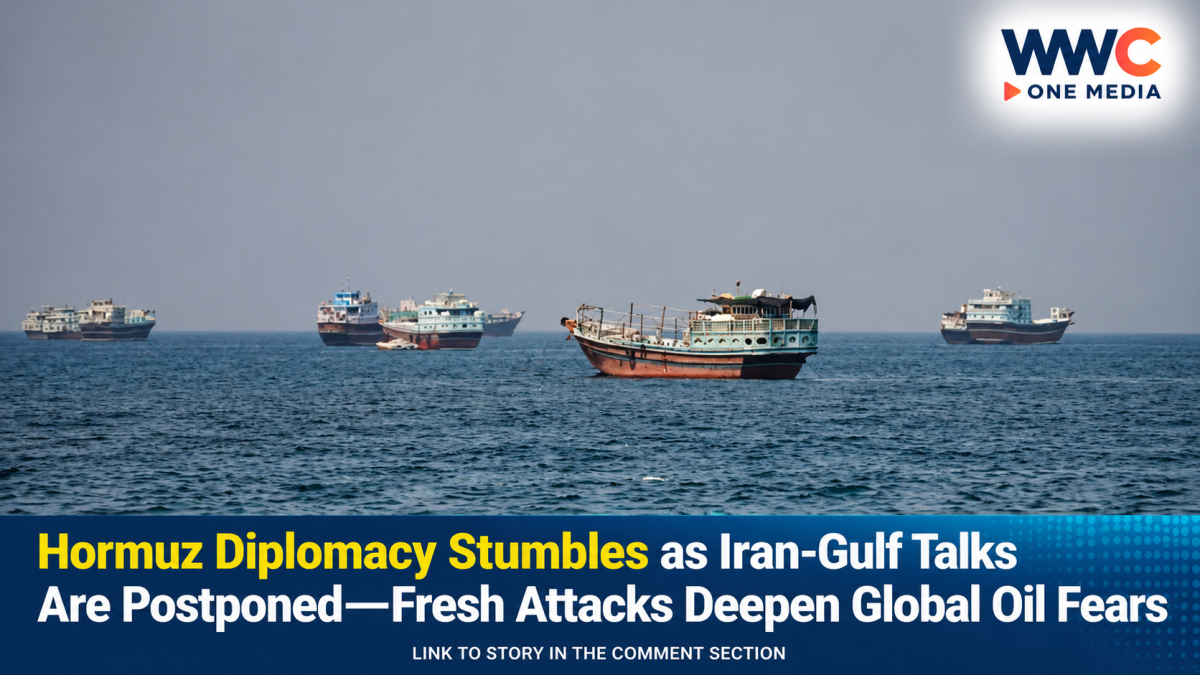
ADEN/DUBAI — Diplomatic efforts to prevent a deeper crisis in the Strait of Hormuz have suffered a major setback after a crucial meeting between Iran and Gulf Arab states was postponed, just as fresh attacks around the Middle East intensified fears over global energy supplies.
The meeting, which was expected to take place in Oman on Monday, Sept 14, was intended to discuss a proposal for managing shipping through the Strait of Hormuz, one of the world’s most important oil transit routes.
Instead, the talks were delayed after regional countries failed to reach a consensus.
The diplomatic setback came as new attacks struck the region and oil prices surged above US$100 a barrel, raising fears that the Middle East conflict could trigger an even bigger global energy shock.
Why Were the Crucial Hormuz Talks Postponed?
Oman had been attempting to bring Iran and Gulf Arab countries together to discuss a proposal aimed at managing shipping through the Strait of Hormuz.
Omani officials said the meeting was postponed in the interest of creating conditions for a more constructive dialogue and achieving greater regional consensus.
But behind the delay are major disagreements over how the proposal would work and what it could mean for the balance of power in the Persian Gulf.
Saudi Arabia reportedly raised concerns about proposed changes to an Iran-Oman arrangement and the potential long-term consequences for other Gulf Cooperation Council countries.
Bahrain also declined to attend, while participation from other regional countries remained uncertain. Iraq was among the countries that had confirmed its attendance.
A Major Diplomatic Opportunity Slips Away
The postponed meeting was seen as an important opportunity for Iran and its Gulf neighbours to discuss maritime security at a time when commercial shipping through the Strait of Hormuz remains under severe pressure.
The proposed discussions would have focused on creating a framework for navigation through the strategic waterway.
But the lack of agreement has exposed the deep divisions still separating Iran from several Gulf Arab states.
The delay is particularly significant because high-level regional engagement between Iran and Gulf Cooperation Council countries has remained difficult amid the wider Middle East conflict.
Instead of a breakthrough, diplomats are now left trying to determine whether a new meeting can be arranged—and whether the countries involved can actually agree on a common approach.
Why the Strait of Hormuz Matters to the World
The Strait of Hormuz is one of the most important energy chokepoints on the planet.
The narrow waterway connects the Persian Gulf to the Gulf of Oman and is a critical route for oil and gas exports from major producers in the Middle East.
Any prolonged disruption can quickly affect global oil prices, shipping costs and inflation.
The latest diplomatic failure has therefore alarmed energy markets.
Reports indicated that oil prices climbed sharply as concerns grew over disruptions in Hormuz and other key shipping routes, including the Bab el-Mandeb Strait near Yemen.
The combination of military attacks and diplomatic uncertainty is making it increasingly difficult for the global energy industry to predict when normal shipping conditions might return.
Fresh Attacks Add to the Pressure
The postponed meeting came as violence continued to spread across the region.
An Iranian commercial vessel was struck near Qeshm Island in the Strait of Hormuz, killing one person and injuring several others, according to Iranian state media.
Iran blamed what it described as a hostile enemy, though the circumstances surrounding the strike remained unclear.
At the same time, attacks on Saudi Arabia’s critical energy infrastructure added another layer of concern.
A drone attack disrupted Saudi Arabia’s East-West oil pipeline, an important route that allows the kingdom to move crude toward the Red Sea without relying entirely on the Strait of Hormuz.
The disruption has raised fears that two major energy routes could now face simultaneous pressure.
Oil Prices Surge as Energy Markets Brace for Worse
The escalating crisis has already been felt in global markets.
Oil prices surged above US$100 a barrel as traders reacted to the postponed talks, attacks on Saudi infrastructure and continued threats to shipping.
The East-West pipeline is particularly important because it can transport large volumes of Saudi oil to the Red Sea.
If the disruption continues, Saudi Arabia could face increasing pressure on its ability to maintain exports.
Reports have warned that prolonged pipeline outages could potentially affect a significant portion of global oil supply, adding to fears of higher fuel prices and renewed inflationary pressure around the world.
The Houthi Factor Is Making the Crisis Even More Dangerous
The situation is also being complicated by Iran-aligned Houthi forces in Yemen.
The Houthis have intensified military activity around the Red Sea and Bab el-Mandeb, another vital global shipping chokepoint.
This means international shipping companies are facing growing risks in two strategically important waterways.
Ships attempting to avoid the Strait of Hormuz could face longer and more expensive alternative routes.
The crisis is increasing tanker costs and creating new pressure on global supply chains already struggling with higher energy prices.
Gulf States Face Difficult Choices
The growing regional conflict has placed Gulf governments in an increasingly difficult position.
They must balance concerns about Iran’s influence, maritime security and regional diplomacy while protecting their own energy infrastructure.
Saudi Arabia has sought greater security support as attacks threaten its territory and energy facilities.
But the wider regional response remains complicated, with different countries holding different views on how far they should go in confronting Iran and its allies.
The postponement of the Oman meeting shows just how difficult it has become to build a unified regional position—even when the security of one of the world’s most important shipping routes is at stake.
What Happens Next for the Strait of Hormuz?
Oman has made clear that the talks have been postponed, not permanently cancelled.
But no immediate breakthrough has been announced.
The biggest questions now are whether Iran and Gulf Arab states can resolve their differences, whether a revised proposal can win broader regional support and whether continued attacks will make diplomacy even more difficult.
For global markets, the stakes could not be higher.
A successful agreement could help restore confidence in one of the world’s most important energy routes.
A prolonged diplomatic failure, however, could mean more shipping disruptions, higher oil prices and renewed pressure on economies already facing inflation concerns.
Diplomacy Is Stalling—But the Crisis Is Moving Fast
The timing of the postponed meeting could hardly be worse.
Diplomacy has slowed down just as military activity is accelerating.
An Iranian ship has been struck.
Saudi energy infrastructure has come under attack.
The Houthis are increasing pressure around another vital shipping route.
And oil prices are already climbing.
The planned Oman meeting was supposed to offer a possible path toward reducing tensions.
Instead, it has become the latest sign of how deeply divided the region remains.
With diplomacy now on hold and attacks continuing across key energy corridors, the world is watching one question more closely than ever: Can the Strait of Hormuz crisis still be solved at the negotiating table—or will the next move come from the battlefield?


Leave a Reply