
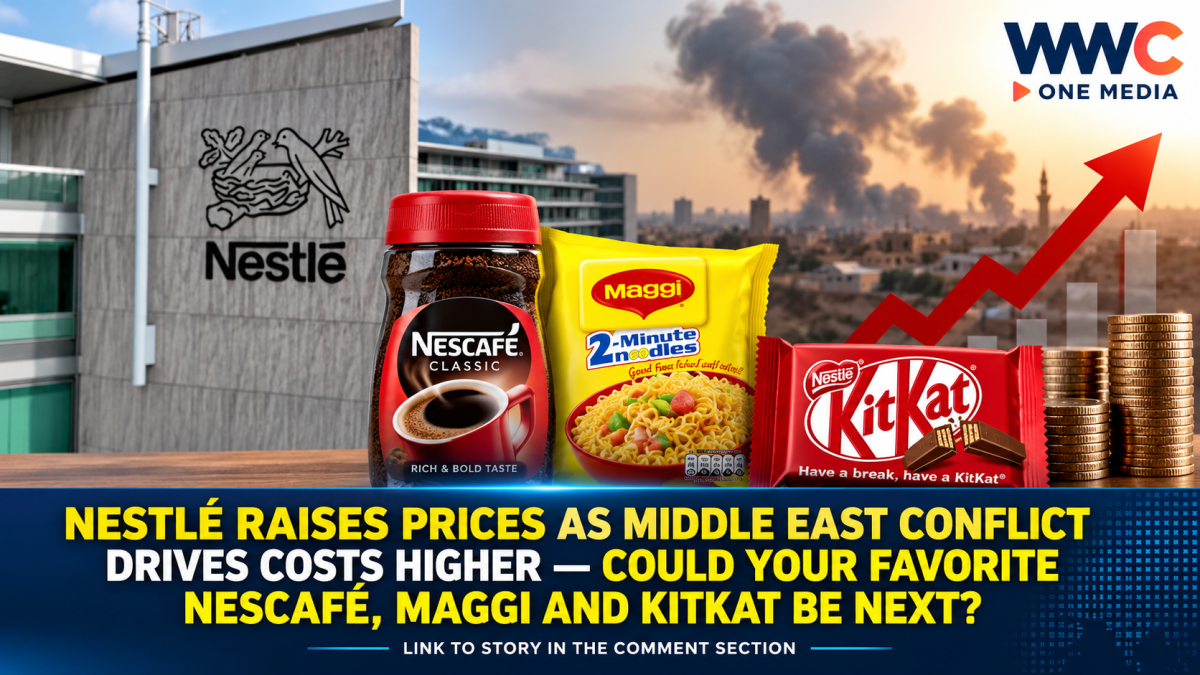
CACAPAVA, Brazil/LONDON — The effects of the Middle East conflict may be moving closer to consumers’ grocery baskets.
Nestlé, the world’s largest packaged-food company, has confirmed that it is raising prices and changing parts of its product portfolio as higher energy, transportation and raw material costs ripple through its global supply chain.
Nestlé CEO Philipp Navratil said the conflict’s impact is being felt far beyond the Middle East itself, with suppliers facing mounting inflationary pressure.
“Each and every supplier of ours will have some increase in costs,” Navratil told Reuters in an interview. The company, he said, must work to absorb or mitigate those increases while ensuring consumers remain willing to buy its products if prices need to rise.
The development could have implications for consumers worldwide, including those who regularly buy Nestlé brands such as Nescafé, Maggi and KitKat.
Nestlé Turns to Price Hikes, Product Changes and Cuts
Nestlé is not relying on price increases alone.
According to Navratil, the Swiss food giant is also:
- Raising prices where necessary;
- Reformulating products;
- Pursuing efficiency and cost-saving measures;
- Reviewing products that consumers are unwilling to pay more for; and
- Streamlining parts of its wider business portfolio.
The strategy highlights the difficult balancing act facing major consumer goods companies: passing higher costs to shoppers without driving them toward cheaper alternatives or causing sales volumes to fall.
The Middle East accounts for only around 2% to 3% of Nestlé’s roughly 90 billion Swiss francs in annual sales, meaning the company’s direct sales exposure to the region remains relatively limited.
However, the indirect impact is proving much more significant.
Higher energy costs affect factories and food production. More expensive fuel raises shipping and logistics expenses. Rising commodity and agricultural input costs then add further pressure throughout the supply chain.
That means a conflict thousands of kilometers away can eventually affect the price of food and beverages on supermarket shelves.
From the Middle East to the Grocery Aisle
The Nestlé warning comes as global businesses face renewed concerns over energy and shipping disruptions.
Recent developments have intensified fears about oil supplies and critical maritime routes in the Middle East. Disruptions affecting major shipping corridors and oil infrastructure have pushed energy markets higher, increasing inflation risks for manufacturers and consumers alike.
For food companies, higher oil prices can have a much broader impact than simply increasing transportation costs.
Energy is used across:
- Manufacturing and factory operations;
- Transportation and shipping;
- Packaging production;
- Agricultural machinery;
- Fertilizer production;
- Food processing; and
- Distribution networks.
As these costs rise, suppliers may eventually pass the increases on to multinational companies such as Nestlé, which must then decide whether to absorb the expense, improve efficiency or raise retail prices.
Other Consumer Giants Are Also Feeling the Pressure
Nestlé is not alone.
Fellow consumer goods giant Procter & Gamble has also warned about mounting cost pressures linked to higher oil prices and other supply-chain challenges.
Reuters reported that P&G had estimated a potential $1 billion after-tax profit impact in fiscal 2027, with elevated oil prices among the factors making business conditions more difficult.
Colgate-Palmolive has likewise warned of substantial additional raw material and logistics expenses connected to the Middle East conflict. The company estimated that these pressures could add around $300 million in costs during the year.
The growing list of warnings suggests that the impact of geopolitical tensions is spreading beyond energy markets and into everyday consumer products.
Food Inflation Risks Are Growing Again
The latest pressure on Nestlé also comes as concerns grow about another possible wave of global food inflation.
The United Nations’ Food and Agriculture Organization has warned about renewed food-price risks. Reuters reported that the FAO Food Price Index reached 131.1 points in July, up from 130.3 in June and marking its highest level since January 2023.
Meanwhile, companies are also dealing with volatile agricultural commodity markets.
Nestlé itself is working to strengthen its cocoa supply chain by increasing sourcing efforts in Brazil and collaborating with farmers to improve yields and reduce fertilizer use.
The move follows previous global cocoa supply shocks that sent prices to record highs. Nestlé CEO Navratil said diversifying supply sources is becoming increasingly important, although expanding production takes time because cocoa trees can require years to reach full production potential.
Coffee markets are also being closely watched. Reuters recently reported that coffee traders were preparing major Brazilian arabica shipments to exchange warehouses as historically low certified inventories helped keep prices elevated.
For a company with major exposure to both coffee and chocolate products, managing commodity costs remains a critical challenge.
Nestlé Reshapes Its Business as Costs Rise
Beyond the immediate cost crisis, Nestlé is continuing to reshape its global business.
The company has been streamlining its portfolio, including moves involving its bottled water business and vitamins operations, while continuing to focus on major brands and strategically important categories.
However, Navratil stressed that Nestlé is not simply selling businesses. The company remains open to acquisitions that could strengthen its long-term strategy.
The company is therefore fighting the current cost pressures on several fronts: reducing expenses, reviewing its product lineup, adjusting prices, strengthening supply chains and reshaping its portfolio.
Will Consumers Pay More?
The biggest question may ultimately be whether consumers are willing to accept higher prices.
Nestlé’s decision to reformulate or potentially eliminate products that shoppers are unwilling to pay more for shows how seriously the company is taking consumer resistance.
After years of global inflation, households in many markets are already under pressure from expensive food, energy and transportation.
That leaves global consumer companies facing a difficult choice.
Raise prices too aggressively, and customers could switch brands.
Absorb too much of the higher cost, and profits could suffer.
Cut products or change formulations, and companies risk altering the products consumers already know.
For Nestlé, the challenge is now clear: how much of the growing cost crisis can the company absorb — and how much will eventually be passed on to consumers?
As conflict-driven disruptions continue to affect energy, freight and commodity markets, the answer could increasingly be reflected in supermarket price tags around the world.
And for millions of consumers, the next shock from the Middle East conflict may not arrive at the gas station — it could arrive in the grocery basket.



Leave a Reply