
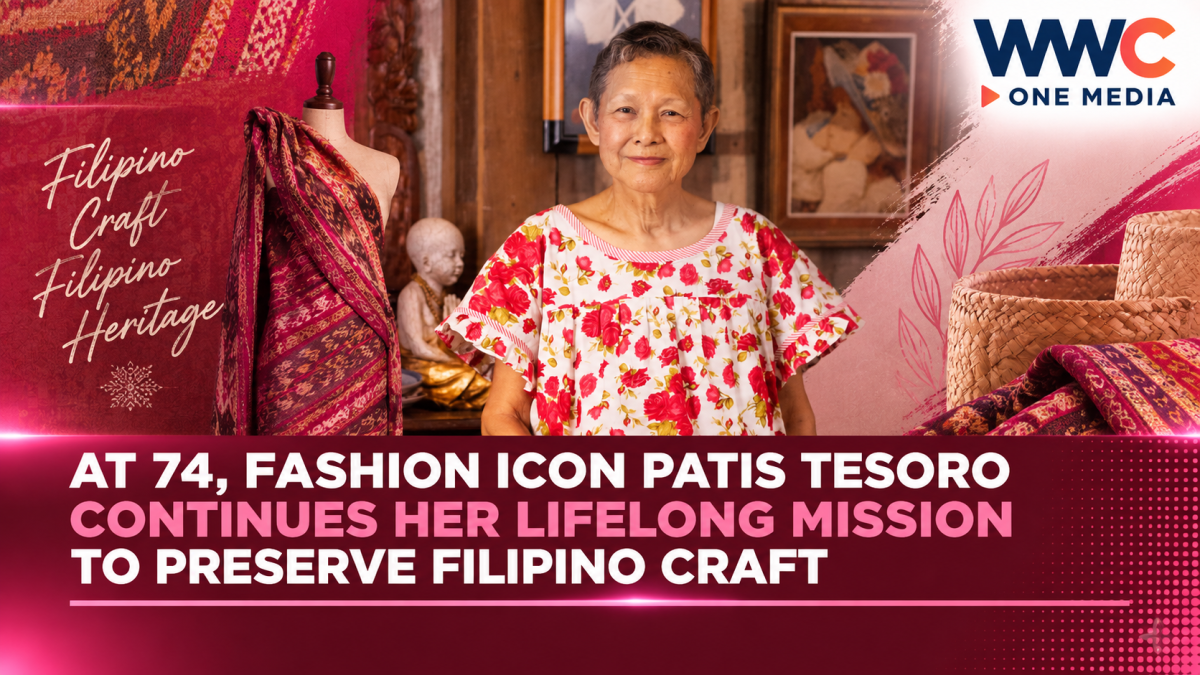
SAN PABLO, Laguna — At 74, legendary Filipino fashion designer Patis Tesoro remains as passionate as ever about preserving the country’s traditional crafts, proving that her decades-long mission to champion Filipino identity through fashion is far from over.
Known for her vibrant embroidered creations and unmistakable Filipiniana-inspired designs, Tesoro has spent much of her life transforming traditional materials and techniques into wearable art while supporting the artisans and communities behind them.
A Life Filled With Colour and Filipino Heritage
Patis Tesoro’s world is a reflection of her artistic personality.
Since moving permanently to San Pablo, Laguna, in 2016, the designer has turned her three-acre property into a colourful creative sanctuary featuring her home, atelier, gift shop, café and bed-and-breakfast.
Her distinctive Filipino-inspired aesthetic can be found throughout the compound, from hand-painted ceilings and colourful interiors to textiles and decorative objects.
But behind the colourful surroundings is a serious mission:
To ensure that traditional Filipino craftsmanship survives for future generations.
From Aspiring Artist to Fashion Pioneer
Born Maria Beatriz Pamintuan Tesoro, Patis Tesoro originally dreamed of becoming an artist.
She studied at Marygrove College in Detroit, Michigan, before pursuing a career as a couturier. Her perspective on fashion later evolved after she became involved with her husband’s family’s souvenir business.
It was there that she began to see fashion as something more than clothing.
She realised it could become a powerful tool for preserving culture, supporting local communities and promoting Filipino heritage to both local and international audiences.
Reviving Traditional Filipino Textiles
One of Tesoro’s most important contributions has been her advocacy for traditional Filipino fabrics, particularly piña.
For decades, she has worked to preserve and promote ethnic clothing and traditional textile-making practices.
She also collaborated with former First Lady Ming Ramos in efforts to encourage the use of piña, helping bring greater attention to the fabric and its importance in Philippine fashion.
Her work is also associated with the wider revival and appreciation of Filipino garments such as the barong Tagalog and other forms of Filipiniana.
Handmade Fashion Takes Time — Sometimes Years
Tesoro’s creations are known for their extraordinary detail and the amount of work required to produce them.
Some pieces use hand-embroidered piña fabric that can take years to complete.
The slow and labour-intensive process stands in sharp contrast to today’s fast-fashion industry.
But for Tesoro, that is exactly what makes handmade work valuable.
Traditional crafts represent generations of knowledge, patience and artistic skill — qualities that cannot easily be replaced by mass production.
Her advocacy has expanded beyond piña to include:
- Hand weaving
- Natural dyes
- Traditional embroidery
- Needlework
- Indigenous textiles
- Hand-painted fabrics
- Beading and other artisanal techniques
Supporting Women Artisans and Communities
Tesoro’s work is also closely connected to women’s empowerment.
Much of her creative practice depends on skilled artisans, and women make up a significant part of the communities involved in producing traditional handmade crafts.
Through her decades in fashion, Tesoro has helped create opportunities for artisans while promoting the value of their work to new audiences.
Her approach goes beyond simply using traditional materials.
She wants people to recognise the hands, communities and generations of knowledge behind every handmade creation.
Filipiniana for Everyday Life and Haute Couture
Tesoro has spent much of her career challenging the idea that Filipiniana belongs only at formal events.
Her designs have explored how traditional Filipino clothing can evolve and remain relevant in contemporary life.
From embroidered blouses and everyday dresses to elaborate gowns and couture pieces, her work demonstrates that cultural fashion does not have to remain frozen in the past.
It can change, adapt and continue to inspire new generations.
Her more recent collections have continued to combine traditional craftsmanship with bold colours, patchwork, embroidery and contemporary silhouettes.
Why Handmade Fashion Matters in the AI Era
As technology rapidly changes the fashion industry, Tesoro continues to advocate for the value of handmade work.
Her philosophy is rooted in the belief that cultural identity and craftsmanship remain deeply human.
At a time when digital technology and artificial intelligence are becoming increasingly influential, her work represents a return to physical materials, local traditions and the skills passed from one generation to another.
For Tesoro, preserving Filipino craft is not about rejecting modernity. It is about making sure progress does not erase cultural identity.
Still Working at 74
Despite her age and more than five decades in the fashion industry, Tesoro remains actively involved in promoting Filipino design.
Her San Pablo property continues to serve as both a home and a creative centre where her ideas, designs and advocacy come together.
She also continues sharing her knowledge with younger designers, educators and creatives interested in Philippine fashion and traditional craftsmanship.
The Bottom Line
At 74, Patis Tesoro remains one of the Philippines’ most important champions of traditional fashion and craftsmanship.
For decades, she has used fashion to preserve piña, embroidery, weaving and other Filipino artisanal traditions while helping demonstrate that cultural clothing can remain relevant in the modern world.
Her legacy is not simply measured by the garments she has created.
It lives in the artisans she has supported, the traditions she has helped preserve and the generations of Filipinos who continue to discover that fashion can carry the history and identity of an entire nation.




Leave a Reply