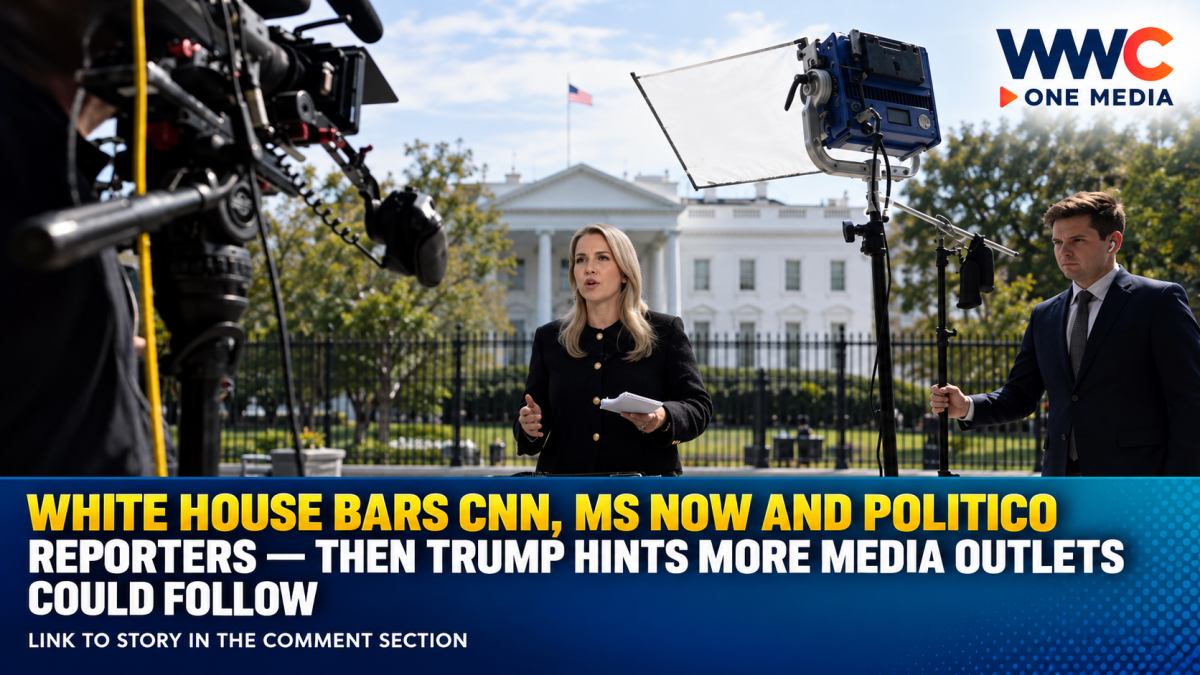
WASHINGTON — The White House has barred journalists from CNN, MS NOW and Politico from entering the White House grounds, putting into effect a media-access ban announced by President Donald Trump just a day earlier.
Reporters from all three organizations said their White House credentials were disabled or confiscated on Saturday, September 19, after Trump announced that he was banning the outlets from the White House.
The developments were reported independently by Reuters, CBS News, ABC News and other major news organizations.
The move has immediately raised questions over press access and the First Amendment, with the targeted organizations saying they intend to defend their ability to cover the administration.
Reporters turned away at White House gates
CBS News reported that an MS NOW correspondent and cameraman were turned away Saturday morning after their credentials were revoked. CBS also observed CNN senior White House reporter Betsy Klein and a cameraman attempting to enter the White House grounds before leaving without their badges.
Politico separately said White House reporter Cheyenne Haslett was denied entry and had her credential confiscated by Secret Service personnel.
ABC News also reported witnessing a CNN reporter and photographer being turned away at the White House security checkpoint.
The Los Angeles Times, citing reporting from the Associated Press, reported that MS NOW correspondent Akayla Gardner said her badge had been disabled when she attempted to enter. She said an officer told her the decision was above his level.
The White House did not issue a new detailed statement on Saturday and referred reporters back to Trump’s comments announcing the ban, according to Reuters and ABC.
Why did Trump announce the ban?
Trump announced the restrictions on Friday, saying CNN, MS NOW and Politico were being barred because of what he described as “fake news.”
In his social-media post, Trump accused the outlets of reporting what he characterized as false or fabricated information about him, his administration and the United States.
During remarks at the White House, he again criticized the organizations’ coverage and said other media organizations could potentially face similar treatment.
Trump specifically mentioned The New York Times and The Washington Post when discussing news organizations he considers “fake news,” although he did not announce that either newspaper had been banned at that time.
The White House has not identified specific articles or reports as the basis for the latest restrictions.
CNN, MS NOW and Politico push back
The three organizations have rejected the restrictions and said they intend to continue covering the Trump administration.
CNN said its journalists would continue reporting on the government and argued that the administration cannot interfere with its journalism by restricting access.
MS NOW said it would take steps to defend what it described as its First Amendment rights and the role of independent journalism.
Politico editor-in-chief Jonathan Greenberger also said the organization stood behind its White House reporters and would defend its constitutional rights.
The White House Correspondents’ Association has also objected to the move.
Association president Jacqui Heinrich said the revocation of the journalists’ credentials violates First Amendment protections and called for their access to be restored. The association represents journalists who cover the White House across numerous news organizations.
The legal fight could become the next major development
The dispute is likely to draw legal scrutiny because federal courts have previously considered whether the government can restrict White House press access because of a journalist’s reporting or criticism.
Reuters reported that the latest restrictions are expected to face legal challenges over First Amendment protections for freedom of speech and the press.
The administration has previously fought with news organizations over access.
In 2025, the White House restricted Associated Press access after the news organization declined to adopt the administration’s preferred name for the Gulf of Mexico. The AP challenged the restrictions in court.
During Trump’s first presidency, the White House also attempted to revoke CNN correspondent Jim Acosta’s press credentials following a confrontation between Acosta and Trump. A federal judge ordered the credential restored.
More recently, disputes over government press access have extended beyond the White House, including restrictions involving journalists covering the Pentagon and other federal agencies.
What happens next?
For now, CNN, MS NOW and Politico say they will continue reporting on the Trump administration despite losing physical access to the White House.
The immediate questions are whether the administration will extend restrictions to additional news organizations and whether the three targeted outlets will pursue legal action.
Trump has already warned that “other” media organizations could follow, but as of Saturday there was no announcement that The New York Times, The Washington Post or another major outlet had been subjected to the same White House ban.
The dispute therefore moves beyond a confrontation between the White House and three news organizations: the central legal question will be how far the executive branch can go in controlling access to journalists who cover the president and his administration.
This story may be updated as the White House, the affected news organizations and the courts respond.