
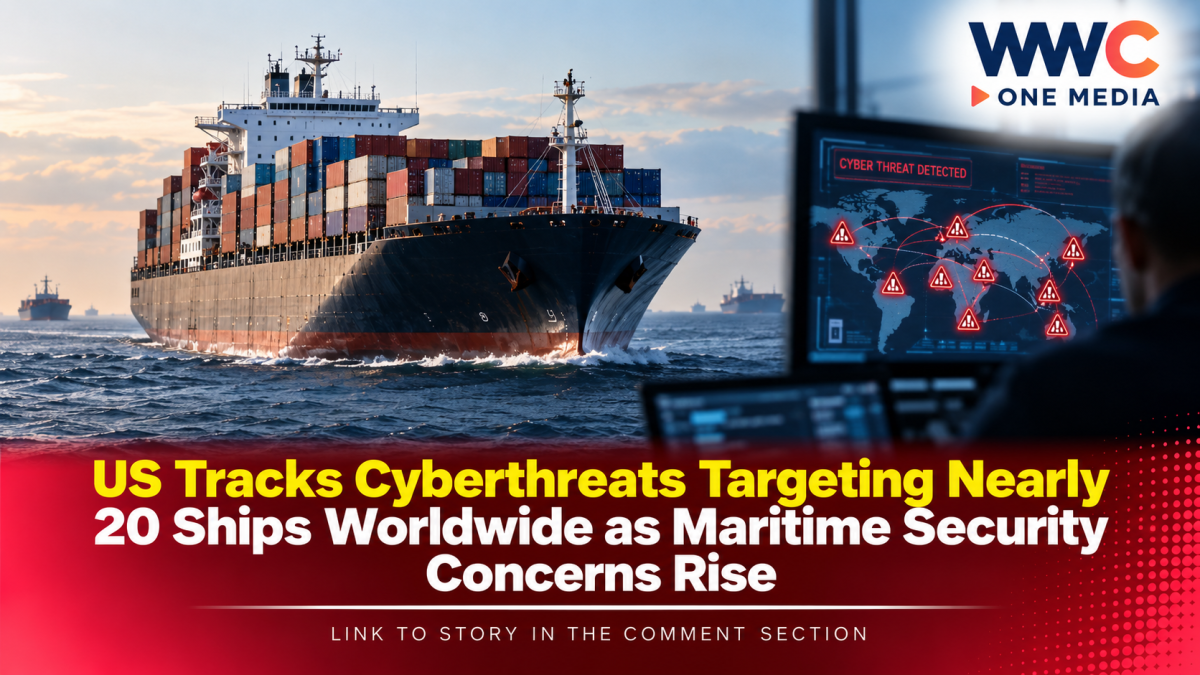
WASHINGTON — A Growing Cybersecurity Warning at Sea
U.S. government agencies are tracking cyberthreats involving nearly 20 shipping vessels around the world, according to U.S. officials familiar with the situation, highlighting a growing cybersecurity challenge for the global maritime industry.
The U.S. Coast Guard has reportedly asked operators to provide advance notice if any of the vessels under scrutiny are planning to enter a U.S. port. Officials have not publicly disclosed the ships’ identities, destinations or cargo manifests.
The development comes as authorities investigate separate cyber incidents involving two foreign-flagged oil tankers that were traveling toward the United States.
Two Tankers Triggered a US Investigation
The FBI and U.S. Coast Guard boarded two foreign-flagged oil tankers in the Gulf of Mexico in August after authorities detected signs that their computer networks may have been compromised.
According to the Associated Press, cyber experts from multiple agencies examined the vessels’ operational and information-technology systems. Authorities reported no operational disruption, vessel instability, danger to crews or environmental damage from the incidents.
The investigation remains open, and the party responsible for the cyber intrusions has not been identified publicly.
Why Ships Are Becoming Cyber Targets
Modern commercial ships are increasingly dependent on connected digital systems for navigation, communications, cargo management, engine monitoring and other operations.
That connectivity can improve efficiency, but it also creates potential points of vulnerability.
A successful intrusion does not necessarily have to take control of an entire vessel to cause problems. Disruption of communications, information systems or other digital infrastructure could potentially affect a ship’s operations and create delays across already interconnected supply chains.
The recent U.S. cases have therefore drawn attention to a threat that extends beyond individual vessels.
The Threat Goes Beyond American Waters
The reported tracking of nearly 20 vessels indicates that U.S. authorities are looking at the issue on an international scale rather than treating the August incidents as isolated events.
The specific nature of the threats against the other vessels has not been publicly detailed, and authorities have not established that all of the vessels are connected to the same attacker or campaign.
That distinction is important: being tracked because of a cyberthreat does not by itself establish that a vessel has been successfully hacked or that an attack has caused damage.
Maritime Security Is Already Under Pressure
The cyber concerns come at a particularly sensitive time for international shipping.
Commercial vessels are already navigating heightened security risks in several major maritime routes. Recent reporting has documented disruptions and security concerns around strategic waterways, including the Strait of Hormuz, where shipping activity has remained below earlier levels amid regional tensions.
This means shipping companies are facing multiple forms of risk simultaneously — from physical security incidents to cyber threats affecting the digital systems that support maritime operations.
What Authorities Know — and What Remains Unclear
So far, several details remain unresolved:
- U.S. officials have not publicly identified the nearly 20 vessels being monitored.
- The destinations and cargoes of those vessels have not been disclosed.
- Authorities have not publicly identified the perpetrators.
- There is no public evidence establishing that every vessel is part of one coordinated cyber campaign.
- The two tankers boarded in the Gulf of Mexico did not experience reported operational or environmental consequences from the incidents under investigation.
The investigation could therefore reveal more about the scope and origin of the threat as authorities examine affected systems and compare incidents.
A New Front for Global Shipping
The latest developments underscore how cybersecurity has become part of maritime safety.
For shipping companies, protecting digital infrastructure is no longer simply an information-technology concern. A cyber incident aboard a commercial vessel can potentially intersect with navigation, communications, logistics and broader supply-chain operations.
For now, U.S. authorities are monitoring the situation while investigators work to determine who is behind the reported attacks and whether the incidents are connected.
Nearly 20 ships are now under scrutiny — but the biggest unanswered question is who, or what, is behind the growing maritime cyber threat.
WWC ONE MEDIA G.A




Leave a Reply