WASHINGTON — U.S. President Donald Trump abruptly cut short his weekend stay at Camp David and returned to the White House on Saturday, September 19, as tensions in the Middle East intensified following a reported Houthi missile attack targeting Saudi Arabia.
Trump had initially been scheduled to remain at the presidential retreat in Maryland through Sunday. The White House later revised his travel schedule, with Trump returning to Washington aboard Marine One. A White House pool report cited by multiple news organizations said the helicopter was expected to arrive near the White House at about 7 p.m. Eastern time.
The administration did not publicly provide a reason for the change in Trump’s schedule.
Sudden return comes amid escalating regional tensions
The unexpected change came as Saudi Arabia reported that Yemen’s Iran-aligned Houthi movement had attempted to strike Riyadh with a ballistic missile.
The Saudi-led coalition said the missile was intercepted. Saudi authorities also reported attempts against other locations, including Yanbu, Taif, Bish and Farasan. The Houthis, meanwhile, claimed they had targeted sensitive sites in Riyadh and an Aramco facility in Yanbu, although those claims were not independently verified.
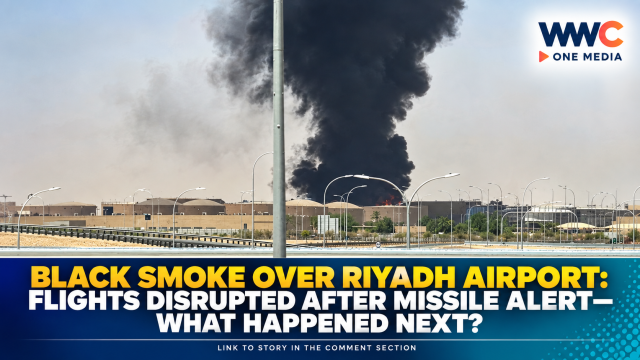
Reuters reported that flames and a large plume of smoke were seen near Riyadh’s main airport following the attacks, while Saudi authorities later issued an all-clear. The incident marked a significant development in the widening regional conflict.
U.S. issues fresh Middle East security warning
The developments also coincided with a new security alert from the U.S. State Department.
American citizens in the Middle East were urged to exercise heightened vigilance, while Americans outside the region were advised to seriously reconsider travel to and through the area. The department warned that the security situation could change rapidly, citing possible flight cancellations, airspace closures and other disruptions.
The State Department specifically cited attacks by Iranian-supported Houthis against Saudi Arabia, including incidents involving civilian airports, and warned of the possibility of further escalation.
No official explanation for Trump’s schedule change
Despite the timing, there has been no public confirmation from the White House that Trump’s early return was directly caused by the Houthi attacks or the broader Middle East situation.
That distinction is important. The president’s schedule was changed as regional tensions were increasing, but officials have not publicly stated that the security developments prompted the decision.
Earlier Saturday, a NORAD F-16 also intercepted a general aviation aircraft that entered restricted airspace near Camp David. The aircraft was escorted out safely, and the U.S. Air Force said the incident did not pose a danger to people on the ground or indicate a threat to Trump or the presidential retreat.
A rapidly changing Middle East crisis
Trump’s sudden return comes as the Middle East conflict continues to expand beyond its original battle lines.
Reuters reported that Houthi attacks on Saudi territory have emerged as another major front in the broader regional conflict, with the group also targeting shipping and energy-related infrastructure. The developments have raised concerns over the security of Red Sea shipping routes and global energy supplies.
The latest escalation also comes just days before Trump is expected to face international scrutiny at the United Nations, where the continuing U.S.-Iran conflict and its wider regional consequences are likely to dominate discussions.
For now, the White House has not said what specifically prompted Trump to abandon his planned Camp David schedule early. But with Saudi Arabia reporting a missile attack on Riyadh, Washington issuing new travel warnings and regional hostilities intensifying, the president’s unexpected return places renewed attention on what may happen next in the Middle East.