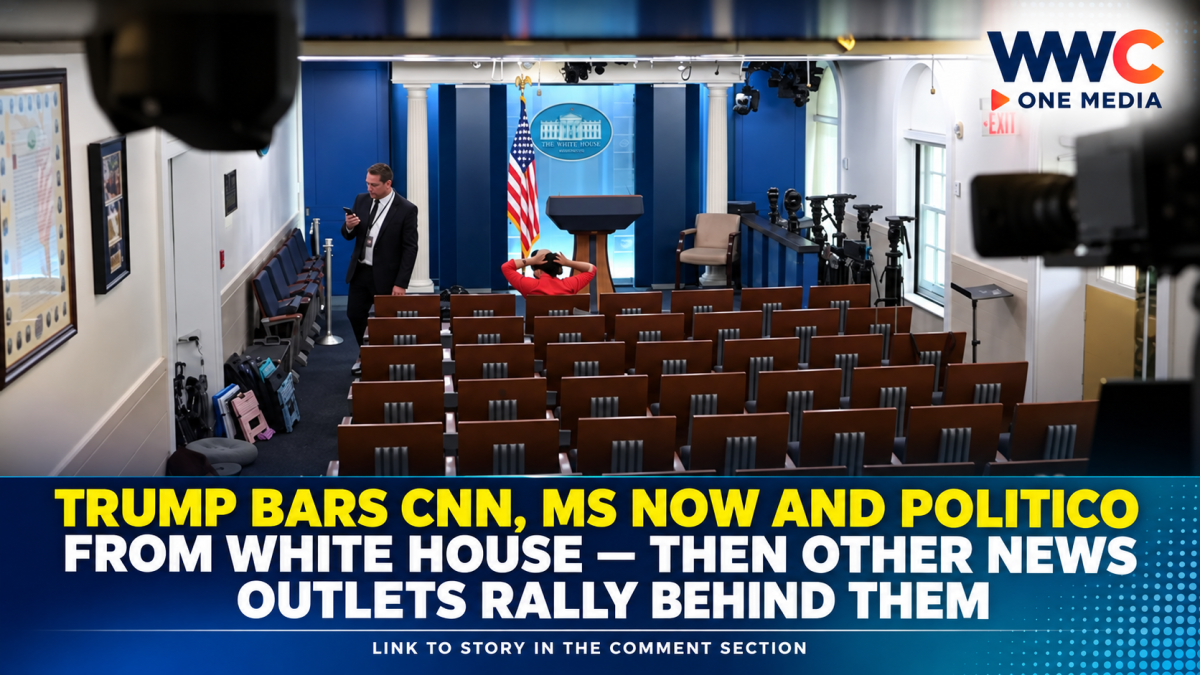
WASHINGTON — A new confrontation between President Donald Trump and major US news organizations intensified Saturday after reporters from CNN, MS NOW and Politico were denied access to the White House, with journalists saying their press credentials were deactivated or confiscated.
The action followed Trump’s announcement Friday that the three organizations would be barred from the White House, accusing them of publishing what he described as “fake news.” Trump also warned that other media organizations could face similar restrictions.
On Saturday, the threat became an on-the-ground reality.
CNN White House reporter Betsy Klein said she was denied entry and that her press pass had been confiscated. MS NOW correspondent Akayla Gardner similarly reported that her badge had been disabled. Politico reporter Cheyenne Haslett was also denied entry, with Politico saying the Secret Service confiscated her White House access pass.
The White House did not issue a new detailed response Saturday, instead referring reporters to Trump’s previous comments about the restrictions.
News organizations push back
The three affected organizations have rejected the administration’s characterization of their reporting and said they intend to continue covering the Trump administration.
CNN called the action an unlawful interference with its constitutional right to conduct journalism. MS NOW said it would take steps to defend what it described as its First Amendment rights, while Politico said it would stand behind its reporters and challenge restrictions on their access.
Other major news organizations also expressed solidarity with the journalists.
The New York Times described the action as a retaliatory and unconstitutional threat, while The Washington Post said access to the White House is a constitutional right and characterized the restrictions as intimidation intended to affect coverage.
White House Correspondents’ Association warns of wider implications
The dispute has also drawn a strong response from the White House Correspondents’ Association (WHCA).
WHCA President Jacqui Heinrich said the implications extend beyond CNN, MS NOW and Politico, arguing that a standard used to exclude one organization because of its coverage could potentially be applied to other news organizations.
The association called for the journalists’ access to be restored and said that courts have repeatedly held that once the White House provides access to journalists, that access cannot be withdrawn arbitrarily or because officials object to the content of their reporting.
The dispute therefore goes beyond the three organizations directly affected. At its center is a broader legal and constitutional question: how much control can a president exercise over which journalists are permitted to cover the White House?
Trump says other outlets could be next
Trump has indicated that the restrictions may not end with CNN, MS NOW and Politico.
In a Friday social-media post announcing the ban, Trump said other “fake news” organizations would follow. During remarks at the White House, he also mentioned The New York Times and The Washington Post when discussing media organizations he considers problematic, although he did not specifically announce that those two newspapers had been banned.
That distinction is important: as of Saturday, the confirmed White House access restrictions applied to CNN, MS NOW and Politico. Reports that other major outlets had already been banned would go beyond what had been publicly confirmed.
A dispute with a longer history
The latest confrontation is not Trump’s first fight over White House press access.
During his first administration, the White House attempted to restrict the credentials of CNN correspondent Jim Acosta and Playboy correspondent Brian Karem. Federal judges subsequently ordered their access restored.
During Trump’s current administration, the Associated Press has also faced restrictions after a dispute over the administration’s terminology for the Gulf of Mexico. The AP has challenged those restrictions in court.
Reuters reported that Trump’s latest decision is likely to face legal challenges centered on First Amendment protections for freedom of speech and the press.
What happens next?
The immediate question is whether CNN, MS NOW and Politico will challenge the restrictions in court — and whether the administration will expand the policy to additional news organizations.
The WHCA’s intervention has added another layer to the dispute, while the affected outlets have signaled that they intend to continue reporting on the White House even without the same physical access.
For journalists, the practical impact is already clear: reporters who previously entered the White House using press credentials were turned away at the gates.
For the administration and the news organizations, however, the larger battle may now move beyond the White House gates and into the courts.
And with Trump warning that other media outlets could follow, Saturday’s confrontation may be only the beginning of a much broader fight over presidential power, press access and the First Amendment.