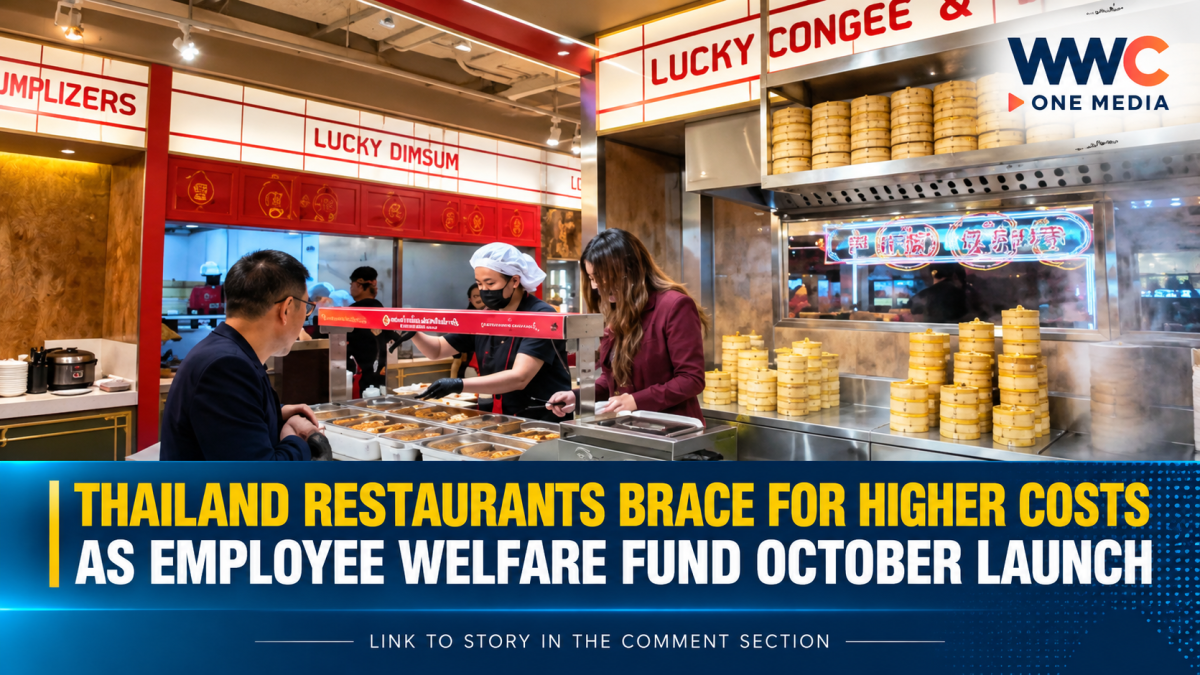
Thailand’s restaurant industry is preparing for another potential increase in operating costs as the country’s Employee Welfare Fund (EWF) moves toward implementation on October 1, 2026, prompting concern among restaurant operators about the impact on already-tight margins.
The Bangkok Post reported on September 17 that restaurant associations have expressed mixed reactions to the new welfare requirement, with businesses warning that additional employment-related costs could put further pressure on the food-service sector.
New Welfare Contribution Set to Begin
The Employee Welfare Fund is designed to provide financial protection for eligible employees, including support connected to circumstances such as termination of employment. The scheme applies generally to employers with 10 or more employees, subject to the law’s exemptions and requirements.
Businesses and employees will contribute to the fund. Industry guidance indicates that the contribution rate starts at 0.25% of wages, with the rate scheduled to increase to 0.5% from 2030 under the current framework.
The Thai government previously postponed the start of contributions, with the Cabinet approving a delay that moved the effective contribution date to October 1, 2026.
Why Restaurants Are Watching Closely
For restaurants, labor costs are a major part of day-to-day operations. The industry relies heavily on front-of-house staff, kitchen workers, cleaners and other employees, meaning even relatively small percentage-based contributions can add up across a large workforce.
Restaurant operators are therefore assessing how the new obligation could affect payroll expenses, pricing decisions and profit margins.
The concern comes at a time when Thailand’s hospitality and food-service businesses are already navigating a range of operating pressures. For smaller restaurants in particular, additional mandatory employment costs may require tighter cost management.
However, the contribution is also intended to strengthen employee protection by creating a dedicated welfare mechanism for workers who fall under the scheme.
A Bigger Change for Thailand’s Employers
The Employee Welfare Fund is part of Thailand’s broader labor-protection framework under the Labor Protection Act. Businesses have been given additional time to prepare because implementation was postponed from the earlier timetable to October 2026.
Employers affected by the requirement will need to make sure their payroll systems, employee records and contribution procedures are ready before collection begins.
For restaurant businesses operating on narrow margins, the question now is how much of the additional labor cost can be absorbed without affecting staffing, menu prices or expansion plans.
The debate highlights a broader challenge facing Thailand’s service sector: how to strengthen worker protections while allowing businesses—particularly small and medium-sized restaurants—to remain financially sustainable.
As October approaches, restaurant groups and employers will be watching the new fund closely, especially its effect on payroll costs and the industry’s ability to absorb another mandatory expense.
WWC ONE MEDIA G,A