
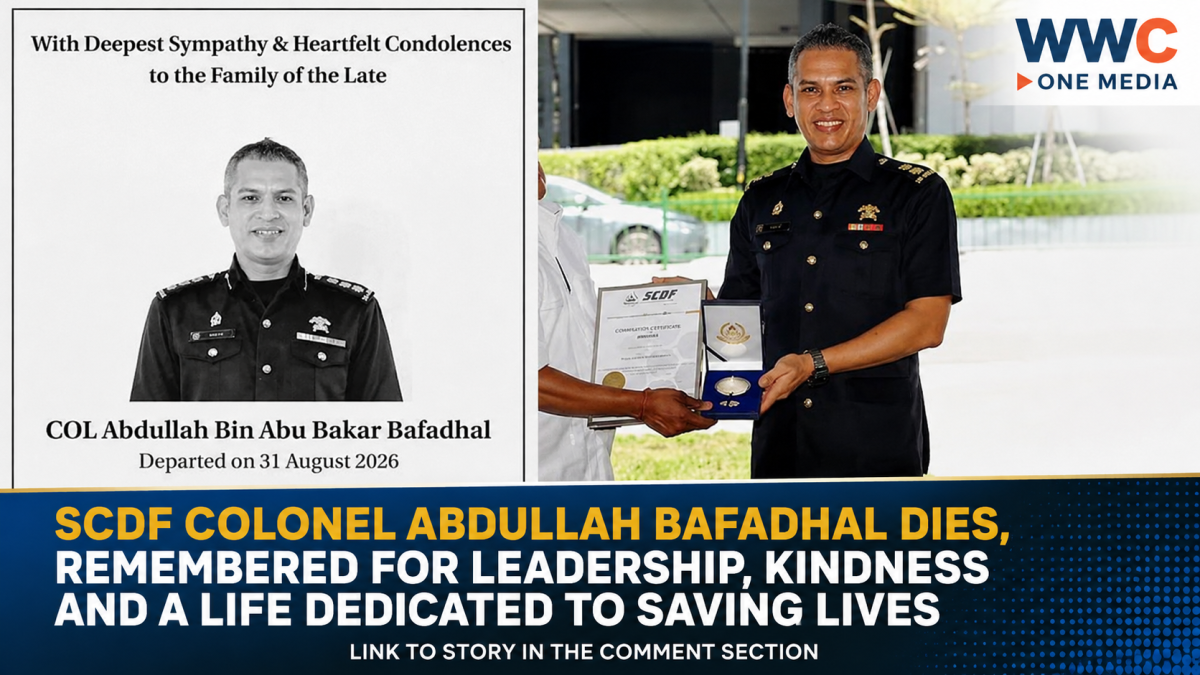
SINGAPORE — Singapore’s emergency-response community is mourning the death of Colonel Abdullah Bin Abu Bakar Bafadhal, a senior Singapore Civil Defence Force (SCDF) officer remembered by former colleagues and community responders as a dedicated leader, mentor and friend.
Colonel Abdullah died on Monday, Aug. 31, 2026, according to his obituary and reports on his passing. News of his death was followed by an outpouring of tributes from people who had worked with or encountered him during his SCDF career.
His death comes after a career spanning multiple SCDF leadership and operational roles, including work focused on strengthening Singapore’s emergency preparedness and community response.
A career built around emergency preparedness
Colonel Abdullah held several senior appointments during his time with SCDF.
He previously served as Head of the Operations Branch at the 2nd SCDF Division and later became Senior Assistant Director for Community Preparedness in the Volunteer and Community Partnership Department. Earlier in his career, SCDF records also identify him in operational roles, including as a Tuas Fire Station Commander.
His work extended beyond frontline emergency operations.
In July 2025, then-Lieutenant Colonel Abdullah was among SCDF officers recognised at the Public Sector Transformation Awards, receiving the Citizen Engagement Excellence Award for his contribution to the Save-A-Life (SAL) initiative.
The award recognised efforts to strengthen public participation in emergency response by giving members of the community lifesaving knowledge, tools and skills. SCDF said the Save-A-Life initiative had been running since 2015.
Helping put lifesaving skills into the hands of the public
The significance of that work goes beyond an award.
Singapore’s community-response system relies partly on members of the public being prepared to act during the crucial minutes before emergency responders arrive.
SCDF’s myResponder programme, for example, alerts registered Community First Responders to nearby cardiac-arrest and fire incidents. Responders can provide assistance such as CPR, use an automated external defibrillator (AED), or help mitigate minor fires when it is safe to do so.
SCDF has continued to highlight the impact of community responders. In one case reported by the agency in 2026, three Community First Responders worked together to revive a man who had suffered cardiac arrest before SCDF arrived.
That broader culture of public preparedness was part of the environment in which Colonel Abdullah worked and contributed.
Colleagues remember more than his uniform
Following news of his death, tributes focused not only on his professional achievements but also on the way he treated people.
One person who recalled meeting Abdullah around 2009 described him as a naturally gifted and charismatic leader, while stressing that his kindness was what stood out most. Another former colleague remembered him as a leader who cared deeply about the officers under his charge.
Other tributes described him as a leader, mentor and friend, with colleagues saying he embodied SCDF’s values by leading through example and influencing the people around him.
The reaction reflects a familiar reality within emergency services: a leader’s influence is often measured not only by the positions he holds, but by the people he develops and the communities he helps prepare.
His legacy extends beyond one award
Colonel Abdullah’s career illustrates the changing role of emergency-response organisations such as SCDF.
Modern civil defence is not limited to firefighters and paramedics arriving after an emergency has already occurred. It increasingly involves public education, community preparedness, technology and partnerships designed to give people the ability to respond during the first critical moments of an incident.
The Save-A-Life initiative, which received national recognition in 2025, was one example of that approach. SCDF said the programme was recognised for going beyond traditional government service by engaging citizens and external partners to strengthen emergency response.
A loss felt across the SCDF community
The circumstances surrounding Colonel Abdullah’s death have not been publicly detailed in the reporting reviewed for this article, so no cause of death should be inferred or reported as fact.
What has emerged clearly, however, is the impact he left on colleagues, community responders and others who encountered him during his years of service.
For those who knew him, the tributes point to a legacy that goes beyond rank.
He was remembered as a man who led, mentored and cared — and whose work helped strengthen the ability of ordinary people to save lives before professional responders could reach the scene.
His passing leaves a notable void in Singapore’s civil-defence community, but the principles he championed — preparedness, service, leadership and helping others — continue through the systems and people he helped shape.
WWC ONE MEDIA J.M.D


Leave a Reply