
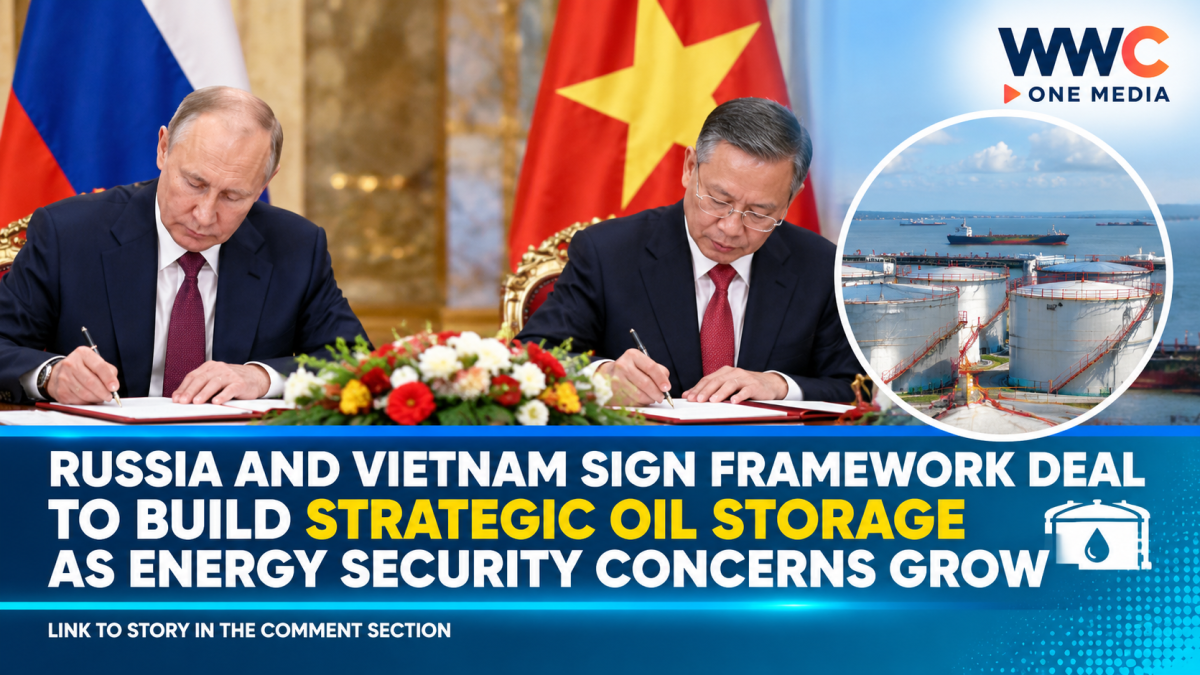
MOSCOW — Russia and Vietnam have taken a new step in strengthening their energy partnership after signing a framework agreement to cooperate on establishing strategic oil storage in Vietnam.
The agreement was signed between Russian state-owned oil company Zarubezhneft and Vietnamese state energy firm Petrovietnam during Vietnamese leader To Lam’s state visit to Russia.
While key details — including the proposed storage capacity, investment costs and construction timeline — have not yet been disclosed, the agreement signals Hanoi’s growing focus on protecting its energy supplies during an increasingly volatile period for global oil markets.
A New Push for Vietnam’s Energy Security
Russian President Vladimir Putin said Moscow had proposed working with Vietnam to develop strategic fuel reserves, underlining Russia’s intention to deepen its long-standing energy relationship with Hanoi.
For Vietnam, the agreement could eventually provide an additional layer of protection against supply disruptions and sharp swings in global oil prices.
Strategic oil reserves allow countries to store crude oil or petroleum products that can be tapped during emergencies, supply shortages or major market disruptions.
The framework agreement, however, does not yet mean that a final project has been approved.
Further negotiations will be needed to determine how the proposed storage system would be developed and financed.
Vietnam Had Earlier Called for More Russian Investment
The deal follows earlier discussions between Vietnamese and Russian officials over strengthening energy cooperation.
In March, Vietnamese Prime Minister Pham Minh Chinh called on Zarubezhneft to increase its investments and help secure long-term crude oil supplies for Vietnam.
Russian Deputy Prime Minister Alexander Novak later said Moscow was ready to support Vietnam’s plans to develop strategic oil storage.
The latest framework agreement now gives those discussions a more formal foundation.
Why the Timing Matters
Vietnam has faced growing pressure to secure stable energy supplies as global oil markets remain vulnerable to geopolitical tensions and supply disruptions.
Earlier this year, Vietnam increased imports of refined petroleum products to offset reduced crude supplies for domestic refineries amid disruptions linked to the Middle East conflict. The increased fuel imports also contributed to higher consumer prices and pressure on the country’s trade balance.
Against that backdrop, developing a larger strategic reserve could become increasingly important for Vietnam’s long-term energy security.
Russia and Vietnam Deepen Long-Standing Energy Ties
Energy has remained one of the strongest pillars of the relationship between Moscow and Hanoi.
Russia and Vietnam have a decades-long history of cooperation in oil and gas, while Zarubezhneft has maintained a significant presence in Vietnam’s energy sector.
The latest agreement also comes as Vietnam’s leadership pursues stronger relationships with multiple major powers amid global economic uncertainty.
To Lam’s September visit to Russia is part of a wider series of international engagements aimed at strengthening Vietnam’s economic and strategic partnerships.
Details Still Remain Under Wraps
Despite the significance of the announcement, several major questions remain unanswered.
Authorities have not disclosed:
- The size of the proposed strategic oil reserve
- Whether it will primarily store crude oil or refined petroleum products
- The location of the facilities
- The total investment required
- The construction timetable
- How the reserve would be financed and operated
The framework agreement means the two sides have agreed to cooperate in principle, but further negotiations and formal project approvals will likely be required before construction can begin.
The Bottom Line
Russia and Vietnam are moving closer to building a new strategic oil reserve in Vietnam, potentially giving Hanoi greater protection against future energy supply disruptions.
The framework deal between Zarubezhneft and Petrovietnam is another sign of deepening energy cooperation between the two countries.
But with the project’s size, cost and timeline still undisclosed, the biggest questions remain ahead.
For Vietnam, the deal could become more than just another energy agreement — it may be the foundation of a crucial safety net for the country’s future fuel security.
WWC ONE MEDIA J.M.D




Leave a Reply