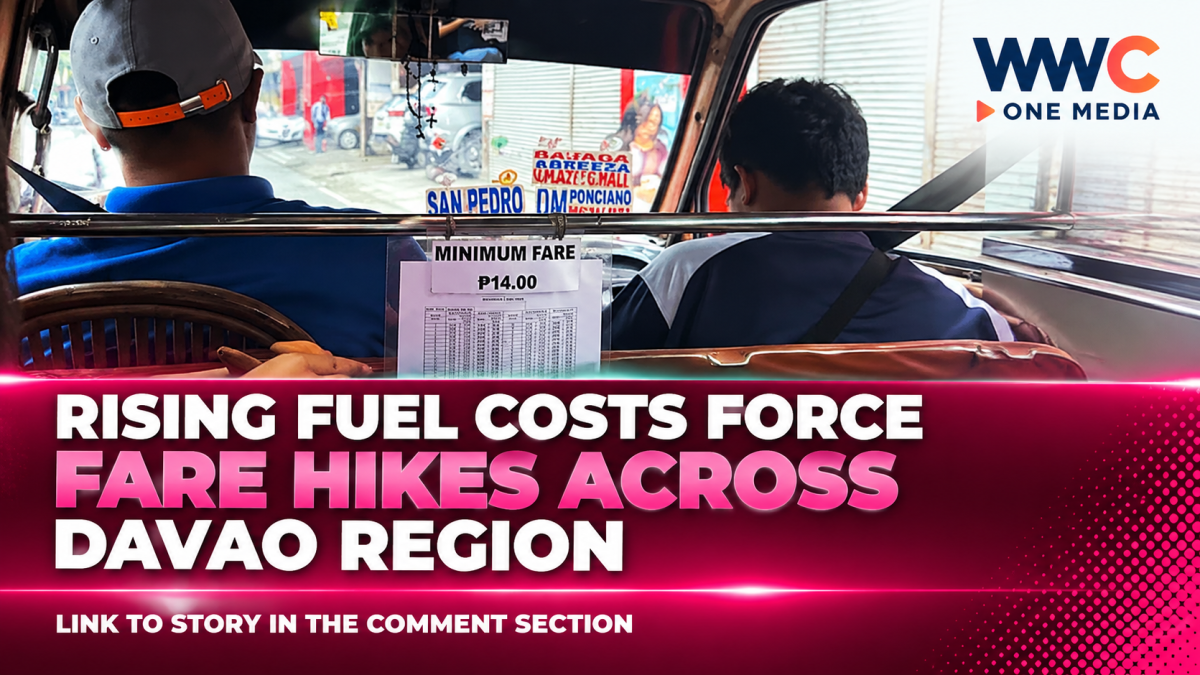
Rising fuel prices are putting increasing pressure on public transportation operators across the Davao Region, prompting the implementation of provisional fare increases as transport groups warn that some fleets could be reduced if operating costs continue to climb.
The Land Transportation Franchising and Regulatory Board implemented provisional fare adjustments on September 28 covering public utility jeepneys, public utility buses, taxis and transport network vehicle services.
The adjustments come as transport cooperatives report mounting fuel expenses that are making it increasingly difficult to keep vehicles operating at current fare levels. Some cooperatives have warned that they may pull as much as half of their active fleets if diesel prices continue rising.
The pressure on operators has been building as fuel prices remain a major component of daily operating expenses. Transport groups have also been calling for government assistance as higher fuel costs reduce drivers’ take-home earnings and increase the cost of maintaining vehicles.
The fare adjustments are intended to provide some relief to operators while keeping public transportation services running. However, higher fares also add to the daily expenses of commuters who rely on public utility vehicles for work, school and other essential trips.
The situation is unfolding alongside broader transport-sector concerns over fuel prices and government support. In Cebu, for example, transport groups proceeded with a planned two-day strike over fuel costs, fare levels and other industry concerns, highlighting the pressure being felt by drivers and operators in different parts of the country.
In Davao City, transport operators have previously raised similar concerns about declining earnings as fuel costs increase. Tricycle groups have also sought higher minimum fares, arguing that existing rates have become difficult to sustain amid higher fuel and operating expenses.
For commuters across the Davao Region, the latest fare adjustments mean higher transportation costs at a time when household budgets are already being squeezed by increases in other essential expenses.
Transport authorities and operators now face the challenge of balancing the financial viability of public transportation with the need to keep fares manageable for the commuting public as fuel-market pressures continue to affect the sector.