
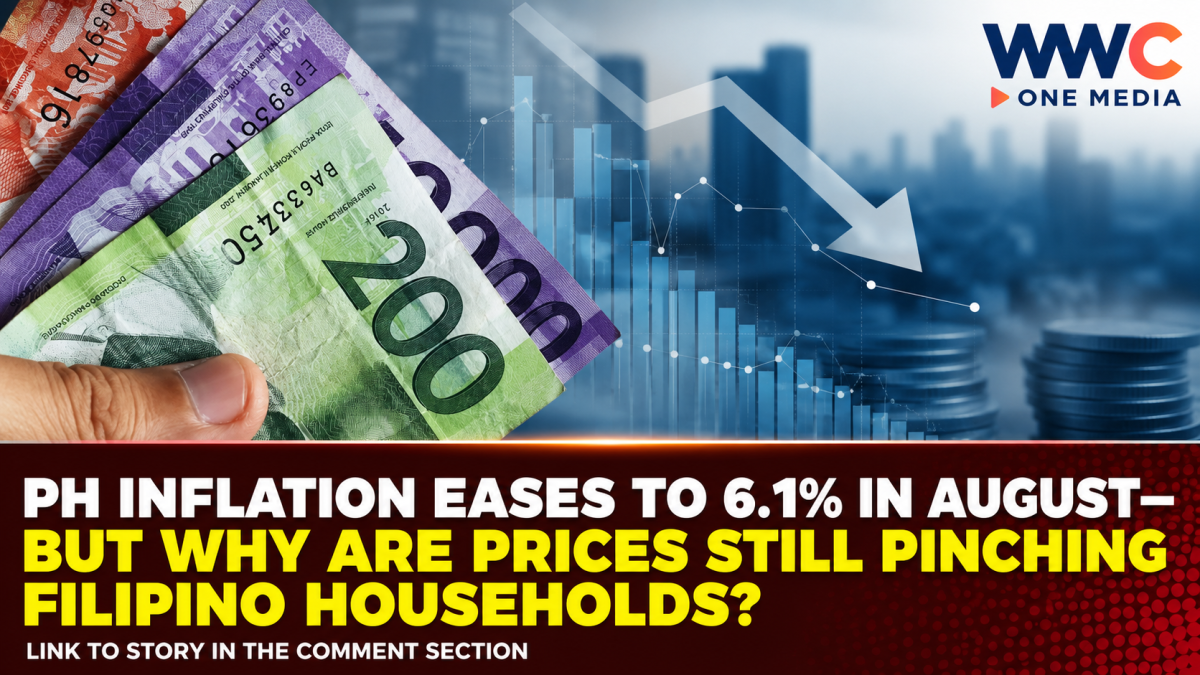
MANILA, Philippines — There is a small measure of relief for Filipino consumers as the country’s headline inflation rate eased to 6.1 percent in August 2026, extending its decline for a fourth consecutive month.
The latest figure, released by the Philippine Statistics Authority (PSA) on Friday, September 4, was slightly lower than the 6.2 percent recorded in July.
But while inflation is moving in the right direction, the numbers still point to a difficult reality for households: prices are continuing to rise, just at a slower pace.
The August reading also remained well above the government’s preferred 2 to 4 percent inflation target range, while the average inflation rate for January to August climbed to 5.2 percent.
Fourth straight month of easing
The latest data mark another step down from the inflation surge earlier this year.
Headline inflation reached 7.2 percent in April, before easing to 6.8 percent in May, 6.4 percent in June, 6.2 percent in July, and finally 6.1 percent in August.
That makes August the lowest inflation reading since March 2026, when inflation stood at 4.1 percent.
The downward trend is significant because inflation had accelerated sharply in April, putting additional pressure on food, transportation and other household expenses.
Still, the latest figure is a long way from the relatively low inflation environment Filipinos experienced during much of 2025. The August 2025 inflation rate was only 1.5 percent, according to the BSP’s historical inflation data.
Food prices provide some relief
The PSA said the main reason behind the August slowdown was the slower increase in prices of food and non-alcoholic beverages, which recorded an inflation rate of 4.6 percent.
PSA National Statistician Claire Dennis Mapa identified the slower increase in food prices as the primary factor behind the decline from July’s 6.2-percent inflation rate.
That development is particularly important because food remains one of the biggest expenses for Filipino families.
The Bangko Sentral ng Pilipinas had warned before the release that food prices could remain a major source of pressure, particularly for rice, vegetables, fruits and fish, following weather-related disruptions.
The central bank also pointed to elevated domestic fuel prices as an upside risk, although these pressures could be partly offset by lower meat prices, electricity costs and a stronger peso.
Inflation is slowing—but the cost of living is not going backward
For ordinary consumers, the 6.1-percent figure does not mean prices have fallen by 6.1 percent.
Instead, it means prices are still higher than they were a year earlier, although the pace of increase has slowed.
That distinction matters.
A family that has already been paying substantially more for rice, meat, vegetables, transportation, rent and utilities may not immediately feel relief simply because inflation has moved from 6.2 percent to 6.1 percent.
In other words, inflation easing is not the same as prices becoming cheaper.
BSP had already turned more cautious
The latest inflation figure comes just days after the Bangko Sentral ng Pilipinas (BSP) raised its key policy rate.
On August 27, the Monetary Board increased the target reverse repurchase rate by 25 basis points to 5 percent, citing persistent inflation risks.
The overnight deposit and lending facility rates were likewise raised to 4.5 percent and 5.5 percent, respectively.
The BSP said inflation risks remained elevated even as headline inflation had started to ease, with core inflation still above the central bank’s tolerance range.
The move underscores the difficult balancing act facing monetary authorities: inflation has begun to cool, but price pressures remain strong enough to warrant caution.
August result was within expectations
The August result also came close to what economists had anticipated.
A poll of 10 economists conducted by The Philippine Star produced a median forecast of 6.1 percent, exactly matching the eventual PSA figure.
Economists had warned that food and fuel prices, weather-related supply disruptions and peso movements could keep inflation elevated despite the continuing slowdown.
The BSP itself had previously projected August inflation at 5.5 percent to 6.5 percent, reflecting the uncertainty surrounding food, fuel and weather-related price pressures.
What happens next?
The August inflation report offers some breathing room, but it does not yet signal that the country has completely escaped its inflation problem.
The biggest challenge will be whether the slowdown can continue in the coming months.
Food supply disruptions, global energy prices, weather disturbances and movements in the peso could still influence consumer prices.
The BSP has also already revised its full-year inflation outlook. During its August monetary policy meeting, the central bank lowered its 2026 inflation forecast to 6.1 percent from 6.4 percent, while raising its 2027 forecast to 5.4 percent from 4.5 percent.
For Filipino households, the message from the latest data is therefore mixed:
Inflation is finally cooling—but prices remain elevated.
The real test now is whether the four-month decline can continue long enough to bring inflation back toward the government’s 2-to-4-percent target and, eventually, provide more noticeable relief to household budgets.
Until then, a 6.1-percent inflation rate may look better on paper—but for many Filipinos, the high cost of everyday necessities remains very real.




Leave a Reply