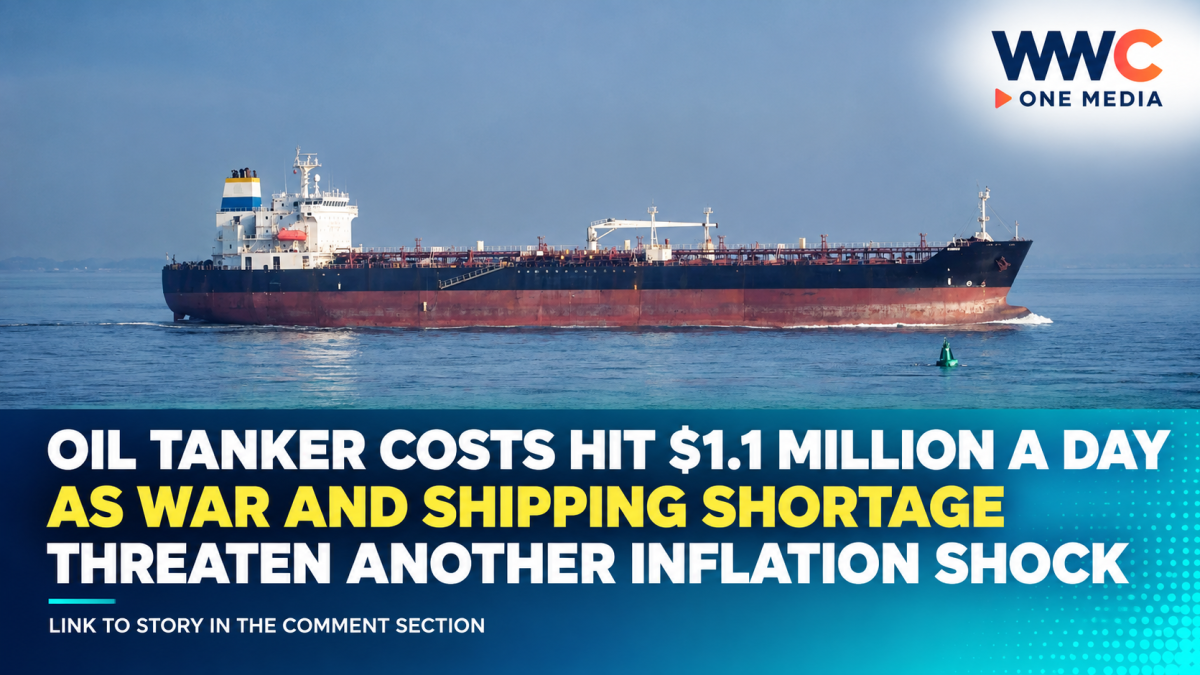
The cost of transporting crude oil is surging as war, disrupted trade routes and a shortage of large tankers create a new pressure point for global energy markets.
Daily rates for Very Large Crude Carriers, or VLCCs, on the key Persian Gulf-to-Asia route have climbed to about $1.1 million, roughly 12 times their level only a few months ago. Earlier this year, rates around $50,000 to $100,000 a day were considered strong for shipowners.
The extraordinary increase reflects the growing difficulty of moving oil through and around the Strait of Hormuz amid the conflict involving Iran. Longer voyages and shuttle operations are tying up vessels for extended periods, leaving fewer tankers available for other shipments.
The tanker shortage has been aggravated by attacks on alternative export infrastructure. Saudi Arabia’s East-West pipeline, which provides a route that can bypass Hormuz, was disrupted by a drone attack earlier this month. Although operations have resumed, the pipeline has not immediately returned to full capacity, pushing more crude toward Gulf shipping routes.
The consequences extend beyond shipowners. Higher freight costs can squeeze refiners and traders and eventually add to the price of fuels and other petroleum products. Shipping costs on the affected route have become so high that they can represent a significant portion of the value of the cargo being transported.
The underlying problem is also structural. The global VLCC fleet is relatively small, with about 925 vessels, meaning that disruptions involving a relatively modest share of the fleet can have an outsized effect on freight rates and the availability of ships.
Aging vessels and years of limited investment have added to the pressure. Industry data show that the crude tanker fleet contains a substantial number of older ships, while the current crisis has sharply increased incentives to order new vessels. More than 217 VLCCs had reportedly been commissioned in 2026 by mid-September, roughly double the previous year’s total.
Another complication is the growth of so-called dark-fleet or shadow-fleet shipping, involving vessels that operate with opaque ownership structures or outside conventional Western insurance and regulatory arrangements. While such vessels can provide additional transportation capacity, their use can also complicate efforts to track global tanker availability and enforce sanctions.
The shortage is encouraging major energy and trading companies to secure their own shipping capacity. Trafigura, for example, recently launched a tanker business that initially includes 14 supertankers, reflecting how companies are seeking greater control over transportation costs as freight markets become increasingly volatile.
For oil-importing economies, the issue is bigger than the price of crude itself. Even if benchmark oil prices eventually ease, exceptionally high shipping costs can keep delivered energy prices elevated and delay the impact of cheaper crude reaching consumers.
The surge in tanker rates therefore adds another layer of uncertainty to an already disrupted global energy market. With limited numbers of large vessels, longer voyages and continued security risks around key shipping routes, the cost of simply moving oil has become a potential source of renewed inflation pressure.