
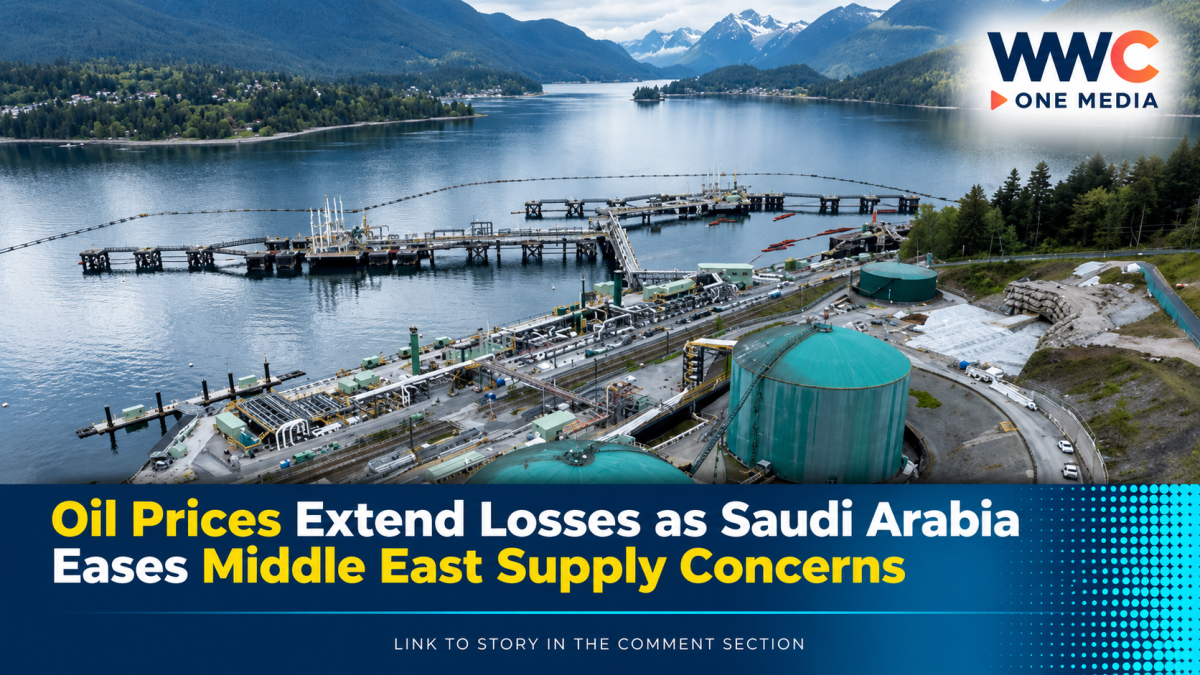
Oil prices fell further on Thursday as concerns over supply disruptions in the Middle East eased, although both major benchmarks remained above US$100 a barrel.
Brent crude futures settled US$1.01, or 0.95 per cent, lower at US$104.82 a barrel, while US West Texas Intermediate crude fell 52 US cents, or 0.5 per cent, to US$101.91. Both benchmarks had dropped about 3 per cent on Wednesday.
The latest decline came after reports that Saudi Arabia was offering additional crude cargoes to Asian refiners through ship-to-ship transfers off Oman’s Sohar port.
The extra shipments are expected to offset part of the supply disruption caused by attacks on Saudi Arabia’s East-West oil pipeline, which carries crude towards the Red Sea port of Yanbu.
Saudi Arabia is also working to restore part of the pipeline’s capacity. US Energy Secretary Chris Wright said crude could begin flowing through the damaged pipeline again within days.
The developments helped ease some of the market’s immediate supply concerns after oil prices surged to around four-month highs earlier in the week.
Crude loadings at Yanbu had been suspended following attacks on the pipeline, while Saudi Arabia had reportedly cancelled some oil cargoes to European customers.
The pipeline disruption has raised concerns about the amount of oil available on global markets. Traders have estimated that a prolonged shutdown could put as much as 4 per cent of global oil supply at risk.
However, the additional shipments through Oman are not expected to fully replace the barrels affected by the disruption.
The wider conflict remains a major source of uncertainty for energy markets. Saudi Arabia and Yemen’s Iran-backed Houthi movement exchanged fresh attacks on Thursday, increasing concerns that the conflict could spread further across the region.
Investors are also watching developments around the Strait of Hormuz and other key shipping routes, where disruptions could further tighten global energy supplies.
Market expectations of a possible easing of tensions have provided some additional pressure on prices. Traders are also looking ahead to next week’s planned meeting between US President Donald Trump and Chinese President Xi Jinping.
Despite the latest declines, oil prices remain significantly elevated because of the continuing risks to production, transportation and exports across the Middle East.
The direction of the market in the coming days will depend largely on how quickly Saudi Arabia can restore disrupted infrastructure, how much additional crude can reach international buyers and whether the wider conflict continues to threaten regional energy supplies.




Leave a Reply