
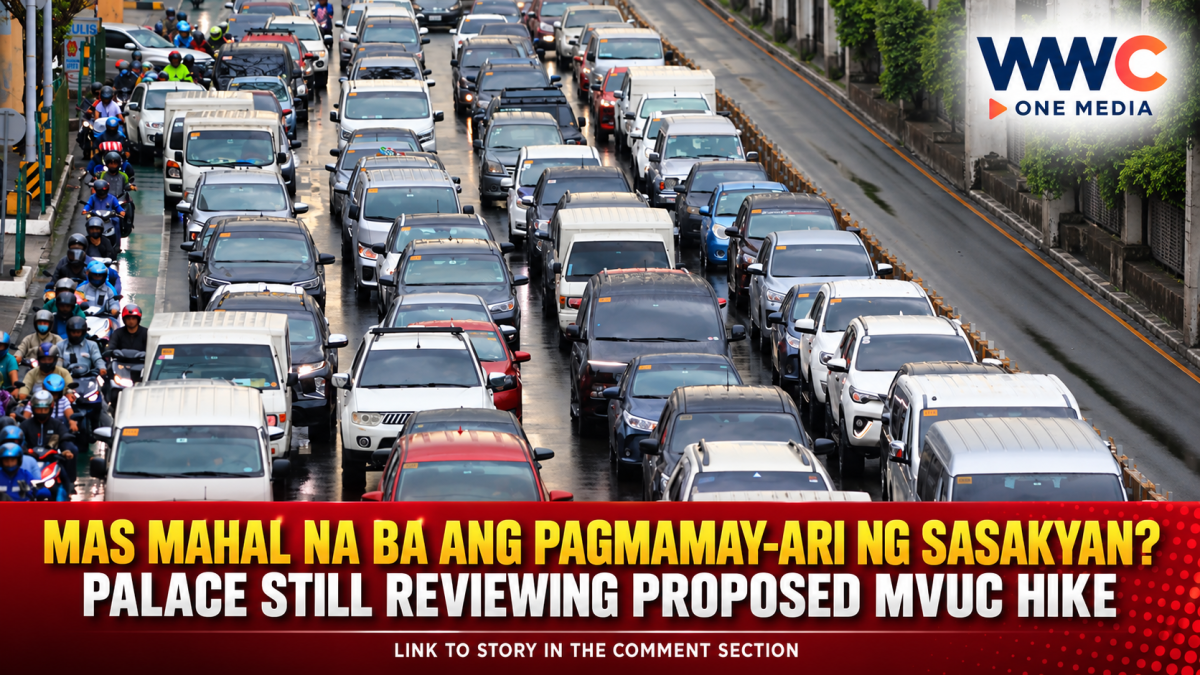
MANILA, Philippines — Malacañang has yet to make a final decision on a proposal that could significantly increase the fees paid by Filipino motorists, as the Department of Finance (DOF) pushes for an overhaul of the decades-old Motor Vehicle Users Charge (MVUC).
Palace Press Officer Claire Castro said the proposed MVUC increase remains under review and stressed that President Ferdinand R. Marcos Jr. has not yet taken a final position on the measure.
The government, she said, must carefully weigh the need to raise revenues against the additional financial burden that higher vehicle charges could place on motorists.
What Is the Proposed MVUC Hike?
The DOF is proposing to adjust MVUC rates, which it said have remained largely unchanged since 2004 and have lost value over time because of inflation.
Based on details discussed during stakeholder consultations on the proposed tax reform package known as the Progress Bill, some MVUC rates could increase by about 109%.
For example, the proposed MVUC for a light passenger car could rise to P3,344 from the current P1,600, while the charge for trucks could increase to P6,170 from P2,952. The proposal would cover various types of vehicles, including private, government and for-hire vehicles.
The DOF has argued that an adjustment is needed because revenues from the existing rates have been eroded by inflation while the cost of maintaining roads continues to increase.
Palace: No Final Decision Yet
Castro emphasized that the proposal is still being studied and should not yet be treated as a final government policy.
Malacañang said officials need to determine whether the proposed increase can effectively boost government revenues without placing an excessive burden on vehicle owners.
The Palace also acknowledged that tax measures inevitably affect consumers and motorists, making a careful review necessary before President Marcos makes a final decision.
Where Does the MVUC Money Go?
The MVUC is a mandatory charge collected in connection with motor vehicle registration. According to government information, the fee is intended to support programs related to road maintenance and air pollution control.
Current charges vary depending on the classification, type and other specifications of a vehicle. Official LTO schedules show that motorcycles and other vehicle categories are subject to different MVUC rates, while larger and heavier vehicles generally face higher charges.
Part of a Bigger Tax Reform Plan
The proposed MVUC increase is only one component of the broader DOF tax reform initiative.
The Progress Bill is also examining changes involving taxes on high-value and non-essential goods. Among the proposals discussed are a higher tax on certain luxury consumption, the inclusion of private aircraft and recreational vessels in the tax framework, and a proposed new 75% excise tax tier for automobiles valued at P8 million and above.
The government has said the broader tax reforms are intended to strengthen revenue collection while supporting tax relief and other economic measures.
Why the Proposal Could Be Politically Sensitive
The MVUC proposal comes as the Marcos administration has repeatedly acknowledged the financial pressure facing Filipino commuters, motorists and workers.
Earlier this year, President Marcos ordered the suspension of planned public transport fare increases, saying it was not the right time to impose additional costs on Filipinos amid economic pressures linked to rising fuel prices and the Middle East crisis. The administration subsequently rolled out transport assistance, including fare discounts, free rides and other support measures.
That backdrop could make the proposed MVUC increase particularly sensitive, especially if motorists see it as another added cost at a time when households are already dealing with transportation and fuel expenses.
What Happens Next?
For now, motorists do not need to pay higher MVUC rates because the proposal has not been approved.
Malacañang said the measure remains under review, and President Marcos has yet to announce his final position.
The key question now is whether the government can find a compromise between generating additional revenue for public services and infrastructure and protecting motorists from another increase in the cost of owning and operating a vehicle.
For millions of Filipino motorists, the next Palace decision could determine whether vehicle registration costs stay the same—or become significantly more expensive.
WWC ONE MEDIA J.M.S




Leave a Reply