
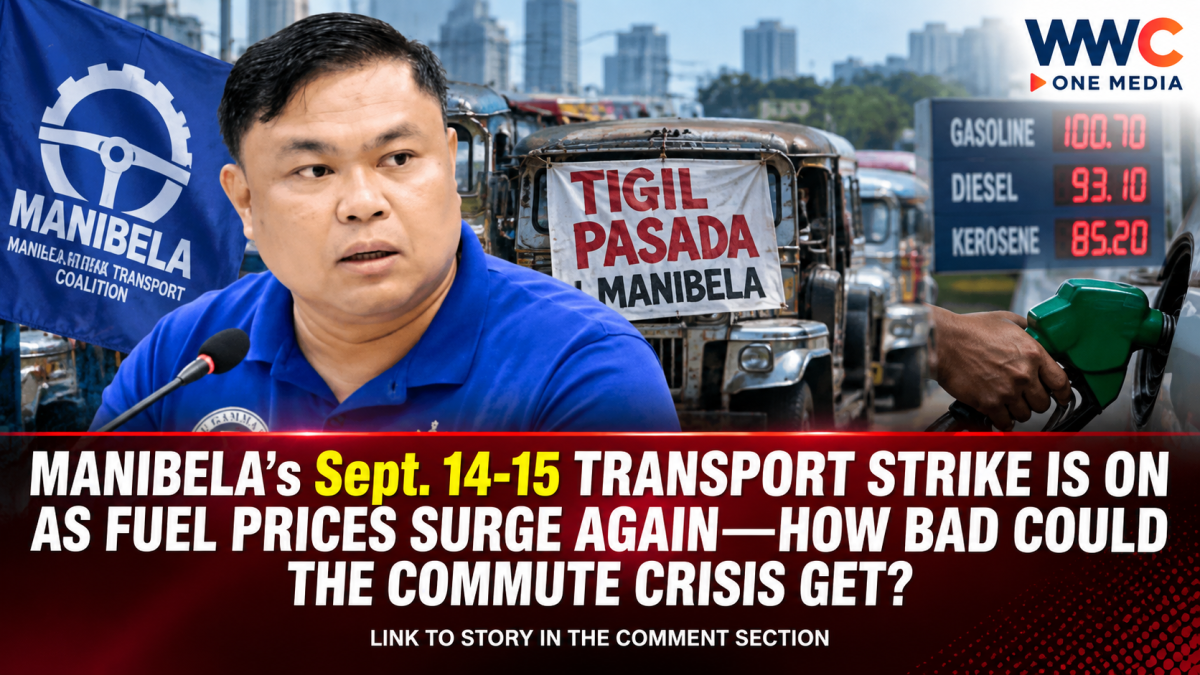
MANILA, Philippines — Commuters across the Philippines could face another difficult start to the week as transport group MANIBELA confirmed plans to stage a two-day transport strike on September 14 and 15 in protest of continuing fuel price increases.
The planned nationwide protest comes as Filipino motorists and public utility vehicle drivers brace for yet another possible major increase in pump prices, adding more pressure to drivers whose earnings have already been squeezed by months of volatile fuel costs.
According to an earlier report by INQUIRER.net, MANIBELA initially announced a nationwide transport strike for September 14 over anticipated fuel price increases. The group later confirmed that the protest would run for two days, from Monday through Tuesday.
Fuel Prices Could Rise Again
The strike comes after a major fuel price increase earlier this month.
According to GMA News Online, oil companies recently raised gasoline prices by P4.69 per liter, diesel by P5.18 per liter and kerosene by P5.58 per liter. The Department of Energy attributed the increases to rising international oil prices linked to tensions involving the United States and Iran, as well as the weakening Philippine peso against the US dollar.
The pressure may not be over.
ABS-CBN News reported on September 12 that fuel prices were again expected to increase in the coming week, with gasoline potentially rising by as much as P6 per liter. Meanwhile, an earlier INQUIRER.net report said another increase of up to around P5 per liter was being anticipated for September 15 amid continuing conflict in the Middle East.
For jeepney and other public utility vehicle drivers, repeated increases can quickly eat into already limited daily earnings.
MANIBELA Blasts Government Response
MANIBELA chairman and president Mar Valbuena has criticized the government’s response to the continuing oil price increases, particularly the Department of Energy.
Reports from several Philippine news organizations said the transport group believes government measures have not done enough to protect drivers from rapidly rising fuel costs.
Radyo Pilipinas reported that Valbuena questioned whether existing interventions were sufficient as pump prices continued to climb. The report said the government was preparing measures, including free rides through various agencies and local government units, to help commuters affected by the planned strike.
MANIBELA has also raised concerns over the implementation of fuel subsidies for drivers.
According to reports by Remate and Bombo Radyo, Valbuena questioned the fuel subsidy system and called for stronger government action as drivers face increasing operating expenses.
PISTON May Also Back the Protest
The planned MANIBELA action could gain wider support.
A September 12 report indicated that PISTON was preparing to support MANIBELA’s two-day transport strike while also pushing for stronger action against continued fuel price increases. PISTON has maintained that government assistance remains insufficient for many drivers and operators affected by soaring fuel costs.
That could raise concerns about possible disruptions in more areas if other transport groups decide to participate.
Why Are Philippine Fuel Prices Rising?
The latest round of fuel price increases has been linked to developments beyond the Philippines.
The Department of Energy has pointed to elevated global oil prices amid tensions and conflict in the Middle East, particularly involving the United States and Iran. The weaker Philippine peso has also added to the cost of importing petroleum products, according to reports.
INQUIRER.net reported earlier this week that gasoline and diesel prices had reached more than P100 per liter in some areas, highlighting the growing burden on motorists, transport workers and consumers.
Higher fuel prices do not only affect vehicle owners.
They can also contribute to higher transportation costs, increased delivery expenses and potentially higher prices for goods and services.
What Commuters Should Expect on September 14-15
The government and local authorities are expected to prepare contingency measures to minimize disruptions caused by the transport strike.
Radyo Pilipinas reported that government agencies and some local governments were preparing free ride programs and other assistance for passengers who could be affected by the two-day protest.
However, the actual impact will depend on how many drivers and transport groups participate in the strike and which areas see the strongest turnout.
Commuters are advised to monitor announcements from their local governments, transport authorities and schools or workplaces regarding possible alternative transportation arrangements.
A Growing Crisis for Drivers and Commuters
The September 14-15 strike is the latest sign of growing frustration among transport workers over the country’s continuing fuel price crisis.
MANIBELA and other transport groups have staged protests this year over rising oil prices, subsidies and the growing financial burden on public utility vehicle drivers. Previous protests have included calls for fuel price rollbacks and additional government support.
Now, with another possible round of price increases looming, drivers are once again preparing to stop operations and take their grievances to the streets.
The biggest question is whether the two-day strike will remain limited to MANIBELA members—or whether more transport groups will join, potentially creating wider disruptions for commuters across the country.
As September 14 approaches, millions of Filipino commuters may soon find out just how serious the impact of another fuel price shock could be.

Leave a Reply