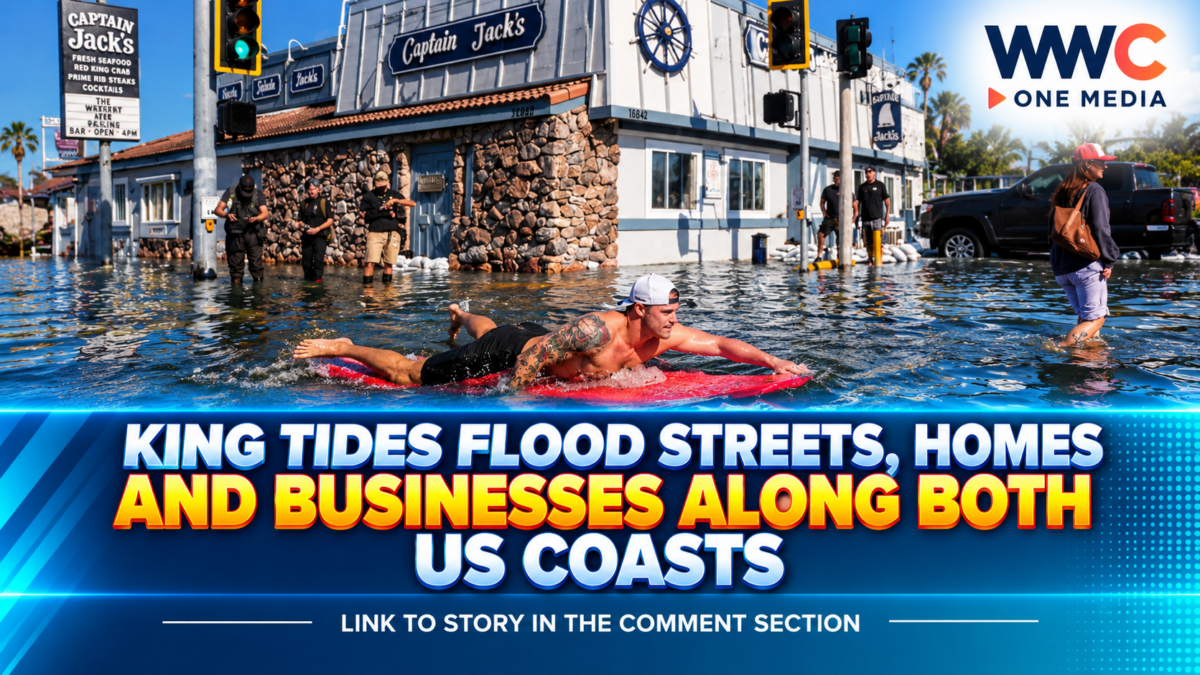
Exceptionally high tides have inundated coastal communities across the United States, flooding streets and forcing seawater into homes and businesses in California, Florida and the Carolinas.
The flooding began earlier this week as a full moon contributed to unusually high tides, with forecasters warning that some areas could continue experiencing coastal inundation into the weekend.
Known as king tides, these exceptionally high water levels occur when the gravitational forces of the Earth, moon and sun combine to produce higher-than-normal tides. Although the phenomenon happens several times a year, this week’s conditions have been intensified by additional weather and ocean factors.
California Communities Face Record-Breaking High Tides
Southern California experienced some of the most noticeable flooding, with water spilling onto roads and residential properties in coastal communities.
In Huntington Beach, residents were seen placing sandbags outside their homes as seawater pushed inland. Some people used paddleboards and surfboards to move through flooded streets, while authorities closed sections of the Pacific Coast Highway after floodwaters covered parts of the road.
Record high tides were reported in Santa Barbara, San Pedro, San Diego and nearby La Jolla.
In Newport Beach, businesses and waterfront properties were affected as water moved through coastal areas. Some residents said the flooding was more severe than what they had experienced in previous years.
Northern California also faced coastal flooding, particularly in low-lying areas near shorelines and tidal waterways. Forecasters warned that minor flooding could continue through Saturday during peak high tides.
Florida and the Carolinas Also Experience Coastal Flooding
The effects were not limited to the Pacific coast.
Parts of Florida’s Atlantic coastline experienced flood warnings, with seawater covering streets and making access to waterfront businesses and venues difficult.
In Fort Lauderdale, visitors attending a major in-water boat show faced flooded roads near marinas, hotels and convention facilities.
Virginia Key, a barrier island near Miami, recorded its highest king tide and third-highest water level in approximately three decades, according to a National Weather Service meteorologist.
Coastal communities in South Carolina, including Charleston and Myrtle Beach, also reported street flooding. Meanwhile, officials warned that dangerous rip currents and rough surf could affect beaches as far north as North Carolina’s Outer Banks.
Meteorologists attributed Florida’s worsening conditions partly to strong high pressure to the north and low pressure over the Caribbean, which contributed to increased ocean swells.
El Niño and Warmer Ocean Waters Worsen California Flooding
California’s flooding has been intensified by unusually warm ocean conditions associated with a powerful El Niño developing in the Pacific.
Warmer seawater expands, increasing ocean volume and raising sea levels. Meteorologists also pointed to Kelvin waves, which are pulses of warm water that can temporarily elevate sea levels along coastlines.
These conditions have added to the impact of the already exceptionally high astronomical tides.
Recent reports from Southern California indicate that ocean levels have risen significantly above expected conditions, making it easier for high tides to overtop seawalls, flood streets and reach buildings in low-lying coastal neighbourhoods.
The combination of warmer ocean temperatures, elevated sea levels and high tides has raised concerns about what could happen when stronger storms arrive.
Residents Brace for More Flooding in the Coming Weeks
Although king tides are a recurring natural phenomenon, the current episode has highlighted the vulnerability of communities built close to the shoreline.
Officials have urged residents to stay away from beaches during high tides, avoid flooded roads and take precautions around properties that are particularly vulnerable to seawater.
The concern extends beyond the immediate flooding. Higher tides expected in November and December could coincide with winter storms, large ocean swells and heavy rainfall, potentially creating more serious coastal flooding.
For communities already dealing with damaged roads, waterfront facilities and homes, the latest flooding serves as a warning of the growing challenges facing coastal areas as sea levels rise and extreme weather conditions intensify.