
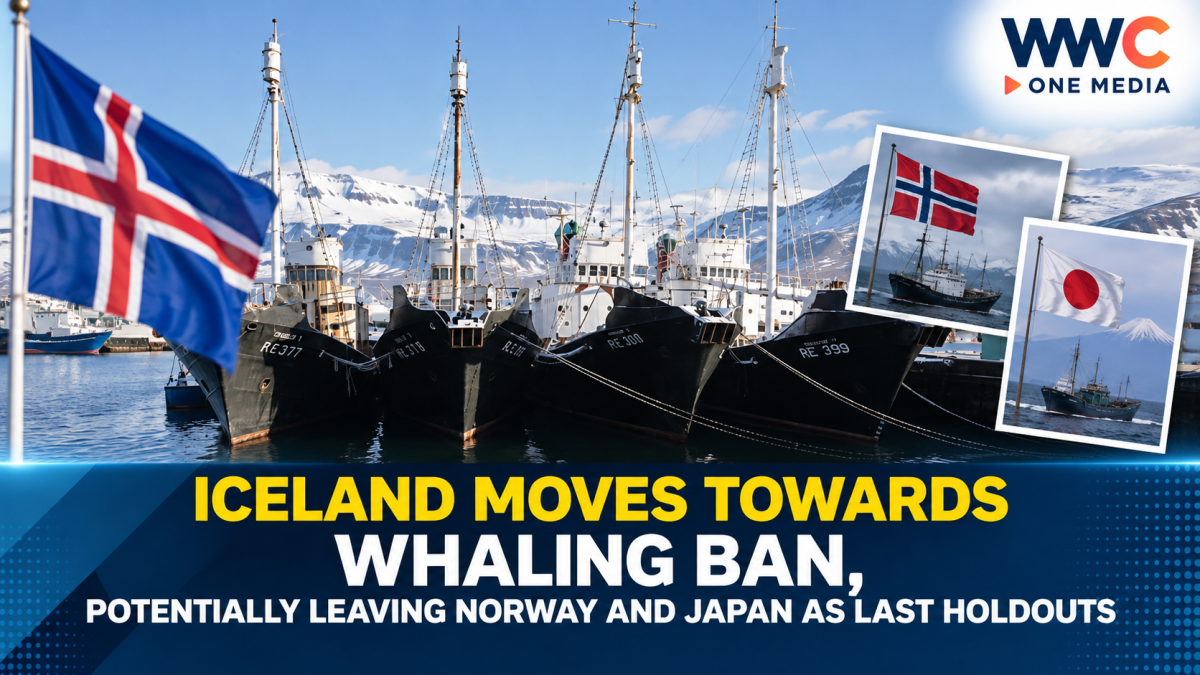
Iceland is preparing legislation that could permanently end commercial whaling in the country, a move that would leave Norway and Japan as the only nations still conducting commercial whaling if the ban is approved.
The Icelandic government said it will introduce a bill in February 2027 to revise the country’s whaling laws, with particular consideration being given to a permanent ban. The government has a majority in parliament, although the proposed ban still needs to go through the legislative process.
The announcement marks a major shift for a country that has continued commercial whaling despite an international moratorium introduced in 1986. Iceland’s whaling industry resumed in 2006, while Norway resumed commercial whaling in 1993. Japan withdrew from the International Whaling Commission in 2019 and subsequently resumed commercial whaling in its territorial waters and exclusive economic zone.
Iceland’s decision comes after years of growing opposition to the practice, including criticism from animal-welfare organisations and public figures.
The country’s last remaining whaling company, Hvalur hf., was issued a five-year licence in 2024. It resumed hunting fin whales this year after a two-year pause, despite mounting domestic opposition and concerns over the treatment of the animals.
As of Sept. 9, 80 fin whales had been caught during Iceland’s 2026 hunting season, according to Humane World for Animals. The quota for fin whales this year allows up to 150 animals to be killed, meaning the current quota had not yet been exhausted when the government announced its plans.
Fin whales are classified as vulnerable by the International Union for Conservation of Nature. They are the primary target of Iceland’s remaining commercial whaling industry and are the second-largest animals on Earth after blue whales.
The controversy intensified after a government-commissioned report examined the welfare implications of Iceland’s whale hunts. The 2023 report found that some harpooned whales could take a prolonged period to die, fuelling calls for tighter restrictions and eventually an outright ban.
There are also questions about the economic future of the industry. Whale meat has limited domestic demand in Iceland, with only a small proportion of Icelanders regularly consuming it. Conservation groups and parts of the tourism industry have argued that whale watching offers a more sustainable economic alternative.
The proposed legislation would not immediately end the current hunting season or automatically cancel the existing licence. Instead, it begins a process that could ultimately change Iceland’s legal position on commercial whaling.
If parliament approves a permanent ban, Iceland would join the growing majority of countries that no longer permit commercial whaling and leave Norway and Japan increasingly isolated internationally over the practice.
The development is also significant because the international moratorium on commercial whaling remains in place, although it does not prohibit all forms of whale hunting. Indigenous communities in certain regions, including parts of Greenland and Alaska, retain provisions allowing whaling for cultural and subsistence purposes.
For Iceland, the coming parliamentary debate could therefore determine whether commercial whaling becomes a relic of the country’s past or remains a regulated industry for years to come.




Leave a Reply