For Wee Teng Wen, managing partner of Singapore-based The Lo & Behold Group, successful hospitality is about more than attractive interiors or attentive service. The most meaningful places are shaped by the memories, rituals and communities that develop within them over time.
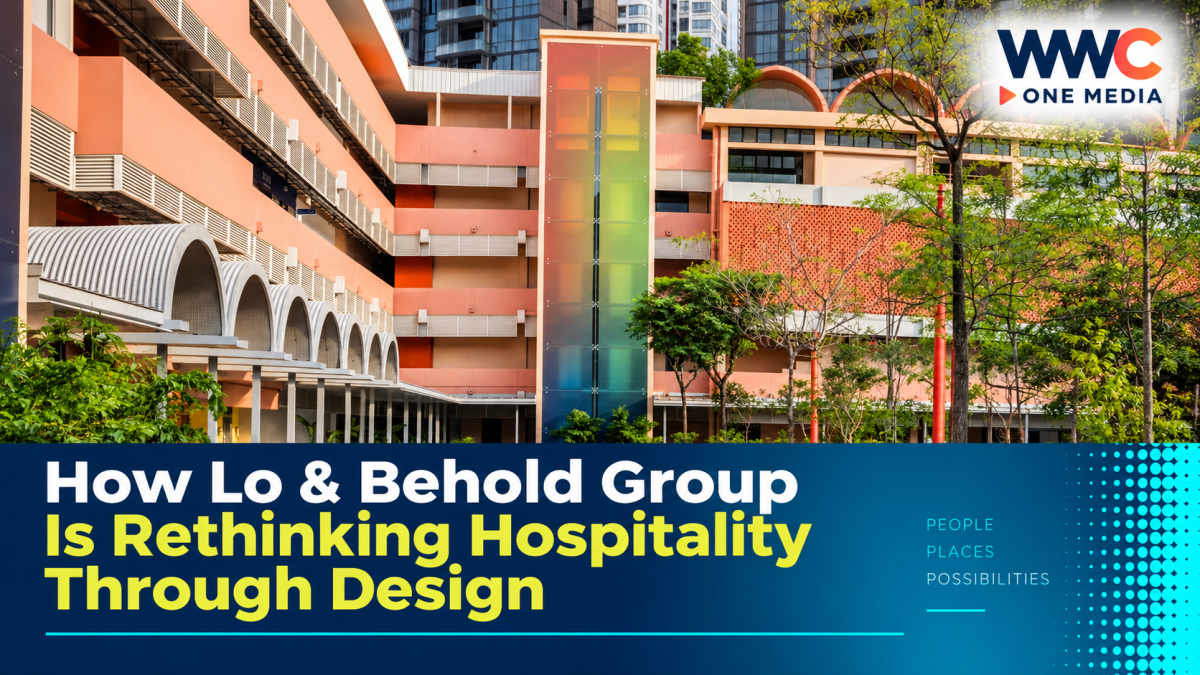
Over the past two decades, Lo & Behold Group has developed restaurants, hotels and civic destinations with a focus on creating spaces where people want to gather, stay and return. Its work includes New Bahru, an adaptive-reuse project that transformed a former school into a destination for creative businesses, restaurants and community activities.
For Wee, adaptive reuse is only the starting point. The greater challenge is making sure a place continues to contribute to its surroundings after the initial excitement of a new opening has faded. Programming, gatherings and everyday interactions are what can turn a well-designed space into a place with a lasting identity.
Designing With Intention
Wee questions the idea that authenticity should be the ultimate goal of contemporary design. Instead, he places greater emphasis on intention — whether a space has been thoughtfully conceived and whether its design serves a clear purpose.
He argues that convenience and visual sameness can make distinctive experiences more valuable. Rather than removing every inconvenience, designers can sometimes create carefully considered experiences that encourage people to slow down and engage more fully with their surroundings.
He points to bathhouse rituals as one example, where design, sequence and deliberate inconvenience can form part of the experience. In his view, intentionality provides a more useful standard than simply attempting to create something that appears authentic.
Beyond What Looks Good
Wee also rejects the notion that good design should necessarily disappear into the background. The spaces people remember most vividly, he says, are not always visually understated.
For him, memorable design engages more than sight. Smell, taste, sound and touch all contribute to how people experience a place. A space that photographs beautifully may attract attention, but genuine attachment develops through the experiences that take place there.
New Bahru illustrates this approach. The project retained elements of the former Nan Chiau High School, including its mid-century architecture, breeze blocks, open corridors and louvred windows. But the building’s transformation did not end with the physical renovation. Restaurants, businesses, gatherings and other activities have helped activate the site and encourage people to return.
Designing for Community
The Lo & Behold Group’s approach reflects a broader shift in hospitality and architecture, where the success of a space is increasingly measured by what happens inside it rather than simply how it looks.
Wee believes design can establish the conditions for social interaction without being able to control exactly what people will do. Architecture can provide the setting, but the people who occupy it ultimately give a place its character and meaning.
This is particularly important as cities become increasingly similar. While global design trends can create polished and visually consistent environments, Wee argues that local history, craftsmanship and context still have an important role to play in giving places their own identity.
The Luxury of Being Present
For Wee, one of the rarest luxuries in contemporary life is the ability to be fully present. Beautiful objects may be accessible to anyone with sufficient resources, but creating an environment that encourages people to put aside distractions and engage with the moment is considerably more difficult.
He compares this quality to the experience of being in nature, where a forest or coastline does not compete for attention but instead gives people space to slow down and let their minds wander. Good physical environments can create a similar sense of presence by reducing distractions and allowing people to experience their surroundings without constant demands for attention.
Ultimately, Wee sees design as a way of setting the stage rather than scripting the entire experience. A building can be carefully planned, but its lasting cultural value depends on the people who use it, the relationships they form and the memories they create there.
For Lo & Behold Group, that means hospitality extends beyond restaurants, hotels and interiors. The goal is to create places that become part of people’s routines and communities — spaces that gain meaning not simply because of how they look when they open, but because of what happens there over time.