
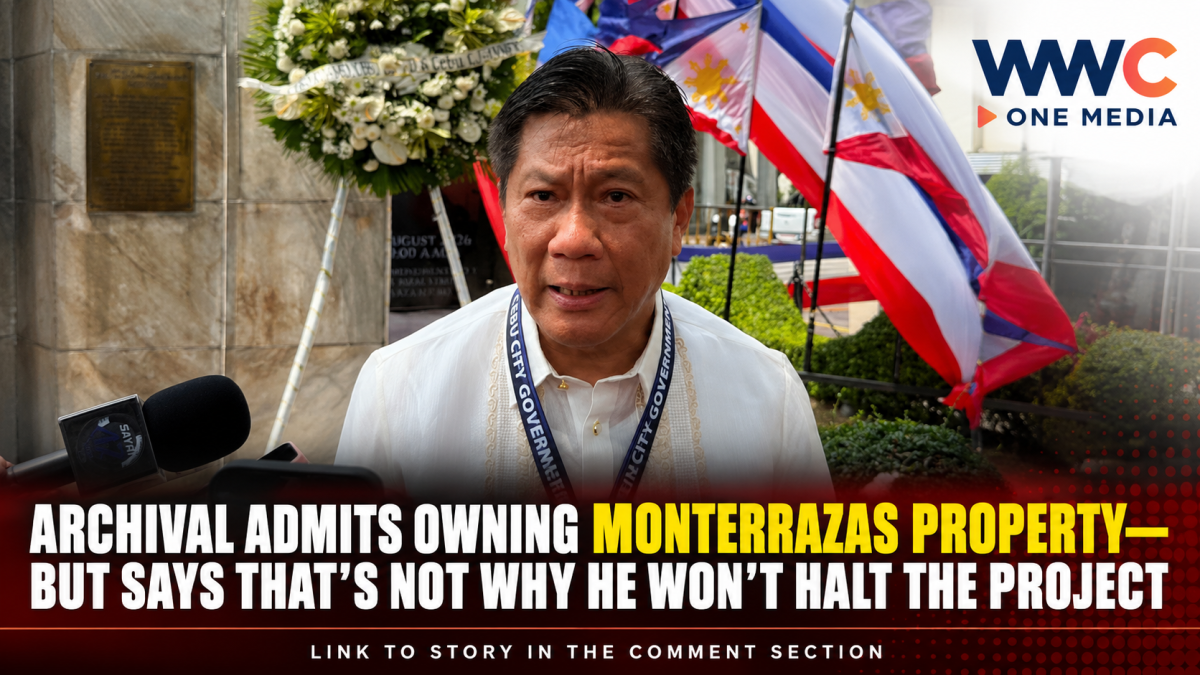
CEBU CITY, Philippines — Cebu City Mayor Nestor Archival Sr. has acknowledged owning property inside the controversial Monterrazas de Cebu development, adding a new layer of scrutiny to the long-running debate over whether the hillside project should be ordered to stop operations.
But Archival has defended his position, maintaining that his refusal to issue a cease-and-desist order (CDO) is based on government findings, due process and the broader circumstances surrounding the project—not his private property ownership.
The controversy comes as Monterrazas de Cebu continues to face public and political scrutiny over environmental compliance and concerns about flooding in communities downhill from the development in Barangay Guadalupe.
Property ownership becomes part of a bigger controversy
Reports published by several Cebu news outlets said a complaint filed before the Office of the Ombudsman raised questions about Archival’s alleged conflict of interest in relation to Monterrazas.
The complaint, filed by Guadalupe resident Ed Karlon Rama, alleges that Archival and his spouse own a 713-square-meter property inside the Monterrazas subdivision. It accuses the mayor of intervening in matters involving the development while allegedly having a private financial interest in the area. Archival is facing allegations under the Anti-Graft and Corrupt Practices Act and administrative accusations, but it is important to note that these are allegations contained in a complaint and have not been proven in court or by the Ombudsman.
The complaint was received by the Ombudsman Area Office for the Visayas on August 19, according to SunStar Cebu and other reports. It seeks, among other things, an investigation into the mayor’s actions concerning calls to halt the project.
Why Archival says a CDO was not issued
Archival has consistently argued that decisions involving Monterrazas should be grounded in official findings and legal authority rather than public pressure alone.
Earlier this year, he said he would respect the Cebu City Council’s position against issuing a CDO at that time, despite recommendations and concerns raised by some city offices regarding alleged permit and compliance issues. Reports noted that city environment and building officials had flagged concerns, while questions over the authority and basis for a stop order remained central to the debate.
By June, Archival remained non-committal on renewed calls—particularly from Vice Mayor Tomas Osmeña—to halt the project, saying the city needed to consider the “bigger picture” and official reports, including measures undertaken to address runoff and flood concerns.
The mayor has also stressed that Monterrazas must comply with local ordinances even after environmental regulators allowed the project to resume operations.
DENR lifted its cessation order after corrective measures
The environmental picture surrounding Monterrazas has also changed significantly since the project’s earlier suspension.
In April 2026, the Department of Environment and Natural Resources’ Environmental Management Bureau in Central Visayas lifted its cessation-of-operations order against the development after the project’s proponent, Mont Property Group Inc., completed documented remedial works, met compliance milestones and settled penalties, according to the Philippine News Agency and GMA News.
Among the corrective measures cited by the EMB were the construction and enhancement of 23 detention ponds with a combined capacity of approximately 52,468 cubic meters, designed to regulate surface runoff and reduce peak water flows toward downstream communities. Government inspections also documented stabilization and erosion-control measures at the site.
That development, however, has not ended the public debate.
Critics and some residents continue to question whether the corrective measures are sufficient and whether continued development could worsen flooding risks. The project has remained under intense scrutiny following severe flooding that affected downstream communities in late 2025, while officials and the developer have pointed to multiple factors in assessing the causes of flooding.
The bigger question: Can public trust survive the controversy?
For Archival, the issue is now about more than whether Monterrazas should be stopped.
His acknowledged property ownership has placed his decisions under a sharper public spotlight, even as he insists that his official position is based on facts, regulatory processes and the law.
The Ombudsman complaint could further test whether there was any legally actionable conflict of interest. Until an investigation reaches a finding, however, the accusations remain allegations.
What happens next may determine whether the Monterrazas controversy finally moves toward resolution—or opens an even more contentious chapter for Cebu City.
As the project continues and questions over accountability, environmental protection and public safety persist, one issue remains impossible to ignore: Can the public be assured that every decision affecting Monterrazas is being made solely in the public interest?



Leave a Reply