
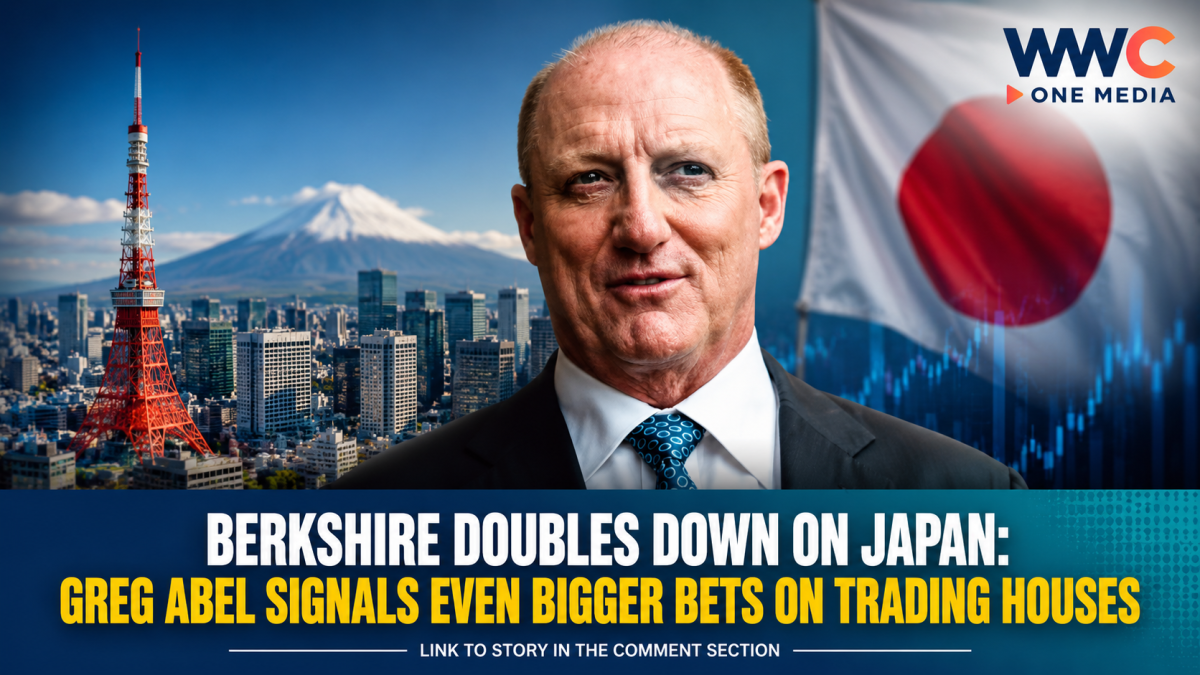
Berkshire Hathaway is signaling that its massive Japan investment strategy is far from over. CEO Greg Abel said the company intends to hold its stakes in Japan’s five major trading houses for “many decades” and is continuing to explore additional business opportunities with them, reinforcing the view that Berkshire’s Japan strategy could become one of the defining pillars of the post-Warren Buffett era. Abel made the comments while visiting Tokyo and speaking with CNBC, with the remarks also highlighted by Nikkei Asia and other major financial outlets.
Berkshire began building positions in Mitsubishi Corp., Mitsui & Co., Itochu Corp., Sumitomo Corp. and Marubeni Corp. about six years ago, initially acquiring just over 5% of each company. The stakes have since grown beyond 10% in all five, after the companies approved Berkshire’s requests to move above the ownership ceiling it had originally observed. Abel said the investments are intended to remain long-term holdings, while Berkshire continues developing relationships with the Japanese conglomerates and examining additional opportunities in Japan and overseas.
The scale of Berkshire’s Japan commitment has become striking. By the end of 2025, the five trading-house positions had a combined cost of about $15.4 billion and a market value of roughly $35.4 billion, according to data reported by The Motley Fool. The companies also paid Berkshire approximately $862 million in dividends during 2025. Berkshire has continued increasing some of its positions in 2026, including Mitsubishi, Sumitomo and Marubeni, pushing ownership above 10% in each.
The appeal is rooted in the unusual structure of Japan’s sogo shosha, or general trading companies. Rather than simply importing and exporting goods, the five companies operate sprawling businesses and investments spanning resources, energy, infrastructure, consumer products, finance and other industries. That diversified model has similarities to Berkshire’s own approach of owning interests across a wide range of businesses, helping explain why Buffett and now Abel have regarded the Japanese holdings as strategic, long-duration investments.
Another key part of the strategy is financing. Berkshire has repeatedly issued yen-denominated debt in Japan to help fund its Japanese investments, creating a natural relationship between its yen assets and liabilities. Abel said Berkshire still expects to raise yen debt when appropriate even as Japanese borrowing costs rise. He noted that the five trading houses themselves did not regard higher Japanese interest rates as a fundamental problem and described current borrowing conditions as still relatively manageable.
That is significant because Japan’s 10-year government bond yield recently moved above 3%, reaching its highest level in roughly three decades. Rising Japanese yields have become an important issue for global investors, as the country’s ultra-low interest-rate era continues to fade. Reuters reported that Japanese bond yields above 3% are already influencing global capital flows, while the Financial Times has warned that higher Japanese rates could have implications for international borrowing costs and the yen carry trade.
For Berkshire, however, Abel argued that the economics of the Japanese investments remain attractive. The company expects the underlying earnings of the five trading houses to continue growing, while dividends and share buybacks could also increase. That combination potentially allows Berkshire to continue receiving growing cash returns while maintaining ownership of businesses it believes can compound value over decades.
Berkshire’s relationship with Japan is also expanding beyond the five trading houses. In March, the company announced a 2.49% stake in Tokio Marine Holdings as part of a broader strategic partnership. Abel said the relationship could potentially lead to future transactions if opportunities make sense for both companies, although he declined to comment on specific takeover targets that have been linked to Tokio Marine in media reports.
Abel’s Tokyo trip also comes as Berkshire makes other major bets on the future. The CEO discussed the company’s roughly $10 billion investment in Alphabet, saying artificial intelligence was an important factor behind the investment. Berkshire ended June with nearly 106 million Alphabet shares worth about $37.8 billion, making Alphabet its third-largest common-stock holding at the time. Abel also sees a potential opportunity for Berkshire Hathaway Energy as AI data centers drive demand for electricity, although he stressed that new data-center projects should not raise costs for existing customers or disregard local concerns over resources such as water.
Yet the Japan strategy remains particularly notable because it reflects continuity rather than a dramatic break with Buffett’s investment philosophy. Abel succeeded Buffett as Berkshire’s CEO at the start of 2026, but Buffett remains chairman, and Abel said the two continue to speak regularly about investments. During his Tokyo visit, Abel said Buffett remains enthusiastic about Berkshire’s Japanese holdings.
The message from Tokyo is therefore difficult to miss: Berkshire does not appear to be treating its Japan investments as a short-term trade. The conglomerate has moved from minority positions to ownership stakes above 10%, established deeper relationships with management teams and opened the door to further investments and transactions.
WWC ONE MEDIA G.A




Leave a Reply