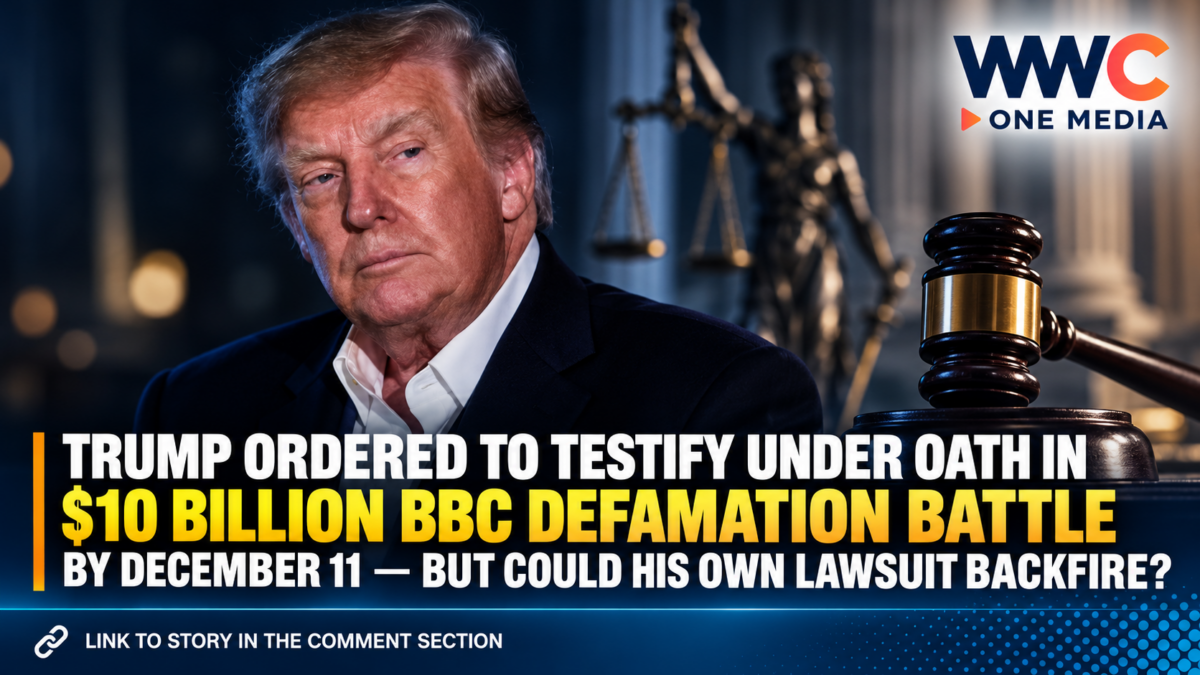
MIAMI, UNITED STATES — October 23, 2026 — US President Donald Trump is facing a major legal test after a federal judge ordered him to answer questions under oath by December 11 in his explosive $10 billion defamation lawsuit against the British Broadcasting Corporation (BBC).
The court order, issued on Thursday, October 22, raises the stakes in a legal confrontation that has already rocked Britain’s public broadcaster, triggered high-profile executive resignations and intensified questions about media accountability and the limits of presidential power.
But an unexpected twist could make Trump’s legal offensive considerably more complicated: the lawsuit he initiated now requires him to face questioning from the very broadcaster he is suing.
Judge Sets Firm Deadline as BBC Accuses Trump of Delaying Testimony
US Magistrate Judge Enjolique Lett issued the deadline after BBC lawyers complained that Trump had canceled a deposition originally scheduled for October 16.
A deposition is a formal legal proceeding in which witnesses or parties answer questions under oath before trial.
Trump’s attorneys argued that presidential responsibilities and matters of national importance prevented him from appearing on the agreed date. They proposed rescheduling the questioning for January 11–22, 2027.
However, that proposed schedule would fall after the December 18 deadline for discovery, the phase when both sides gather evidence, exchange information and obtain testimony.
The judge ordered Trump to complete his deposition by December 11 unless the discovery schedule is extended.
According to Associated Press reporting, the court warned that noncompliance could lead to sanctions, potentially including dismissal of Trump’s lawsuit.
That possibility creates significant pressure on the president, although no such penalty has been imposed and the court has not ruled on the underlying defamation allegations.
The BBC Documentary That Sparked a $10 Billion Legal War
The legal dispute centers on a BBC documentary titled Trump: A Second Chance, which included edited footage of Trump’s January 6, 2021, speech delivered before his supporters stormed the US Capitol.
Trump alleges that the broadcaster deceptively joined separate portions of his remarks, creating the impression that he directly encouraged violent action at the Capitol.
The BBC subsequently acknowledged that its editing was misleading and apologized.
The controversy sparked a leadership crisis at the broadcaster, culminating in the resignations of two senior executives.
However, the corporation continues to deny that the editing amounted to legally actionable defamation or caused the financial and reputational harm claimed by Trump.
The distinction is crucial: acknowledging an editorial mistake does not automatically establish legal liability for defamation.
Trump filed the lawsuit in December 2025, seeking at least $5 billion on each of two legal claims, for a total of at least $10 billion.
Trump’s Presidential Duties Become a Central Dispute
Another confrontation emerged over the president’s reasons for postponing his original deposition.
Trump’s legal representatives maintained that significant national and governmental responsibilities made his October 16 appearance impossible.
However, BBC attorneys pointed to Trump’s political activities in Georgia that day, challenging the argument that official presidential duties fully explained the cancellation.
The president’s legal team has denied accusations that he is deliberately avoiding questioning.
The dispute highlights a difficult legal issue: while presidential responsibilities can create legitimate scheduling and security challenges, a sitting president who initiates private civil litigation remains subject to the procedural obligations associated with pursuing that lawsuit.
The judge’s order places renewed emphasis on balancing those responsibilities with the BBC’s right to prepare its defense.
Former Special Counsel Jack Smith Drawn Into the Fight
In a further development reported by the Associated Press, the BBC has sought testimony from former US special counsel Jack Smith, whose previous work examined events surrounding the January 6 Capitol attack.
BBC attorneys believe Smith may possess information or identify evidence relevant to their defense.
Trump’s legal representatives dispute the value of his testimony, arguing that Smith lacks direct personal knowledge of what Trump intended when delivering his January 6 speech.
A separate legal question concerns whether Smith needs permission from the US Department of Justice before testifying.
The court ordered the department to respond by November 2.
Smith’s possible involvement could broaden the evidentiary battle, but his testimony had not been definitively authorized as of the October 22 hearing.
Could Trump’s Own Financial Records Become Evidence?
Beyond Trump’s testimony, the BBC has also pursued information relevant to his claims of financial and reputational damage.
Court records show that Trump has alleged that the documentary harmed his personal reputation, businesses, professional interests and brand value.
That creates another potentially sensitive area of litigation.
When someone seeks billions of dollars in damages, the opposing side may challenge both the alleged injury and the evidence used to calculate its financial impact.
The BBC’s defense could therefore involve detailed examination of Trump’s public reputation and business-related claims, subject to the court’s discovery rules and any applicable restrictions.
The central question is not merely whether the broadcaster edited the footage improperly, but whether Trump can prove the legal elements of his claims and substantiate the damages he seeks.
Why the Case Matters Beyond Trump and the BBC
This lawsuit has become a major test of the relationship between powerful political figures and international news organizations.
For Trump, the case represents an attempt to hold a prominent broadcaster financially accountable for allegedly misleading coverage.
For the BBC, it is a high-stakes defense against a multibillion-dollar demand, even after publicly acknowledging an editorial failure.
The litigation could also renew broader debates about journalistic editing standards, political speech, public-figure defamation claims and the obligations of prominent plaintiffs during evidence gathering.
However, the outcome will depend on the specific evidence, applicable law and court rulings, rather than the political controversy alone.
What Happens Next?
The immediate legal calendar contains three important dates:
- November 2, 2026: Deadline for the Justice Department’s response concerning Jack Smith’s proposed testimony.
- December 11, 2026: Court-ordered deadline for Trump’s deposition, unless the relevant schedule is modified.
- December 18, 2026: Currently scheduled end of the discovery period.
Trump has not been ordered to pay damages, and the BBC has not been found liable for defamation.
Yet the December 11 deadline creates an important turning point in the case.
Will Trump answer questions under oath and continue his $10 billion legal offensive, or could a procedural battle threaten the very lawsuit he brought against the BBC?
For now, the case remains unresolved — and the next major confrontation may take place not in front of television cameras, but across a table of lawyers asking the president questions under oath.