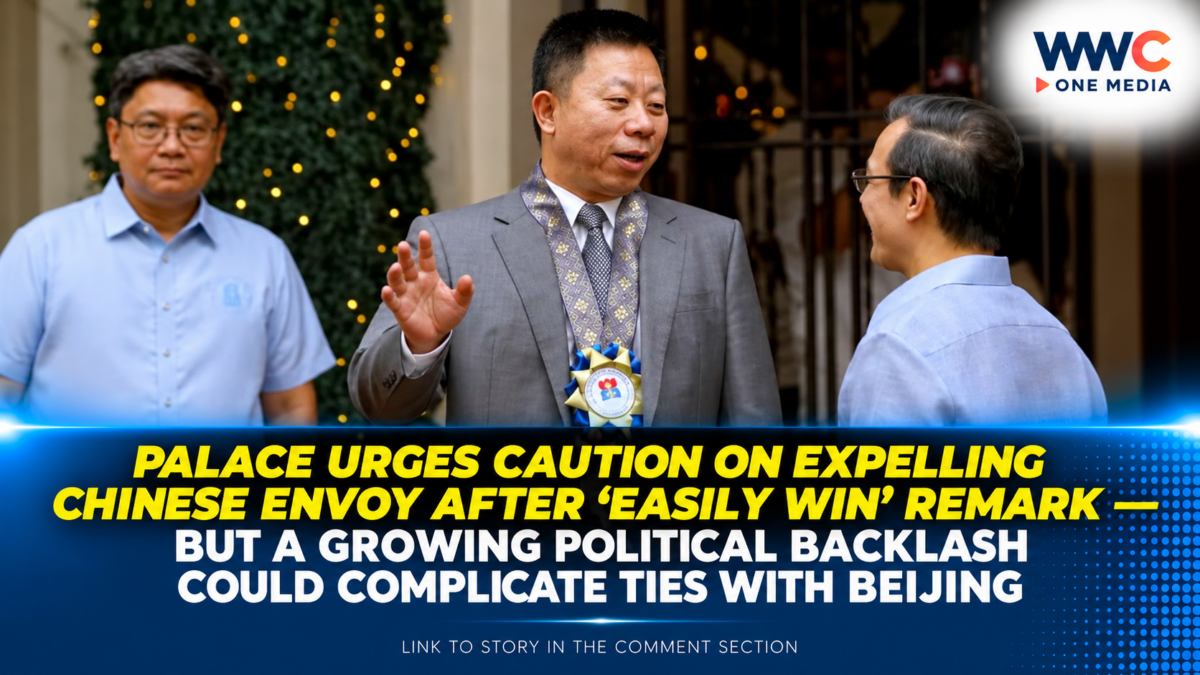
MANILA, Philippines — Malacañang is urging caution over calls to expel Chinese Ambassador Jing Quan as a diplomatic controversy over his remarks about China’s military strength intensifies, putting the Marcos administration under pressure to balance national sovereignty, public outrage and relations with Beijing.
The dispute escalated after Jing said on October 15 that China could “easily win” if it chose to use force, while insisting that Beijing would not take that path because it valued peace. His remarks came in response to criticism of China by Philippine Defense Secretary Gilberto Teodoro Jr.
The statement drew sharp reactions from Philippine officials and lawmakers, with critics viewing the language as provocative and inappropriate for a foreign diplomat representing a major regional power.
President Ferdinand Marcos Jr. said on October 16 that the ambassador’s remarks sounded like a threat and warranted further discussion. The administration has maintained, however, that disagreements with Beijing should be addressed through diplomatic channels rather than unnecessary escalation.
Palace weighs diplomatic consequences
Palace Press Officer Claire Castro said the President did not favor declaring a foreign representative persona non grata, reflecting the administration’s preference for managing the controversy through established diplomatic processes.
The government’s position does not mean that Manila has accepted the ambassador’s remarks without objection. Instead, the administration is seeking to defend Philippine interests while avoiding steps that could further strain bilateral relations.
On October 19, Foreign Affairs Secretary Ma. Theresa Lazaro summoned Jing to convey the Philippines’ serious concern and strong objection. The Department of Foreign Affairs described his remarks as “provocative and unacceptable” and warned that such language could aggravate an already sensitive diplomatic environment.
The DFA also rebuked the Chinese Embassy for publicly criticizing or taunting Philippine lawmakers exercising their official responsibilities. It emphasized that the Philippines would not accept attempts to intimidate public officials expressing their views.
The department said it reserved the right to take further diplomatic action if necessary.
Lawmakers push for stronger action
Despite Malacañang’s cautious approach, calls for consequences have gained momentum in Congress.
Senator Erwin Tulfo filed Senate Resolution No. 739, urging the DFA to recommend declaring Jing persona non grata. Senator Risa Hontiveros subsequently filed Senate Resolution No. 746, asking Marcos to declare the ambassador persona non grata or, alternatively, request his recall by Beijing.
Other lawmakers have also discussed stronger measures in response to the controversy.
However, a Senate resolution urging the envoy’s expulsion does not itself remove him from his post. The decision rests with the executive branch, which handles the Philippines’ foreign relations and diplomatic dealings.
The debate has therefore developed into a broader question: how should the Philippines respond when a foreign diplomat makes remarks that government officials consider threatening or inconsistent with diplomatic conduct?
China pushes back against calls for expulsion
The Chinese Embassy has rejected the criticism surrounding Jing’s statement and challenged Philippine lawmakers calling for his removal.
The dispute intensified after the embassy posted a confrontational message on social media in response to calls to declare the ambassador persona non grata. The exchange added another layer of tension to an already sensitive relationship.
Jing’s remarks and the subsequent diplomatic protest have drawn attention to the difficulty of maintaining dialogue when public statements from officials on both sides generate strong political reactions.
China and the Philippines maintain diplomatic and economic ties despite persistent disagreements over maritime claims and activities in the South China Sea, including waters the Philippines refers to as the West Philippine Sea.
Why the dispute matters beyond the ambassador
The controversy comes amid longstanding tensions over maritime rights, sovereignty and security in the region.
For Manila, the challenge is to respond firmly to statements it considers unacceptable without undermining its ability to pursue negotiations, economic cooperation and other diplomatic objectives.
The stakes also extend to trade and investment. China is an important economic partner for the Philippines, and any further deterioration in relations could complicate cooperation in areas that matter to businesses and consumers.
The Marcos administration has reiterated that protecting Philippine sovereignty and sovereign rights must go hand in hand with a diplomatic approach. The President is also expected to attend the Asia-Pacific Economic Cooperation summit in China next month, making the handling of the controversy particularly sensitive.
What happens next?
The immediate question is whether the administration will maintain its cautious position or consider additional diplomatic measures if tensions continue.
The lawmakers’ resolutions have increased pressure on Malacañang, while the DFA’s formal protest has already demonstrated that the government considers the ambassador’s remarks a serious matter.
For now, calls for expulsion remain distinct from an actual government decision to remove the envoy. The next steps will depend on the executive branch’s assessment of the diplomatic situation and the broader interests of the Philippines.
The episode highlights the difficult balance confronting Manila: asserting its sovereignty and rejecting language it considers threatening while keeping diplomatic channels open with one of its most consequential regional neighbors.