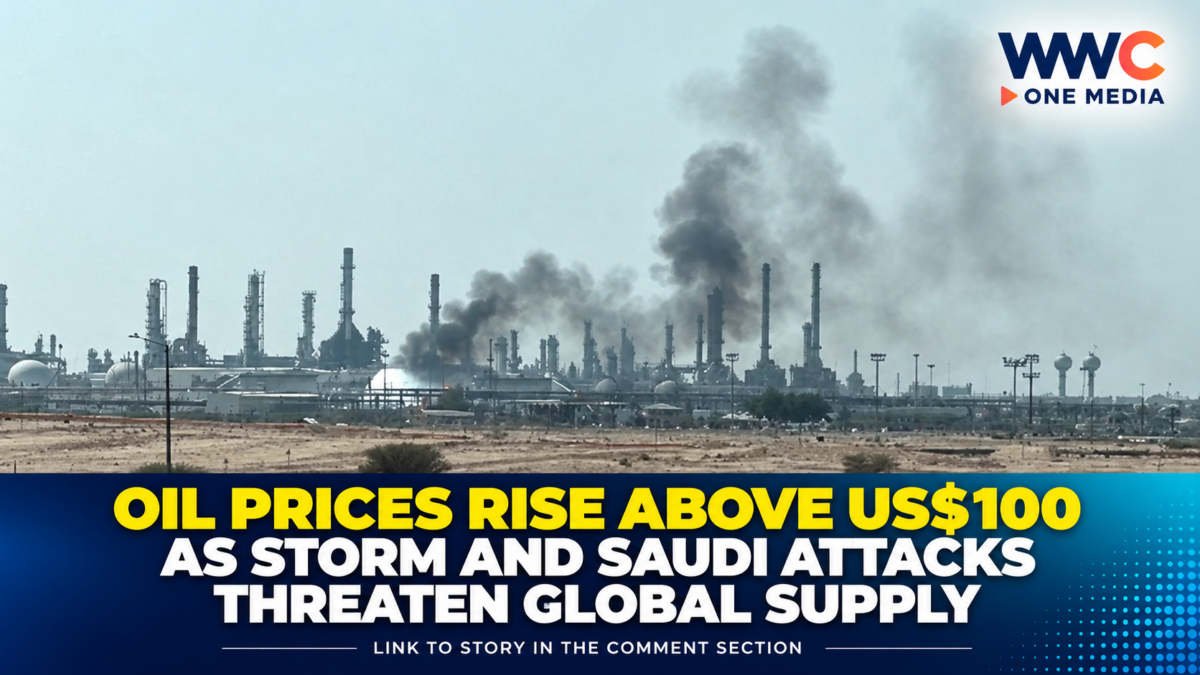
Oil prices climbed on Wednesday (Oct. 7) as traders weighed fresh threats to global energy supplies from a developing storm in the Gulf of Mexico and escalating attacks involving Yemen’s Iran-backed Houthis and Saudi Arabia.
Brent crude futures rose 93 US cents, or 0.92 per cent, to US$101.51 a barrel, while US West Texas Intermediate (WTI) crude gained 82 cents, or 0.92 per cent, to US$90.25 by 12.22am GMT, or 8.22am Singapore time.
The latest gains came despite signs that Middle Eastern oil flows are recovering, underscoring how sensitive the market remains to disruptions to production, refining and shipping.
Gulf storm threatens US oil production
A major concern for traders is a storm forming in the Gulf of Mexico that US forecasters expect to become the first Atlantic hurricane of 2026 within two days.
The storm is expected to move towards areas with significant oil and gas infrastructure, raising the possibility of production shutdowns and refinery disruptions.
Offshore areas in the storm’s projected path account for about 15 per cent of US crude oil production and 5 per cent of natural gas output.
The storm could also affect as many as six refineries along the US Gulf Coast.
Those refineries are particularly important to the country’s fuel supply, with Gulf Coast facilities accounting for about 50 per cent of total US refining capacity, which stands at roughly 18.2 million barrels per day.
KCM Trade chief analyst Tim Waterer described the storm as an “unwelcome complication” for the crude market because it could cause production and refining interruptions at a time when traders are already dealing with multiple supply concerns.
Saudi Arabia faces fresh attacks
At the same time, tensions have escalated in the Middle East.
Saudi Arabia’s aviation authority said its airports in Jazan and Najran were targeted in two attacks on Monday evening.
The attacks came as Saudi-backed Yemeni government forces continued a major offensive against the Iran-backed Houthis, who have made territorial gains in recent weeks.
Saudi Arabia has increased airstrikes in support of the Yemeni government forces, adding another layer of uncertainty for energy markets.
The region is particularly important to global oil supplies, meaning any sustained attacks on production facilities, pipelines, ports or shipping routes could quickly translate into higher prices.
Middle Eastern oil flows are recovering
Despite the renewed risks, there are signs that oil supplies from the Middle East are gradually improving.
Saudi Energy Minister Prince Abdulaziz bin Salman said the country’s East-West pipeline had reached a flow rate of 5.8 million barrels per day.
Vitol CEO Russell Hardy separately said about 12 million barrels per day of crude oil and 2 million barrels per day of refined petroleum products had left the Middle East by tanker during the previous seven to 10 days.
Those flows are critical for preventing an even more severe supply shortage as global inventories remain under pressure.
Hardy warned that the market had moved through several stages of disruption this year — from crude shortages to refined-product shortages and increasingly expensive shipping.
He said maintaining the current level of exports is important to keeping the market from facing an extreme price scenario.
US inventories provide some support to prices
US crude inventories also fell last week, adding another bullish factor for the market.
Data cited from the American Petroleum Institute showed that US crude stocks declined by 2.09 million barrels in the week ended Oct. 2.
Gasoline inventories also fell, while distillate stocks edged higher.
Falling inventories can provide additional support for oil prices because they suggest that available supplies are tightening, particularly when production and transportation are facing disruption risks.
Oil prices remain near the US$100 mark
The latest move comes after oil prices experienced considerable volatility as traders assessed the effects of the ongoing conflict involving Iran and disruptions across the Middle East.
The US Energy Information Administration raised its oil price forecasts on Tuesday, saying rapidly declining global inventories and tight diesel supplies were likely to keep crude prices elevated.
The EIA now expects Brent crude to average about US$105 a barrel in the fourth quarter of 2026, US$14 higher than its previous forecast.
For the full year, Brent is expected to average around US$98 a barrel, an 8 per cent increase from the agency’s previous estimate.
The agency said oil flows through the Strait of Hormuz had been severely disrupted by the conflict. Before the war, the waterway carried about 20 per cent of global oil supplies.
Although exports are gradually recovering through alternative routes and other workarounds, the EIA expects Middle Eastern oil flows to remain constrained through the fourth quarter.
Refined fuels remain particularly tight
The pressure is not limited to crude oil.
Diesel markets have become especially tight as refineries struggle to maintain sufficient output amid damage to refining infrastructure and disrupted supply chains.
China’s decision earlier this month to suspend exports of oil products to destinations beyond Hong Kong and Macau has further tightened fuel supplies in Asia.
Singapore has been particularly exposed because it is a major regional refining and trading hub and one of the biggest buyers of Chinese fuel.
Reuters reported that Singapore imported about 1.77 million tonnes of Chinese gasoline in the first nine months of 2026, roughly 62 per cent below its total imports for all of 2025.
The reduction has contributed to historically tight gasoline inventories in the Singapore trading hub and pushed Asian refining margins sharply higher.
Analysts expect prices to remain elevated
The combination of geopolitical tensions, weather risks, falling inventories and tight refined-product supplies has made the outlook particularly uncertain.
Mukesh Sahdev, chief oil analyst at X Analysts, said attacks and refinery outages were likely to keep refined-product premiums elevated, with the resulting scarcity feeding into crude prices.
He expects crude prices to remain around the US$100 level unless there is a meaningful de-escalation in regional conflicts.
At the same time, the recovery in Middle Eastern exports could limit the upside if those flows remain stable.
That leaves traders closely watching both physical oil movements and developments on the geopolitical front.
Market faces competing forces
The oil market is therefore being pulled in two directions.
On one side, recovering Middle Eastern exports, alternative shipping routes and efforts to restore production are helping ease some of the supply shock.
On the other, attacks on energy infrastructure, tight diesel supplies, declining inventories and the approaching storm in the Gulf of Mexico are creating fresh risks.
For consumers and businesses, sustained crude prices around US$100 could keep pressure on petrol, diesel, air travel and transportation costs, adding to inflationary pressures already affecting economies around the world.
For now, the market’s immediate focus is on whether the Gulf storm causes significant production or refinery shutdowns and whether the escalation involving Saudi Arabia and the Houthis results in further damage to regional energy infrastructure.
With several major supply risks unfolding at once, oil traders are likely to remain highly sensitive to any new disruption.