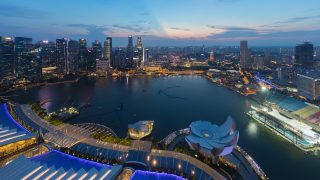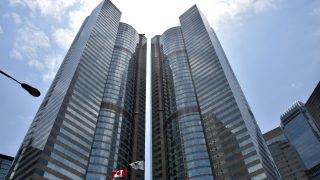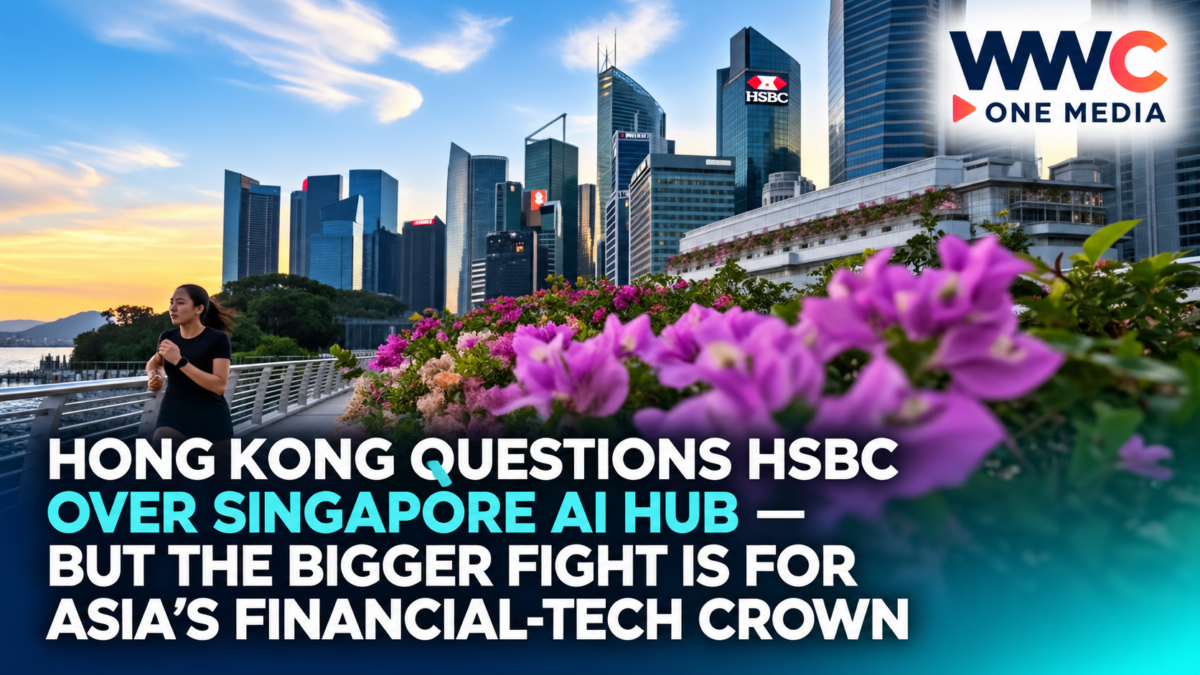
HONG KONG/SINGAPORE — Hong Kong regulators have questioned HSBC over its decision to place a major new global artificial-intelligence centre in Singapore, turning what looked like a corporate hiring announcement into another sign of the intensifying battle between Asia’s two biggest international financial hubs.
The Hong Kong Monetary Authority, the city’s de facto central bank, recently asked HSBC why it chose Singapore rather than Hong Kong for its new Global AI Centre of Excellence, according to the Financial Times.
HSBC announced the Singapore centre in July and plans to hire more than 100 AI specialists there.
The team will develop technology initially focused on:
wealth management;
agentic treasury services;
AI-enabled digital payments;
natural-language processing;
data science;
AI governance;
and human-centred design.
HSBC says those tools will eventually be deployed across its global network.
The bank is also hiring another 100 wealth relationship managers in Singapore, meaning its latest expansion will create more than 200 roles across AI and wealth management.
For Singapore, that is a major vote of confidence.
For Hong Kong, the question is more uncomfortable:
Why did one of the city’s most important banks choose its biggest Asian financial rival for a global technology hub?
HSBC says Singapore has the ecosystem it needs
When HSBC announced the AI centre on July 27, chief executive Georges Elhedery described Singapore as fundamental to the bank’s Asian growth strategy.
The bank specifically highlighted Singapore’s talent base, regulatory environment, education system and technology ecosystem as reasons for putting the centre there.
The Singapore team will work with HSBC’s first Chief AI Officer, David Rice, who took up the newly created role in April.
Rice is responsible for coordinating AI adoption across the group.
The centre is expected to work closely with universities, government institutions and HSBC business units.
That makes it more than an ordinary technology office.
It is intended to become a global development hub whose products are exported internally to HSBC operations around the world.
Singapore is becoming increasingly important to HSBC
HSBC says Singapore is now its fifth-largest geographic contributor to group profit before tax.
It is also HSBC’s primary offshore wholesale booking centre and a major wealth hub for Southeast Asia.
The bank has been investing heavily there.
HSBC says it is:
doubling technology spending over five years;
increasing investment in its physical network fivefold;
opening four new wealth centres since 2024;
adding more than 100 AI specialists;
and hiring 100 additional wealth relationship managers.
HSBC also launched its Innovation Banking business in Singapore in October 2025 with $1.5 billion allocated for high-growth companies.
The message is clear.
Singapore is no longer simply another Southeast Asian branch network.
It is becoming one of HSBC’s key global centres for wealth, technology and innovation.
That is precisely why Hong Kong noticed
Hong Kong has spent years trying to reinforce its position as Asia’s premier international financial centre.
The city remains one of the world’s most important markets for:
capital raising;
cross-border Chinese finance;
wealth management;
banking;
asset management;
and offshore renminbi activity.
But Singapore has steadily strengthened its own position, especially in private banking, family offices, fintech and regional corporate headquarters.
The decision by HSBC—a bank whose history and identity are deeply tied to Hong Kong—to place a global AI hub in Singapore therefore carries symbolic weight far beyond 100 jobs.
The HKMA’s questioning suggests officials understand that.
This is not evidence HSBC is abandoning Hong Kong
That distinction is critical.
HSBC remains deeply committed to Hong Kong.
The bank itself describes Hong Kong as one of its home markets and already operates established AI teams there.
Hong Kong is also central to HSBC’s broader Asian strategy.
The Financial Times reported separately that Hong Kong now contributes close to half of HSBC’s pre-tax profits, making the territory extraordinarily important to the group.
HSBC has also increased its financial exposure to Hong Kong substantially.
Earlier this year, it completed the privatization of Hang Seng Bank in a deal worth approximately $13.6 billion, acquiring the roughly 37% it did not already own.
That is not the behavior of a bank preparing to leave.
HSBC is actually doubling down on Hong Kong
The Hang Seng acquisition dramatically increased HSBC’s commitment to the territory.
HSBC has since been working to strengthen Hang Seng’s balance sheet after years of pressure from Hong Kong and mainland Chinese commercial real estate.
Reuters reported that HSBC transferred approximately HK$11 billion, or $1.4 billion, of loans from Hang Seng to HSBC during the first half of 2026 to give the subsidiary more capacity to diversify lending.
HSBC is also preparing to launch its own Hong Kong dollar-denominated stablecoin, after receiving an HKMA licence earlier this year.
Its Orion digital-bond platform was also used for a roughly $1.5 billion equivalent issuance by the Hong Kong Mortgage Corporation in June.
Those projects show that Hong Kong remains one of HSBC’s most important laboratories for financial technology.
HSBC already has AI capabilities in Hong Kong
The Singapore centre is new, but HSBC says it already has established AI talent hubs in both Hong Kong and the United Kingdom.
The bank describes Singapore as an addition to that network rather than a replacement for Hong Kong.
That makes the disagreement more subtle.
Hong Kong is not asking why HSBC has no AI capability in the city.
It is effectively asking why the title “Global AI Centre of Excellence” and its associated expansion went to Singapore.
In international finance, prestigious global mandates matter.
They attract:
senior executives;
engineers;
researchers;
investment;
universities;
vendors;
and future corporate activity.
Once a hub becomes established, additional jobs often cluster around it.
That is why governments compete aggressively for them.
Hong Kong wants more senior roles back
According to the Financial Times, the HKMA has been encouraging major international banks—including HSBC and Standard Chartered—to locate more senior executives and important functions in Hong Kong.
That effort partly reflects changes that occurred during and after the Covid pandemic.
Singapore gained significant momentum as multinational companies and financial executives reassessed Asian headquarters and travel arrangements.
Its predictable business environment, low tax rates and growing wealth-management sector helped attract talent and capital.
Hong Kong has since been working to reverse that perception and bring international decision-makers back.
The competition intensified after Covid
Before the pandemic, Hong Kong was generally viewed as the undisputed gateway for companies seeking access to mainland China.
Singapore was the dominant regional centre for Southeast Asia.
Those lines have become less clear.
Singapore has built an enormous private-wealth ecosystem.
Hong Kong has expanded family-office incentives and wealth programmes of its own.
Singapore has promoted fintech and digital assets.
Hong Kong has done the same.
Both cities want multinational regional headquarters.
Both want AI specialists.
Both want asset managers.
Both want billionaire family offices.
And both want to be seen as Asia’s safest place for global capital.
HSBC’s AI decision therefore landed in the middle of an already intense rivalry.
Hong Kong is pushing hard on AI itself
Hong Kong is not standing still.
Chief Executive John Lee’s government has laid out plans to make the city an international innovation and technology centre.
Its latest development plan calls for major expansion of three technology clusters:
the Hong Kong section of the Hetao Shenzhen-Hong Kong innovation zone and San Tin Technopole;
Hong Kong Science Park;
and Cyberport.
The government is also accelerating five major research institutions, including a newly established artificial intelligence research institute.
That makes HSBC’s decision particularly sensitive.
Hong Kong is simultaneously telling the world it wants to become a major AI centre while one of its most important banks has chosen Singapore for a prestigious new global AI operation.
Singapore already has a head start in financial AI governance
HSBC specifically pointed to Singapore’s regulatory and technological ecosystem when explaining its choice.
The bank is already involved in the Monetary Authority of Singapore’s Project MindForge, which develops frameworks for responsible AI use in financial services.
That matters because banks cannot deploy AI the way consumer technology firms do.
Financial AI must operate within strict requirements involving:
customer privacy;
data protection;
explainability;
fraud controls;
money laundering;
credit risk;
and regulatory accountability.
A jurisdiction that creates clear AI governance rules can therefore become more attractive to banks than one simply offering cheaper office space.
HSBC is building AI at enormous scale
The Singapore centre is part of a much larger transformation inside HSBC.
The bank says roughly 200,000 employees have access to AI productivity tools, while more than 40,000 engineers use AI-enabled coding assistants.
HSBC also says it has roughly 50 major end-to-end simplification programmes where AI is increasingly being used for areas including:
customer onboarding;
know-your-customer checks;
credit workflows;
contact centres;
and legacy-system modernization.
That means the city hosting HSBC’s key AI development team could influence technology deployed across one of the world’s largest banks.
HSBC and Google are building more than 200 AI use cases
In June, HSBC announced a major multi-year partnership with Google Cloud and Google DeepMind.
The bank said the collaboration could enable more than 200 new AI use cases over two years.
Initial priorities include:
hyper-personalized wealth advice;
financial-crime detection;
and AI tools for relationship managers.
HSBC said it would prioritize projects where it expects individual initiatives to generate more than $100 million in value.
That puts the Singapore centre inside a potentially enormous cost-saving and revenue-generating programme.
The jobs may number only slightly more than 100.
The technology they develop could affect hundreds of billions of dollars of business.
Wealth management is one reason Singapore won
The centre’s initial focus gives another clue.
One of its first priorities is AI for wealth-management conversations and portfolio tools.
Singapore has become a major global wealth-management centre, particularly for Southeast Asian and international high-net-worth clients.
HSBC is simultaneously hiring 100 additional wealth relationship managers there.
That pairing is probably not accidental.
The AI specialists can develop tools directly alongside the wealth teams that will use them.
That creates a practical development environment.
But Hong Kong is arguably even more important to HSBC wealth
Hong Kong remains central to the bank’s wealth strategy because of its enormous base of affluent local customers and its connection to mainland China.
The city also benefits when wealthy Chinese individuals diversify assets internationally.
The FT has reported that Hong Kong has overtaken Switzerland as the world’s largest cross-border wealth hub, strengthening HSBC’s rationale for concentrating on the territory.
That makes the AI decision even more intriguing.
HSBC did not choose Singapore because Hong Kong lacks wealthy customers.
It appears to have chosen Singapore because the bank saw specific advantages in its innovation ecosystem, talent market and regional role.
Hong Kong’s concern may be about momentum
One global AI centre does not determine which city wins Asia’s financial-centre rivalry.
But these decisions accumulate.
A bank chooses Singapore for AI.
Another company puts a regional headquarters there.
A hedge fund moves portfolio managers.
A family office follows.
Universities develop programmes around employer demand.
More specialists relocate.
And eventually an ecosystem becomes difficult to replicate.
Hong Kong regulators are likely conscious of that compounding effect.
That explains why a relatively small hiring announcement could attract attention at the level of the HKMA.
Singapore is also trying to become Asia’s trusted AI hub
Singapore’s strategy is broader than banking.
The government has repeatedly emphasized responsible AI, advanced technology training and regulatory frameworks that allow businesses to experiment while maintaining controls.
HSBC explicitly described Singapore as a “connected and trusted hub” where AI solutions can be developed, tested and responsibly deployed.
That phrase reveals what multinational banks value.
AI talent matters.
But regulatory trust matters too.
A financial institution operating in dozens of jurisdictions needs technology that can satisfy multiple regulators.
If Singapore can become the place where those systems are built and tested, it gains a powerful advantage.
Hong Kong has a different advantage: China
Singapore cannot reproduce Hong Kong’s proximity to mainland China.
Hong Kong remains one of the most important gateways into the Chinese economy.
Its banking system connects international investors with mainland markets.
Its Stock Connect and Bond Connect programmes provide cross-border access.
Its offshore renminbi market is unmatched.
For HSBC, those advantages are fundamental.
That is why the bank continues moving resources toward Hong Kong even as it invests in Singapore.
The two cities serve overlapping—but not identical—purposes.
HSBC increasingly needs both cities
The most likely strategic answer may be that HSBC does not see the competition as winner-takes-all.
Hong Kong gives HSBC deep China connectivity.
Singapore gives it Southeast Asian reach, international wealth management and a rapidly growing technology ecosystem.
The bank can use both.
Its own announcements reflect that approach.
HSBC calls Hong Kong a home market.
Singapore is its fifth-largest profit contributor.
AI teams operate in Hong Kong.
The new global centre sits in Singapore.
Digital assets are being developed in both locations.
From HSBC’s perspective, diversification may be rational.
From the perspective of either government, however, every high-value mandate lost to the other city matters.
The rivalry is becoming a fight over talent rather than skyscrapers
For decades, financial centres competed over:
banks;
stock exchanges;
corporate headquarters;
and trading floors.
AI changes the battlefield.
Future financial centres also need:
machine-learning engineers;
data scientists;
AI governance specialists;
quantitative researchers;
cybersecurity experts;
and software architects.
Those workers are mobile.
They can choose Singapore, Hong Kong, London, New York or Dubai.
That makes talent ecosystems as important as tax rates or office towers.
HSBC’s 100-plus specialist hires therefore matter because they represent exactly the type of workforce both Hong Kong and Singapore want.
The episode also shows how powerful HSBC remains in Hong Kong
There is another way to read the story.
The HKMA questioning HSBC demonstrates how much the bank matters to the city.
HSBC is not simply another foreign lender.
Its roots are in Hong Kong.
Its headquarters building is one of the city’s most recognizable landmarks.
Its subsidiary Hang Seng is deeply embedded in the local economy.
And Hong Kong remains one of HSBC’s biggest profit engines.
When HSBC places a strategic global operation somewhere else in Asia, Hong Kong officials notice.
That relationship creates both influence and political sensitivity.
HSBC is walking a geopolitical tightrope too
The bank’s Asian strategy extends beyond commercial competition.
HSBC has repeatedly faced pressure balancing interests across:
Britain;
Hong Kong;
mainland China;
the United States;
and Southeast Asia.
Its increasing reliance on Asian profits makes those decisions even more sensitive.
The FT recently warned that HSBC’s renewed concentration in Hong Kong brings risks as China tightens controls on outbound capital and cross-border investment.
Singapore therefore also provides geographic and regulatory diversification.
That does not mean HSBC chose the city to escape Hong Kong.
But spreading strategic capabilities across multiple Asian centres reduces concentration risk.
Hong Kong still has powerful cards to play
The city has:
deep capital markets;
direct access to mainland China;
major global banks;
world-class universities;
a large professional-services sector;
and growing government support for AI research.
Its 2026 development plan explicitly aims to deepen AI, microelectronics and life-sciences research.
Hong Kong also remains extremely important to HSBC itself.
The question is whether those advantages are enough to attract the next wave of global technology mandates.
Singapore has now scored a symbolic win
The HSBC decision does not make Singapore the superior financial centre.
But it is undoubtedly a symbolic victory.
A bank with historic roots in Hong Kong chose Singapore for a global AI centre that will develop products for customers around the world.
More than 100 high-value technology roles come with it.
Another 100 wealth-management roles are being added alongside them.
And HSBC is doubling technology spending in Singapore over five years.
Those are exactly the types of investments financial centres want.
The bigger battle is only beginning
Artificial intelligence is likely to transform banking faster over the next decade than many of the technologies that came before it.
Banks will use AI to:
detect financial crime;
advise wealthy clients;
process payments;
write software;
assess risk;
serve customers;
and automate back-office work.
The cities where that technology is designed will gain more than jobs.
They gain expertise.
They attract suppliers.
They influence standards.
And they become natural locations for the next investment.
That is why Hong Kong’s questions about HSBC should not be dismissed as bureaucratic curiosity.
They are evidence of something much bigger.
Hong Kong and Singapore are no longer competing only to be Asia’s banking capital.
They are competing to become the place where the future of banking is actually built.
And HSBC’s decision to put its new global AI centre in Singapore shows that, at least in this round, Singapore has won one of the most closely watched battles.