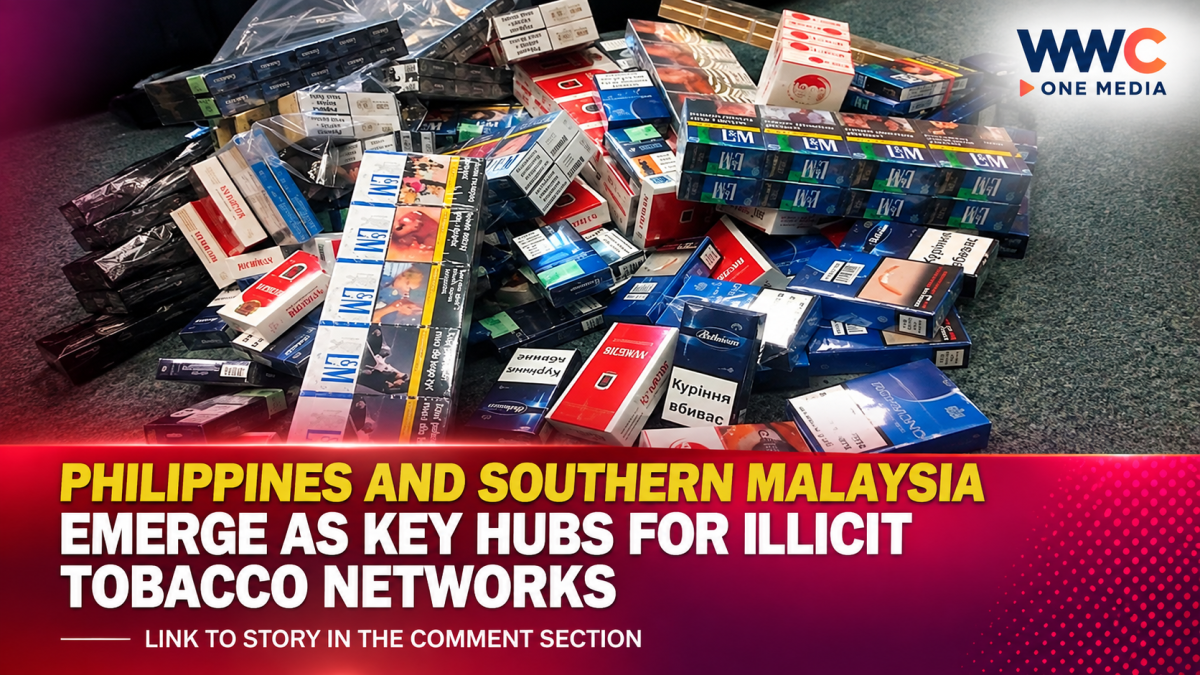
The Philippines, particularly Mindanao, and southern Malaysia are emerging as important nodes in a regional network used by criminal syndicates to move unregulated and untaxed tobacco products across Southeast Asia, according to Japan Tobacco International (JTI).
The illicit trade operates across multiple countries, with criminal groups exploiting differences in taxes, customs rules and regulatory systems to move cigarettes through maritime and land routes. Malaysia can serve as both a destination and transit point, while parts of Mindanao provide access to markets across the southern Philippines.
JTI regional officials said routes linking Malaysia with Tawi-Tawi, Zamboanga and other parts of Mindanao are being used to move illicit tobacco products before they are redistributed to other areas. The networks are not confined to a single country and can involve supply chains extending through China, the United Arab Emirates, Vietnam, Indonesia and Cambodia.
The scale of the problem has also been reflected in recent enforcement operations. Philippine authorities earlier this year raided a cigarette manufacturing facility in Cebu allegedly connected to a Malaysia-based syndicate and seized approximately P1.1 billion worth of illicit cigarettes. The facility was reportedly producing cigarettes intended for Malaysia’s illegal market.
The financial impact is significant. A study by the EU-ASEAN Business Council and Euromonitor International estimated that governments in six major Southeast Asian markets—the Philippines, Malaysia, Indonesia, Singapore, Thailand and Vietnam—lost about US$13.1 billion in revenue from illicit tobacco products in 2024 and 2025.
For the Philippines alone, the study estimated government revenue losses of about US$2.46 billion, equivalent to roughly P141 billion, over the two-year period. The estimate included losses from illicit cigarettes and e-cigarettes.
The issue also has broader implications for organized crime. A 2026 assessment by the United Nations Office on Drugs and Crime described illicit tobacco trafficking as part of an interconnected criminal ecosystem in Southeast Asia, noting that criminal groups can share trafficking routes, financial channels and logistical services across different illegal markets.
JTI officials have called for stronger cooperation among customs, tax authorities, maritime agencies and law-enforcement bodies, arguing that criminal networks operate across borders while enforcement remains largely organized within individual jurisdictions. Common requirements for tax stamps, health warnings and other product controls could also make it harder for illicit products to move between markets.
For the Philippines and Malaysia, the challenge is particularly significant because maritime links across the southern Philippines and northern Borneo provide established commercial and transport connections. Strengthening intelligence sharing, border controls and coordinated enforcement could therefore become increasingly important as authorities attempt to disrupt the regional flow of untaxed tobacco products.