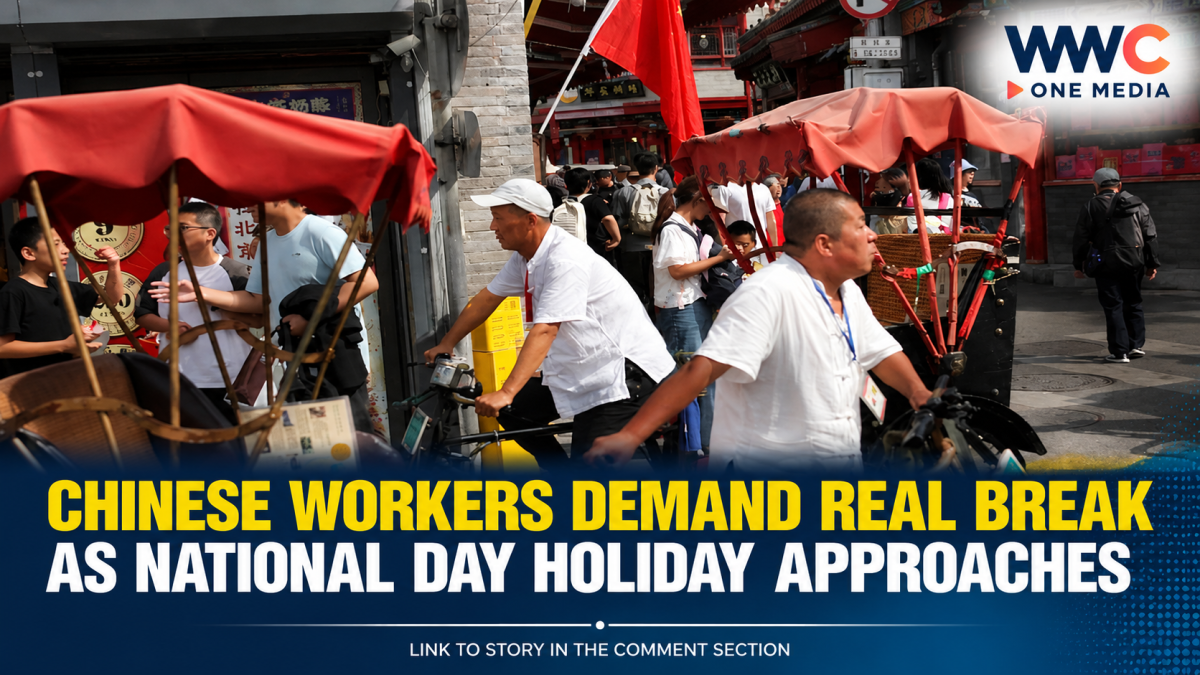
Chinese workers are voicing growing frustration over weekend work scheduled around the upcoming National Day holiday, arguing that the practice leaves them with less genuine time off despite the appearance of a week-long break.
China’s National Day holiday runs from Oct. 1 to Oct. 7, but the official schedule designates Sept. 20 and Oct. 10 as adjusted working days. The arrangement is intended to create a longer continuous holiday, but workers have increasingly criticized the loss of regular weekends surrounding the break.
The issue has triggered a major online discussion. On Weibo, a topic calling for workers’ concerns over holiday compensation work to be heard had attracted about 360 million views and 120,000 discussions, reflecting broader frustration over long working hours, stagnant wages and job insecurity.
Some workers have called for consumers to use their spending power to pressure companies into improving working conditions. One tourism worker said she planned to avoid travel, food delivery and taxis during the holiday because she objected to losing weekends that she regarded as normal rest days.
The complaints come amid a broader rise in labour disputes. China’s Supreme People’s Court reported that courts accepted 648,000 labour-dispute cases involving employers during the first nine months of 2025, up 37.5% from a year earlier.
Worker dissatisfaction has also fueled new online campaigns. A WeChat app called “Weekend Off Shopping” allowed users to identify and rate businesses based on whether their employees received two-day weekends. The platform attracted about 150,000 contributors before authorities suspended it in September, citing regulatory violations.
Some Chinese companies have responded by publicly promoting themselves as employers that provide full two-day weekends, hoping to attract customers as well as workers. State media outlets have also published commentary expressing concern that having a normal weekend off has become difficult for some employees.
The debate highlights a broader tension in China’s labour market as businesses face pressure to control costs and maintain production while workers seek better pay, greater job security and more predictable rest time. Analysts cited in the reporting said the conflict between workers’ roles as employees and consumers could become increasingly significant as economic pressures continue.