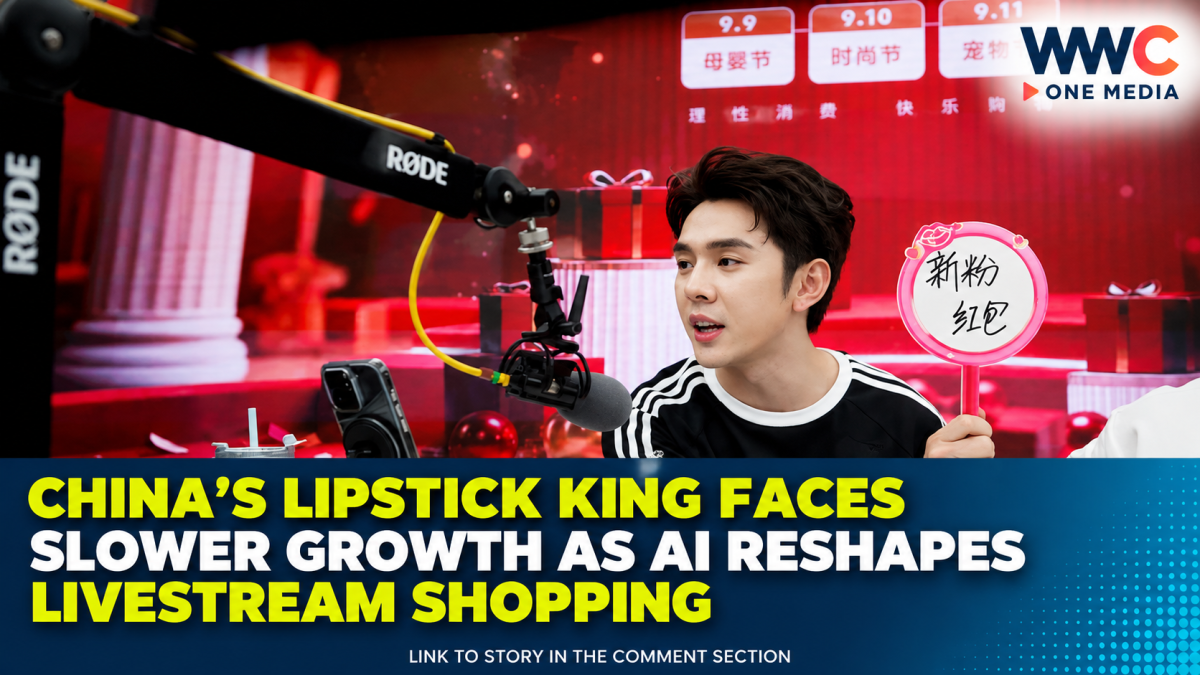
Li Jiaqi, the Chinese livestreamer widely known as the “Lipstick King,” is facing a changing retail landscape as weaker consumer spending slows the rapid expansion of livestream shopping and artificial intelligence begins transforming how products are sold online.
Li, who started livestreaming in 2016, has become one of the most recognizable figures in China’s e-commerce industry, selling billions of dollars worth of beauty products to an audience of more than 100 million followers. He now says the sector has entered a more stable phase after several years of explosive growth.
China’s retail environment has become more challenging. Retail sales increased only 0.4% year on year in August, down from 0.6% growth in July. For the first eight months of 2026, retail sales grew 1.1%, reflecting weaker household spending and tighter competition for consumers’ money.
Livestream shopping, however, has become deeply embedded in China’s retail economy. Online retail sales accounted for more than 36% of total retail sales in 2025, compared with less than 18% in 2021, showing how dramatically digital commerce has expanded in just a few years.
The next disruption is coming from artificial intelligence.
E-commerce platforms are increasingly using AI-generated virtual presenters that can operate for long periods without the costs associated with human hosts. JD.com, for example, has said its AI hosting technology can reduce livestream operating costs by as much as 80% to 90%, giving merchants an incentive to experiment with digital presenters.
That shift could put pressure on the traditional business model built around celebrity livestreamers. Instead of relying primarily on a small number of high-profile hosts, brands are increasingly looking at technology, operational efficiency and the ability to run multiple livestreams at scale.
Li, however, argues that AI and human presenters can coexist rather than compete directly.
He has said AI could be useful for extending livestream operations into hours when human hosts are unavailable. An AI version of a presenter, for example, could continue interacting with viewers overnight while the human host rests. But Li believes human hosts remain important because they can introduce new ideas, provide personal recommendations and build relationships with shoppers.
Other livestreaming professionals point to a similar limitation. Human presenters can respond to the nuances of individual shoppers in ways that current virtual hosts may struggle to replicate, particularly when customers want advice based on personal preferences, body shape or lifestyle rather than a simple product specification.
The industry’s challenge is therefore not simply whether AI can replace a human face on screen. It is also whether consumers will continue to value the trust, personality and judgment associated with established livestream personalities when cheaper automated alternatives become increasingly capable.
At the same time, brands are under greater pressure to prove that livestream spending translates into sustainable sales. Slower consumer demand means merchants have to compete harder for shoppers while dealing with customers who remain demanding but have less money available to spend.
For Li Jiaqi, the changing market represents a major shift from the era when livestream shopping could grow rapidly by attracting ever-larger audiences and celebrity hosts.
The bigger test now is whether human livestreamers can maintain their influence as AI makes online selling cheaper, longer-running and increasingly automated — and whether China’s shoppers will continue choosing a trusted human host when technology can be on screen around the clock.