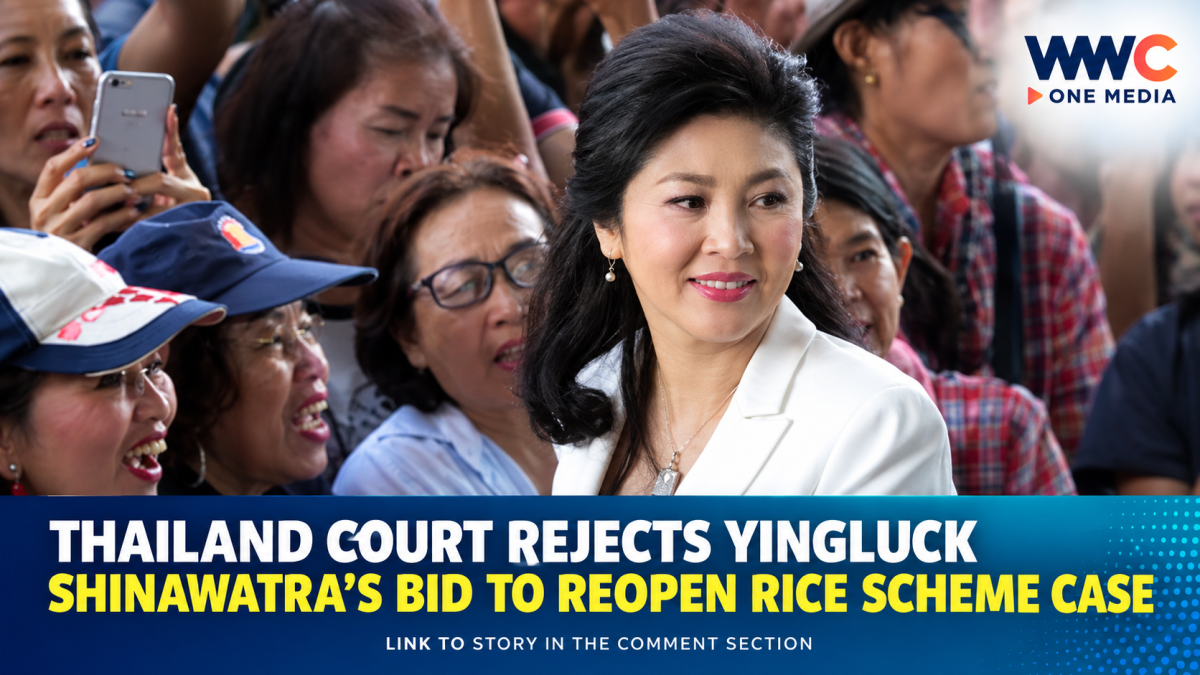
BANGKOK — Thailand’s Supreme Administrative Court has rejected former Prime Minister Yingluck Shinawatra’s appeal seeking a retrial over the compensation order stemming from her government’s controversial rice-pledging scheme, leaving a liability of more than 10 billion baht in place.
The court’s decision, issued on September 23, 2026, upheld the Central Administrative Court’s earlier refusal to accept Yingluck’s request to reopen the case.
The ruling leaves the compensation amount at 10,028,861,880.83 baht, according to Thai media reports on the decision.
Court Says Proposed New Evidence Was Not Enough
At the center of Yingluck’s retrial request was a Commerce Ministry document dated August 1, 2025.
Her legal team argued that the document provided grounds for revisiting the earlier findings, particularly regarding losses connected to government-to-government, or G-to-G, rice sales.
But the Supreme Administrative Court concluded that the document did not constitute new evidence capable of materially changing the facts already established in the case.
The court said the Commerce Ministry letter concerned a different administrative order involving six state officials and therefore did not alter the legal and factual basis of Yingluck’s own case.
Court Rejects Arguments Over Rice-Scheme Losses
Yingluck also challenged the way losses from the rice-pledging programme were calculated and disputed the use of evidence from related criminal proceedings.
The Supreme Administrative Court rejected those arguments, finding that the relevant information concerning the rice sales and associated losses was already contained in the original case record.
According to the court, the arguments therefore amounted to challenges against the court’s earlier assessment rather than evidence of a factual mistake, serious procedural defect or qualifying new evidence that would justify reopening the case.
Why the Rice Case Has Followed Yingluck for Years
The dispute dates back to Yingluck’s administration and its flagship rice-pledging programme, which was designed to support farmers by purchasing rice at prices above prevailing market levels.
The programme accumulated large rice stocks and became the subject of investigations into corruption, government-to-government sales and losses to the state.
In 2017, Thailand’s Supreme Court’s Criminal Division for Persons Holding Political Positions convicted Yingluck in a separate criminal case involving her handling of the rice scheme and sentenced her to five years in prison. Yingluck left Thailand before the verdict and has continued to deny wrongdoing.
The administrative compensation case is separate from that criminal conviction.
In the compensation proceedings, Yingluck was held responsible, in her capacity as prime minister and chair of the National Rice Policy Committee, for failing to prevent corruption and state losses associated with the scheme.
The Amount at the Center of the Dispute
The current compensation order requires Yingluck to pay approximately 10.03 billion baht.
That amount is substantially lower than an earlier Finance Ministry order that had demanded more than 35.7 billion baht. The administrative courts ultimately determined a different level of liability.
Yingluck’s lawyers have argued that the calculation of liability and the treatment of G-to-G rice-sale losses warranted further examination.
Her lawyer, Norawit Lalaeng, said the latest ruling ends the current retrial application but indicated that the legal team believes there are still other legal issues it could pursue.
What the Ruling Means for Yingluck
The Supreme Administrative Court’s decision means the request for a retrial has been rejected and the existing compensation ruling remains in effect.
It does not represent a new criminal conviction against Yingluck. Instead, it concerns the administrative case over financial liability arising from the rice-pledging programme.
The ruling also illustrates how the legal consequences of Thailand’s rice scheme continue more than a decade after the programme was introduced.
For Yingluck, the latest decision closes this particular avenue for reopening the compensation case — but her legal team says it is examining whether other legal avenues remain.
And with more than 10 billion baht still at stake, the long-running rice-scheme saga may not yet be completely finished.
WWC ONE MEDIA G,A