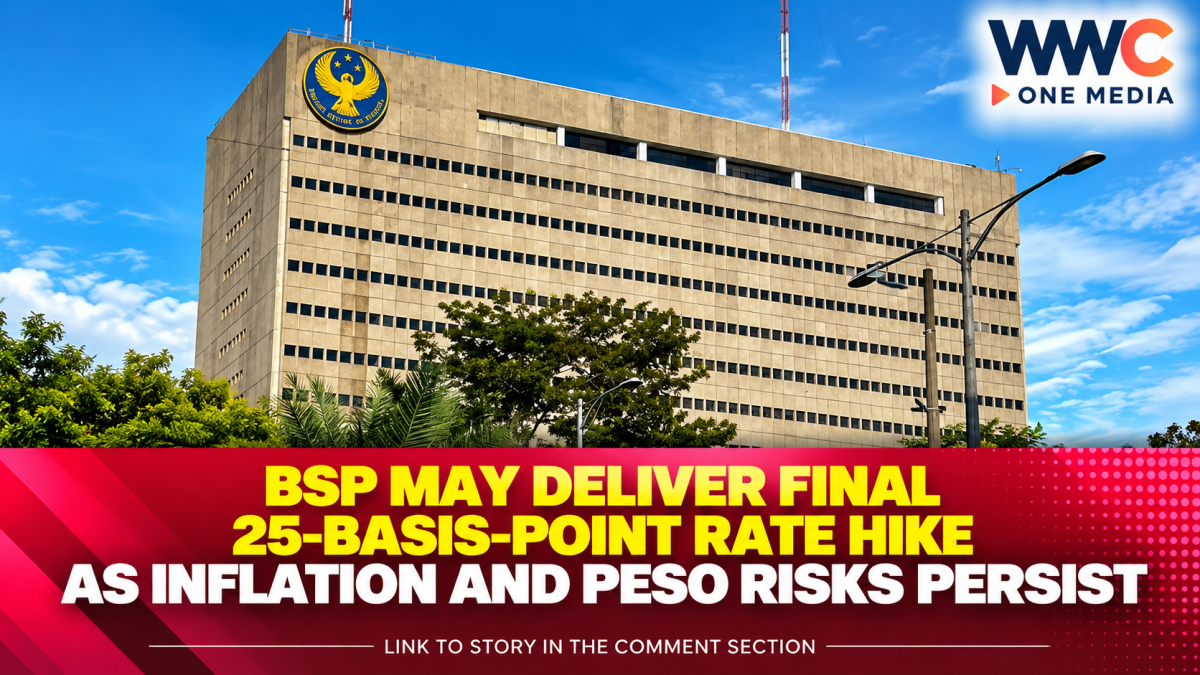
The Bangko Sentral ng Pilipinas (BSP) may deliver one more 25-basis-point interest rate increase before ending its current tightening cycle, as persistent inflation risks and weakness in the Philippine peso continue to complicate the economic outlook.
ANZ Research expects the BSP to raise its benchmark policy rate from the current 5 percent to 5.25 percent, potentially marking the final increase in the current cycle. The forecast comes as higher oil prices, a weaker peso and external economic pressures continue to threaten the inflation outlook.
The BSP has already raised its target reverse repurchase rate three times since April, including a 25-basis-point increase in August that brought the rate to 5 percent. The central bank has cited persistent inflation pressures, volatile oil prices and risks from a severe El Niño and potential wage adjustments as reasons for maintaining a restrictive policy stance.
Inflation remains a key concern. Philippine headline inflation reached 6.1 percent in August, according to the BSP, remaining well above the central bank’s 3-percent target. The BSP has also raised its 2027 inflation forecast to 5.4 percent, reflecting expected pressure from El Niño-related rice prices and higher wages.
The peso is another source of pressure. ANZ expects the Philippine currency to end 2026 at around P63 to the US dollar, while a wider trade deficit could make it more difficult for the peso to withstand higher oil prices and elevated global interest rates. A weaker peso can increase the local cost of imported fuel and other goods, adding to domestic price pressures.
ANZ also considers the Philippines more exposed than some other Asian economies to the combination of high oil prices and elevated US interest rates. The country runs a current-account deficit and does not benefit as strongly from the technology and semiconductor investment boom that has supported several other economies in the region.
The country’s economic growth outlook has also weakened. ANZ projects Philippine GDP growth of 3.5 percent in 2026, while other institutions have recently issued even lower forecasts. S&P Global Ratings and the Asian Development Bank have both cut their Philippine growth projections, citing weak investment, subdued domestic demand and external pressures.
The prospect of another rate increase comes with a trade-off for households and businesses. Higher borrowing costs can help contain inflation and support the currency, but they can also weigh on credit demand, investment and consumer spending at a time when economic growth is already slowing.
ANZ expects Philippine growth to improve to around 5 percent in 2027, while the peso is projected to recover somewhat to about P61.50 per dollar by year-end. The outlook, however, remains sensitive to oil prices, global monetary policy, inflation and developments in the Middle East.
The BSP’s next policy decisions will therefore be closely watched as officials balance inflation risks against weaker economic activity. Whether the central bank delivers another 25-basis-point increase will depend on how price pressures, the peso, oil markets and incoming economic data develop before the next policy meetings.