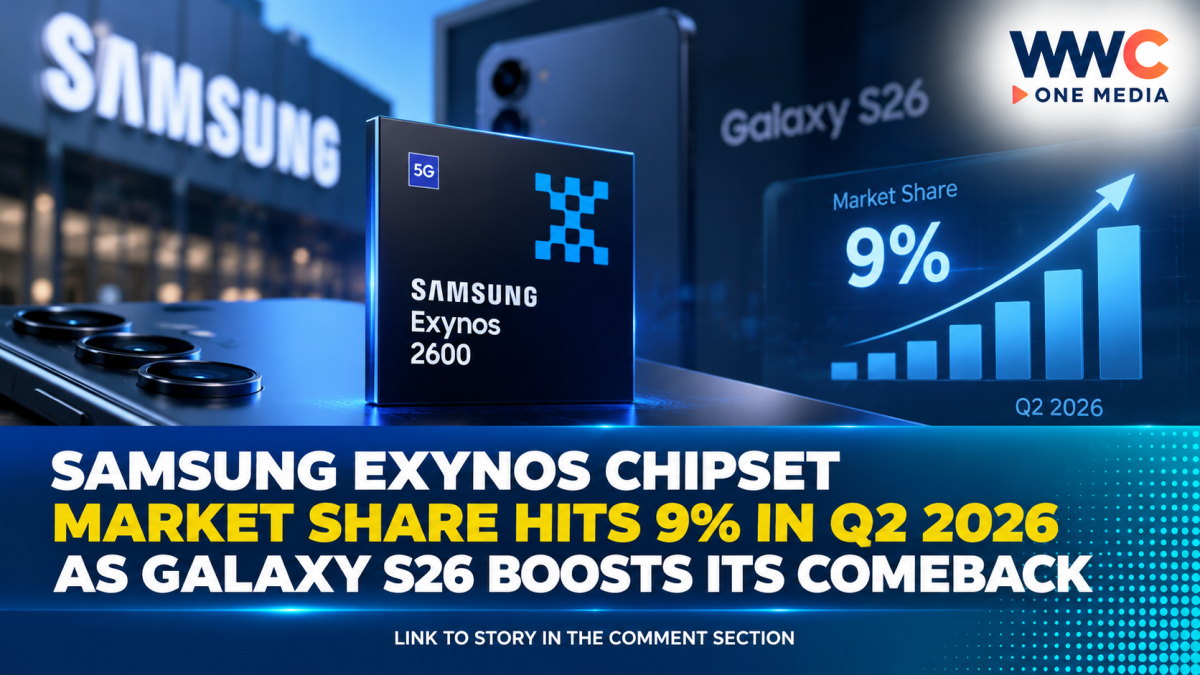
SEOUL — Samsung Electronics’ Exynos smartphone chipsets reached a 9% share of global smartphone application-processor shipments in the second quarter of 2026, marking the highest level recorded since Counterpoint Research began tracking the market in 2024.
The result represents a 2-percentage-point increase from the previous quarter and a 3-point rise from a year earlier, signaling stronger adoption of Samsung’s in-house processors across both premium and mid-range smartphones.
The gains come even as the overall smartphone market faces pressure from rising memory costs and more cautious inventory management by manufacturers.
Exynos Reaches Its Highest Share Since 2024
Counterpoint’s latest data put Exynos at 9% of global smartphone AP shipments in Q2, up from 7% in the first quarter and 6% in the same period of 2025.
Application processors, or APs, function as the central computing platform inside smartphones, handling tasks required to run operating systems, applications and other device functions.
The latest figures show Samsung is increasing the presence of Exynos at a time when several major chipset suppliers are seeing their shipment shares decline.
Galaxy S26 Helps Drive the Premium-Segment Push
A major contributor to Exynos’ growth was the Exynos 2600, which powers the Galaxy S26 and S26+ in a number of markets.
Counterpoint said stronger shipments of the Exynos 2600 helped lift Samsung’s presence in the premium smartphone segment.
The strategy is significant because Samsung has historically used a combination of its own Exynos processors and Qualcomm’s Snapdragon chips across different Galaxy models and regions.
Greater Exynos adoption gives Samsung more control over a key component of its smartphone products while also reducing reliance on external chipset suppliers in devices where Exynos is used.
Galaxy A Series Adds Momentum
The Exynos recovery was not limited to flagship smartphones.
Samsung’s mid-range portfolio also contributed to the increase, with the Exynos 1680 in the Galaxy A57 and Exynos 1480 in the Galaxy A37 helping drive shipments.
Counterpoint said the increase occurred across both the premium and mid-range segments, giving Exynos a broader base of shipments than it had previously.
That matters because mid-range smartphones represent a large portion of global device shipments, allowing chipset suppliers to build volume beyond flagship models.
MediaTek Still Leads the Global Chipset Market
Despite Exynos’ gains, MediaTek remained the largest smartphone AP supplier in Q2, holding a 31% shipment share.
Qualcomm followed with 23%, while Apple’s internally designed smartphone processors accounted for 19%. Samsung’s Exynos came in at 9%.
The numbers show that Samsung’s gains have not yet changed the overall leadership structure of the global smartphone chipset market.
However, the year-over-year movement is notable: MediaTek’s share declined by 5 percentage points, while Qualcomm’s fell by 3 points, according to Counterpoint’s data.
Memory Shortages Are Reshaping the Smartphone Market
The Exynos increase occurred against a difficult backdrop for the broader smartphone industry.
Counterpoint said global smartphone shipments fell 21% year over year in Q2 2026, with rising memory costs and conservative inventory management by smartphone manufacturers contributing to the decline.
Memory supply constraints particularly affected mainstream and entry-level smartphones, while premium-device sales also influenced chipset shipment trends.
For MediaTek, Counterpoint linked weaker shipments partly to slower sales of smartphones using its Dimensity 9000 series in the premium segment.
Qualcomm likewise faced pressure from lower shipments, with Exynos adoption in some Galaxy S26 models contributing to reduced demand for Snapdragon processors in those devices.
Apple Holds 19% Despite a Difficult Market
Apple accounted for 19% of global smartphone AP shipments in Q2.
Counterpoint said Apple’s chipset shipments increased slightly year over year, supported by sales of the iPhone 17 series, particularly its Pro models.
That gives Apple a sizable position in the market even though its chips are used exclusively in its own smartphones.
The comparison also highlights the different strategies among the industry’s major players: Samsung and Apple design their own smartphone processors, while MediaTek and Qualcomm supply chips to a broad range of device manufacturers.
Exynos Has Been Gradually Rebuilding Its Position
The latest result continues a longer recovery for Samsung’s Exynos business.
Counterpoint data show Exynos’ global smartphone AP shipment share has risen from 5% in Q1 2024 to 9% in Q2 2026, although its share has fluctuated during that period.
The rebound reflects Samsung’s decision to place Exynos processors in a wider selection of devices rather than limiting their use primarily to selected mid-range products or particular regional versions.
The strategy has also increased Exynos’ exposure to premium smartphones, where Samsung’s own silicon is now competing more directly with Snapdragon processors.
Samsung’s Broader Chip Business Is Also Expanding
The Exynos development comes alongside strong overall results for Samsung’s semiconductor operations.
Samsung reported KRW 171.5 trillion in consolidated revenue and KRW 89.5 trillion in operating profit for Q2 2026, while its Device Solutions division reported KRW 127.5 trillion in revenue. The company’s Memory Business also recorded record quarterly revenue and operating profit.
Those results cover Samsung’s broader semiconductor business and should not be confused with Exynos’ specific smartphone-chip performance.
Still, the figures highlight the importance of semiconductors to Samsung’s overall technology strategy.
The Exynos Comeback Is Not Yet a Market Takeover
The 9% figure represents an important milestone for Samsung, but it does not mean Exynos has overtaken its main rivals.
MediaTek remains the largest supplier by shipment share at 31%, followed by Qualcomm at 23% and Apple at 19%.
Instead, the latest numbers show that Samsung is rebuilding its presence in smartphone processors while expanding Exynos adoption across multiple Galaxy product categories.
The next question is whether Samsung can maintain that momentum as smartphone manufacturers continue dealing with memory costs, supply constraints and intense competition.
For now, the numbers point to a notable shift: Exynos is no longer sitting at the margins of the global smartphone chipset race. Its 9% Q2 share marks its strongest position since tracking began—and Galaxy devices are at the center of that comeback.