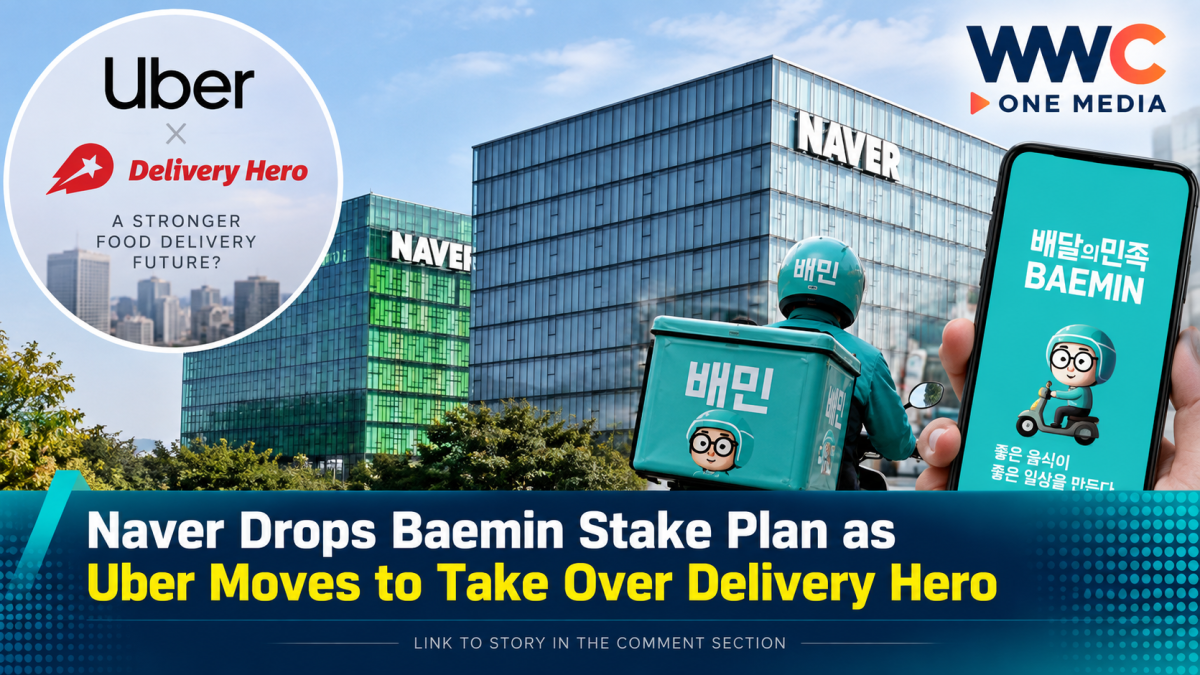
SEOUL — Naver has officially walked away from plans to acquire a stake in South Korea’s leading food-delivery platform Baedal Minjok, better known as Baemin, ending months of speculation over a potential deal with Uber.
Naver said in a regulatory filing on September 17 that it had reviewed the possibility of acquiring a stake in Baemin but ultimately decided not to proceed, citing changes in the business environment and other factors.
The decision closes a chapter that began in May, when reports emerged that Naver and Uber were considering a consortium to acquire a stake in Woowa Brothers, the operator of Baemin, from its German parent company, Delivery Hero.
From Possible Naver-Uber Partnership to No Deal
The potential Naver-Uber transaction attracted attention because it could have reshaped South Korea’s fiercely competitive food-delivery market.
Reports in May suggested that Naver and Uber were considering an ownership structure in which Naver would take roughly 20% and Uber 80% of the stake being pursued. The deal was reportedly valued at as much as several trillion won, although Naver stressed at the time that no concrete decision had been made.
Naver subsequently maintained that it was reviewing different options to strengthen its business competitiveness.
Four months later, the company has now formally ended that review.
Naver did not provide a detailed explanation of exactly which business conditions changed.
Uber’s $14.8 Billion Delivery Hero Deal Changed Everything
The biggest development during those four months came from Uber.
In July, Uber agreed to acquire 100% of Delivery Hero in a transaction valuing the deal at approximately $14.8 billion.
Because Delivery Hero owns Woowa Brothers, the operator of Baemin, completion of Uber’s acquisition would effectively bring Baemin under Uber’s corporate umbrella.
Uber said the transaction is expected to close in the second half of 2027, subject to regulatory approvals and other conditions.
That development dramatically changed the ownership landscape surrounding Baemin.
Instead of Uber and Naver potentially joining forces to acquire a stake in Woowa Brothers, Uber is now pursuing control of Delivery Hero itself.
Why Naver Was Interested in Baemin
Naver’s interest in Baemin had been viewed in the context of its broader digital ecosystem.
Baemin operates one of South Korea’s largest food-delivery platforms, while Naver has major businesses spanning search, shopping, payments, membership services and artificial intelligence.
Industry analysts and Korean business media had discussed the potential for a Baemin investment to connect food delivery with Naver’s existing commerce and payment ecosystem.
However, those possibilities were never formally confirmed by Naver as the reason for considering the transaction.
The company’s official explanation for withdrawing is limited to changes in the business environment and other factors.
The Deal Landscape Shifted Rapidly
The sequence of events shows just how quickly the proposed transaction changed.
In May, Naver acknowledged that it was examining options after reports linked it to a possible Uber-led consortium.
In June, the company still had not reached a final decision.
Then, in July, Uber announced its agreement to acquire Delivery Hero in full.
By September 17, Naver formally confirmed that it would not proceed with a Baemin stake acquisition.
The result is a significantly different ownership picture from the one envisioned when the Naver-Uber consortium reports first emerged.
What Happens to Baemin Now?
For now, Baemin remains operated by Woowa Brothers, which is wholly owned by Delivery Hero.
If Uber completes its planned acquisition of Delivery Hero, Woowa Brothers would become part of Uber’s corporate structure.
That could have implications for South Korea’s food-delivery and mobility markets because Uber already operates ride-hailing and delivery-related services in numerous markets worldwide.
Uber has said the broader Delivery Hero transaction would expand the number of markets in which it offers mobility and delivery services.
However, the transaction still requires the necessary regulatory approvals before it can be completed.
South Korea’s Delivery Market Remains Highly Competitive
Baemin’s future ownership comes as competition among South Korea’s major food-delivery platforms remains intense.
Baemin competes with services including Coupang Eats and Yogiyo, making ownership and strategic investment decisions in the sector particularly significant.
Naver’s withdrawal therefore does not remove the strategic importance of Baemin—it simply means Naver will not take part in the ownership structure currently being pursued.
For Naver, the decision also leaves the company free to concentrate capital and management resources elsewhere.
Korean business publication The Korea Economic Daily reported that Naver is expected to focus on its core businesses, including search, shopping and artificial intelligence, although that interpretation goes beyond Naver’s formal disclosure.
A New Chapter for Korea’s Delivery Industry
The collapse of the potential Naver-Baemin deal marks the end of months of speculation, but the larger story is still unfolding.
Naver is stepping away from Baemin, while Uber is pursuing the acquisition of Delivery Hero and, indirectly, the Korean delivery business controlled by Woowa Brothers.
If the Uber-Delivery Hero transaction receives all required approvals and closes as planned, South Korea’s food-delivery sector could enter a new phase under a very different ownership structure.
For Naver, the Baemin door is now closed. For Uber, the much bigger Delivery Hero deal could open an entirely new one.