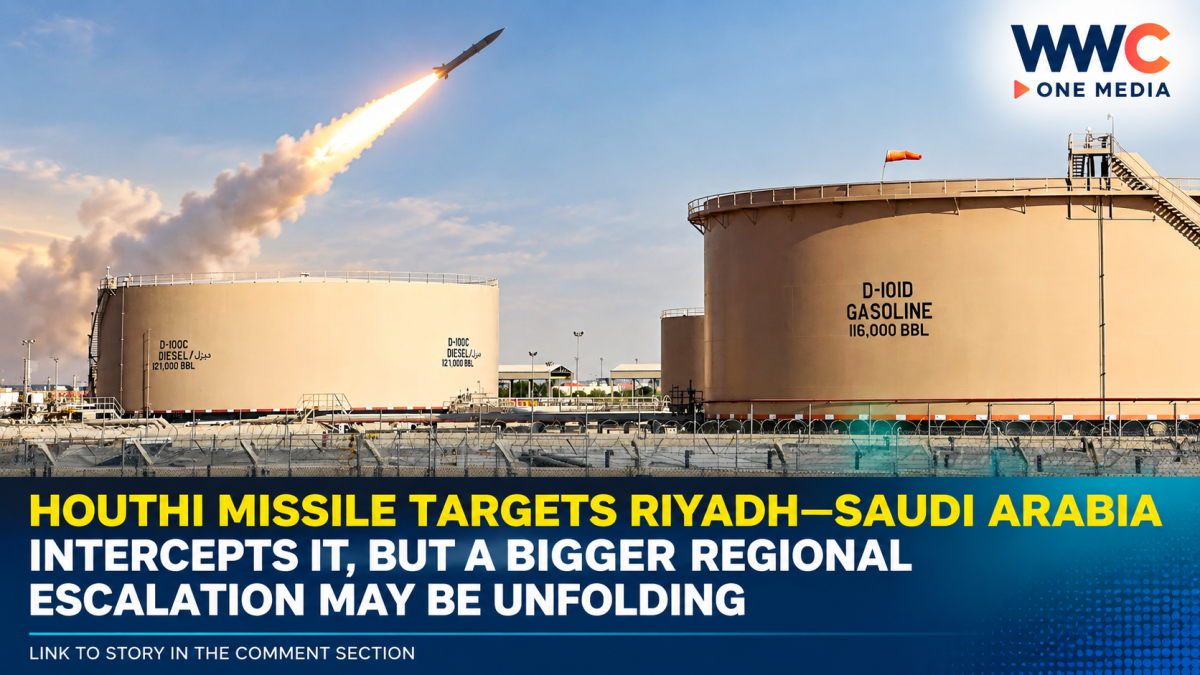
RIYADH — Saudi Arabia said its air defenses intercepted and destroyed a ballistic missile launched by Yemen’s Houthi movement toward the capital Riyadh early Saturday, September 19, in the latest escalation of fighting that is widening across the region.
The Saudi-led coalition supporting Yemen’s internationally recognized government said the missile was destroyed before reaching Riyadh. Saudi officials reported no casualties or damage from the intercepted missile.
The incident nevertheless triggered heightened concern in the Saudi capital. Residents reported hearing explosions, while Reuters footage and photographs showed a large plume of black smoke near the area of King Khalid International Airport. Saudi civil defense had earlier issued alerts warning residents of a potential aerial threat before an all-clear was announced.
Houthis Claim Attacks on Riyadh
The Houthis said they had launched missiles and drones at what they described as “sensitive” sites in Riyadh. The group also claimed it targeted facilities belonging to Saudi oil giant Aramco in the Red Sea port city of Yanbu.
However, the Houthi claims of damage were not independently verified. Saudi authorities said their air defenses had thwarted attacks directed at several locations, including Yanbu, Taif, Baysh and Farasan.
The Houthis said the operation was carried out in response to an attack in Yemen’s capital, Sanaa.
First Riyadh Attack Since the Latest Escalation
The reported missile launch is significant because it represents the first targeting of Riyadh since the latest escalation between Saudi Arabia and the Houthis began in July, according to Reuters and AP.
The renewed fighting has expanded beyond Yemen’s borders, with Houthi attacks involving Saudi cities, energy infrastructure and shipping routes in and around the Red Sea. Reuters reported that the attacks are creating additional risks for energy exports and maritime trade at a time when regional shipping routes are already under pressure.
CNA likewise reported that the Riyadh incident was the first air-raid alert in the Saudi capital since the latest escalation with the Houthis began.
Smoke Seen Near Riyadh Airport
The missile interception came after residents in Riyadh reported explosions and authorities issued warnings about a possible aerial threat.
Reuters reported seeing a large column of black smoke near the city’s main airport, with flames also visible in the vicinity of what appeared to be fuel-storage facilities. The source of the smoke was not immediately established in the initial reports.
Saudi authorities subsequently issued an all-clear.
The Saudi-led coalition maintained that the ballistic missile was intercepted in the air and did not cause damage to Riyadh.
Wider Regional Conflict Adds to the Stakes
The latest Houthi-Saudi confrontation is unfolding against a much broader regional conflict.
Reuters reported that the fighting has developed into another theater in the wider Middle East war, while the Houthis have continued threatening Saudi territory and maritime traffic in the Red Sea.
The United Nations Security Council has also condemned continued Houthi attacks against Saudi Arabia, particularly attacks affecting civilian and energy infrastructure. The council has simultaneously condemned the military escalation inside Yemen.
The Houthis control large parts of northern Yemen and have developed a significant arsenal of missiles and drones. AP reported that years of conflict and outside military intervention have not eliminated the group’s ability to threaten regional infrastructure and important maritime routes.
What Comes Next?
For now, Saudi authorities say the missile headed toward Riyadh was intercepted and that there were no reported casualties or damage from that attack.
But the combination of renewed Houthi attacks, Saudi military operations in Yemen and growing risks around Red Sea shipping has raised the possibility of further escalation.
The immediate question is whether Saturday’s attempted strike on Riyadh remains an isolated attack—or becomes another step in a widening cycle of missile strikes and retaliation across the region.