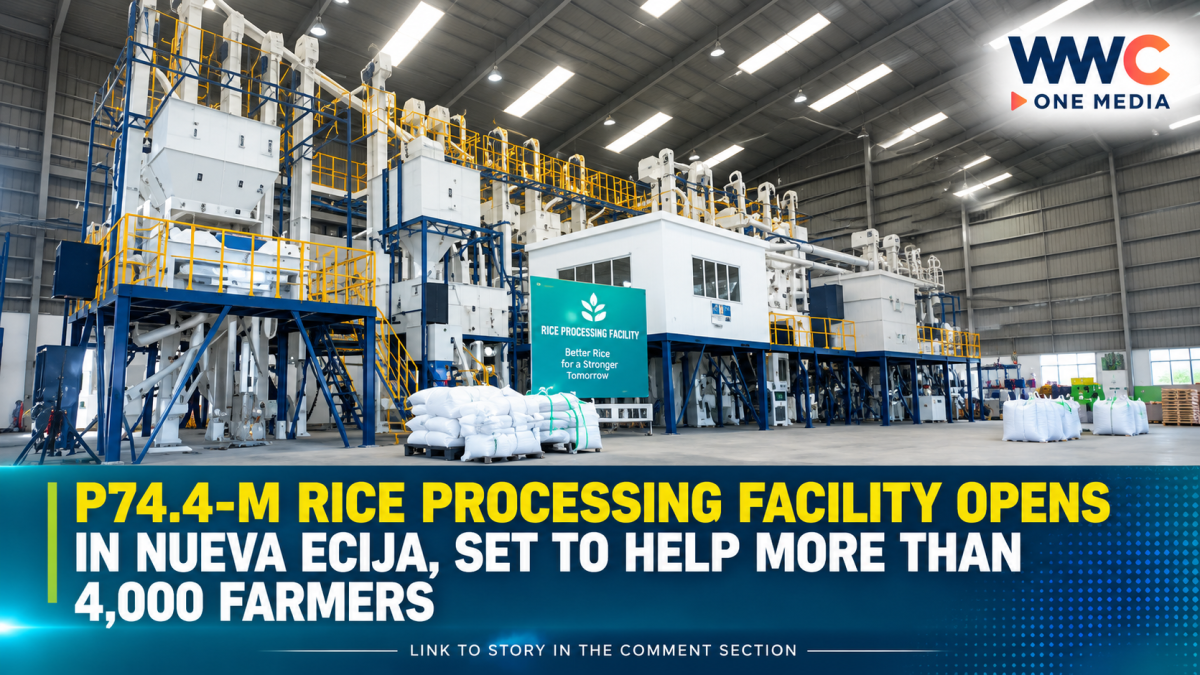
CABANATUAN CITY, Nueva Ecija — A P74.4-million rice processing facility has been inaugurated in Cabanatuan City, giving thousands of Nueva Ecija farmers access to modern drying and milling equipment designed to reduce postharvest losses and improve the quality and value of their harvest.
The facility, established through the Department of Agriculture’s Rice Competitiveness Enhancement Fund (RCEF) Mechanization Program, is expected to benefit approximately 4,060 rice farmers cultivating around 8,976 hectares of farmland.
Modern milling and drying equipment
The new Rice Processing System III facility was turned over to the Cabanatuan City government through the Philippine Center for Postharvest Development and Mechanization (PhilMech).
Its equipment includes a multi-stage rice mill capable of processing 4 to 5 tons per hour, along with three recirculating dryers that can handle up to 12 tons of palay per batch.
The equipment is designed to make postharvest operations faster and more efficient, potentially helping farmers preserve grain quality after harvest while reducing losses during drying and milling.
Why the facility matters to Nueva Ecija farmers
Nueva Ecija is one of the Philippines’ major rice-producing areas, making postharvest infrastructure particularly important for local farmers.
Without adequate drying and milling facilities, harvested palay can face quality losses, particularly when farmers encounter unfavorable weather or limited access to processing equipment.
The Department of Agriculture said the new facility is expected to help address those challenges by providing farmers with improved access to modern postharvest technology. The agency also said the project could contribute to better rice quality and improved farmer incomes.
Part of a wider rice modernization program
The project is part of the government’s RCEF Mechanization Program, which provides farm and postharvest machinery to qualified farmers’ cooperatives, associations and local government units.
The program operates under the amended Rice Tariffication Law, which extended RCEF through 2031 and increased its annual allocation from P5 billion to P9 billion, according to the report.
Agriculture Secretary Francisco Tiu Laurel Jr. emphasized that investments in agricultural infrastructure should ultimately translate into improved livelihoods for farming families.
From harvest to higher-value rice
The new facility is more than another government-funded building: its key role is to improve what happens to rice after it leaves the farm.
Better drying and milling can help farmers maintain grain quality and potentially reduce losses before their harvest reaches buyers and consumers.
For thousands of farmers in Nueva Ecija, the new facility could therefore mean shorter processing times, greater access to modern equipment and an opportunity to capture more value from their harvest.
The bigger test now will be how effectively the facility is operated and accessed by farmers — and whether the investment delivers the improved productivity and income gains that the program is designed to achieve.
WWC ONE MEDIA G,A