
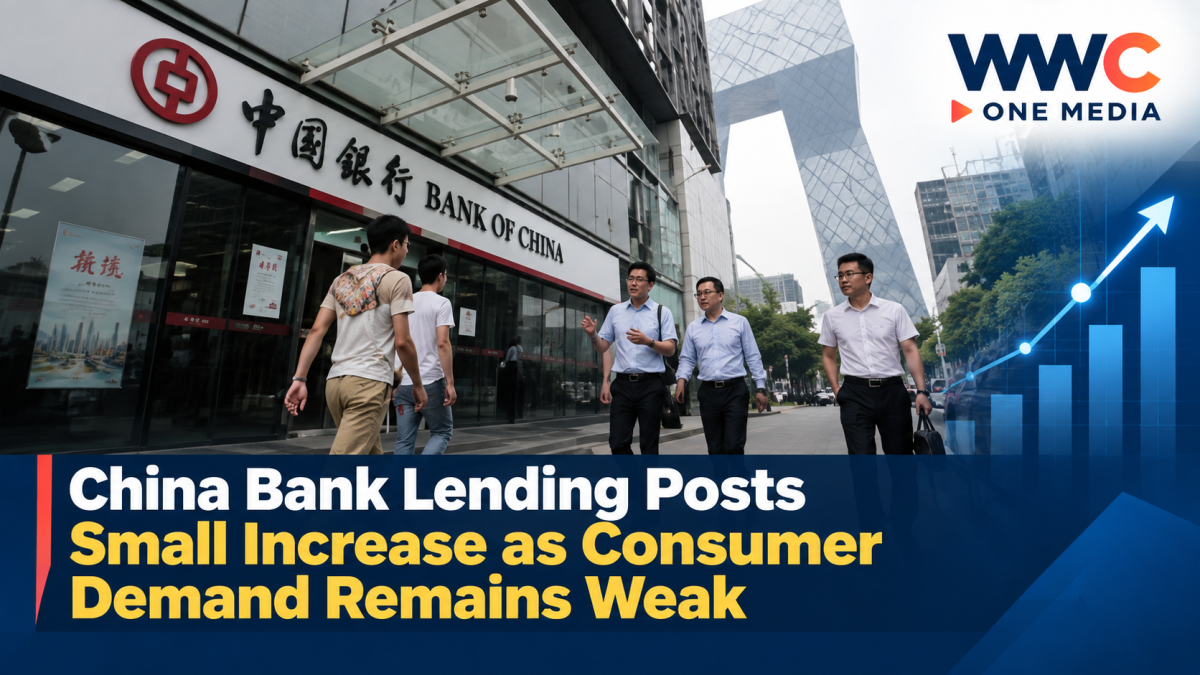
China’s bank lending recovered slightly in August after a record contraction the previous month, but the increase fell well short of market expectations as weak consumer demand and a prolonged property downturn continued to weigh on credit growth.
New yuan loans rose in August, reversing the sharp decline recorded in July. However, the pace of lending remained subdued, highlighting the difficulties facing China’s economy as households and businesses remain cautious about borrowing and spending.
The weak lending figures come as China’s policymakers seek to encourage domestic consumption and support economic activity. Higher borrowing has not translated into stronger demand, with consumers continuing to face uncertainty over incomes, employment and the property market.
China’s property downturn has also reduced demand for mortgages and related borrowing. The sector, which previously accounted for a major share of economic activity and credit creation, remains under pressure despite government measures aimed at stabilising the market.
At the same time, deposits have continued to rise, suggesting that households and companies are retaining more of their money rather than putting it into consumption or investment.
The People’s Bank of China has indicated that slower credit growth may become a more normal feature of the economy. Governor Pan Gongsheng said maintaining the lending growth rates of the past was difficult and unnecessary, arguing that improving the use of existing credit could provide economic support without relying on rapid expansion in new loans.
Pan’s comments reflect a broader shift in China’s financial system as policymakers seek to redirect resources away from sectors such as property and traditional infrastructure towards advanced manufacturing, technology and green industries.
The changing structure of lending also reflects China’s efforts to pursue what officials describe as higher-quality economic growth rather than relying primarily on expanding the overall volume of credit.
Economists and investors are nevertheless watching consumer demand closely. A sustained recovery in household spending would be important for reducing the economy’s reliance on investment and exports.
The latest lending figures therefore point to a Chinese economy undergoing a significant adjustment. While credit growth has not disappeared, the combination of weak borrowing demand, elevated savings and continued property-sector pressures suggests that financial support alone may not be enough to quickly revive domestic consumption.




Leave a Reply