
LOS ANGELES — Prosecutors have removed the possibility of execution from one of Hollywood’s most closely watched murder cases.
But for Nick Reiner, the stakes remain almost as high.
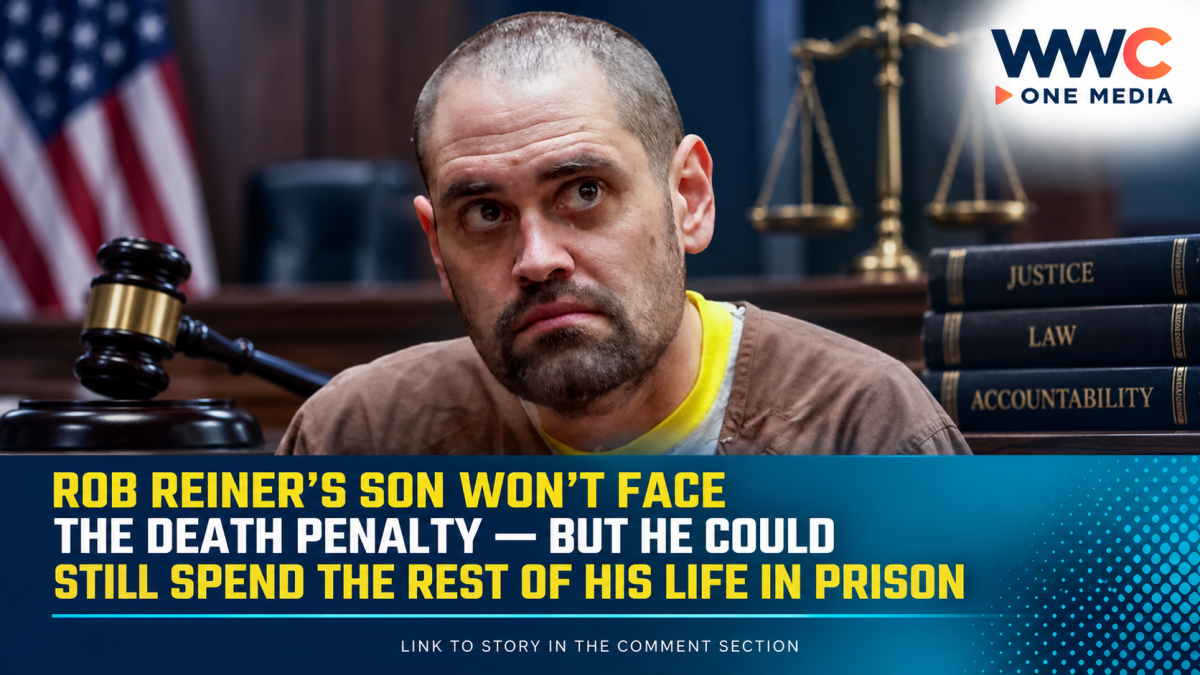
Los Angeles County District Attorney Nathan Hochman announced on Sept. 15 that his office will not seek the death penalty against Reiner, who is accused of fatally stabbing his parents — acclaimed filmmaker and actor Rob Reiner and photographer-producer Michele Singer Reiner — at their Brentwood home in December 2025.
Reiner, who turned 33 on Sept. 14, has pleaded not guilty.
If convicted on the charges and special circumstances now before the court, prosecutors say the maximum punishment will be life imprisonment without the possibility of parole.
That distinction matters.
The prosecution has changed the possible sentence.
It has not reduced or dismissed the murder charges.
And nearly nine months after the deaths of Rob and Michele Reiner shocked Hollywood, the case is still months away from trial.
Hochman said he does not expect a trial to begin before 2027.
Why prosecutors took execution off the table
Hochman said the decision followed what his office described as a thorough review of the case.
He said prosecutors evaluated both aggravating and mitigating factors associated with special-circumstance murder cases and consulted members of the Reiner family before reaching a decision.
Two people had particular significance in those discussions:
Nick Reiner’s surviving siblings, Jake and Romy Reiner.
Hochman told reporters that the two siblings had made their views clear and that prosecutors took those wishes into consideration.
The district attorney did not publicly disclose everything they said.
Nor did his official statement detail every mitigating factor considered.
But Hochman made clear that the office ultimately concluded capital punishment was not appropriate.
His office said seeking execution should be reserved for the most serious cases and that, after reviewing this one, prosecutors chose another path.
The decision does not make this a conventional murder case
Nick Reiner faces two counts of murder accompanied by special-circumstance allegations.
A Los Angeles County grand jury indictment alleges both multiple murders and murder by means of lying in wait.
Prosecutors also allege he personally used a knife.
Those allegations are legally significant because, under California law, special-circumstance murder can expose a defendant to either death or life imprisonment without parole.
With the district attorney now ruling out execution, the second option becomes the most severe possible sentence if Reiner is convicted as charged.
He remains held without bail.
What does “lying in wait” actually allege?
The phrase has attracted particular attention.
It does not simply mean prosecutors believe the killings were planned.
The grand-jury indictment alleges that Reiner was lying in wait before the attack, an allegation intended to establish a particularly serious form of premeditated killing.
The exact evidence supporting that allegation has not yet been publicly aired at a trial.
Grand-jury proceedings are secret, and transcripts from the proceeding remain at the centre of a separate court fight.
So headlines should not describe the lying-in-wait allegation as an established fact.
It remains part of the prosecution’s case and will have to withstand the defence process.
The grand jury changed the trajectory of the case
Reiner was initially charged shortly after his arrest in December.
But prosecutors later went before a grand jury.
The panel returned an indictment on July 20, which was publicly unsealed in August. Reiner again entered a not-guilty plea to the charges.
The grand-jury route has a major procedural consequence.
It allows the prosecution to move toward trial without first holding a conventional preliminary hearing in which witnesses would publicly testify and a judge would decide whether there was sufficient probable cause to continue.
That means some of the most important evidence in the case remains outside public view.
Jake and Romy want the grand-jury transcripts kept sealed
That could become the next major legal battle.
Reuters reports that Jake and Romy Reiner have urged the court not to release the grand-jury transcripts because public disclosure of graphic details surrounding their parents’ deaths could cause them additional trauma.
A judge is expected to consider the issue.
Reiner’s next scheduled court appearance is Oct. 7, for a motions hearing at the Foltz Criminal Justice Center in downtown Los Angeles.
That means the public may have to wait longer for a fuller picture of the prosecution’s evidence.
Rob and Michele Reiner were found dead in December
Authorities say Rob Reiner, 78, and Michele Singer Reiner, 70, were killed at their home in Los Angeles’ affluent Brentwood neighbourhood on Dec. 14, 2025.
Prosecutors allege Nick Reiner fatally stabbed both parents before leaving the property.
He was arrested later that evening.
The Los Angeles County Medical Examiner initially released causes and manners of death for the couple, but those records were subsequently placed under a court-ordered security hold requested by the Los Angeles Police Department.
The department says detailed medical-examiner records therefore cannot currently be publicly released.
Associated Press previously reported that the initial medical findings listed multiple sharp-force injuries as the cause of death for both victims before the security hold restricted access.
The prosecution has not publicly established a motive
This is another important gap.
News reports have described a reported disagreement involving Nick Reiner and his parents at a holiday gathering the night before the deaths.
But prosecutors have not publicly established a motive for the alleged killings, and the trial evidence has not yet been presented.
That means claims that a particular argument, addiction issue, financial dispute or family conflict “caused” the killings would be speculative.
The indictment tells the public what prosecutors allege happened.
It does not yet tell the full story of why they believe it happened.
Nick Reiner’s personal history is likely to become part of the case
Reiner has publicly discussed past struggles involving drug addiction.
He and his father even collaborated on the 2015 film Being Charlie, which explored a turbulent relationship between a successful father and a son experiencing serious drug problems and drew partly from Nick Reiner’s experiences.
His current public defender, Kimberly Greene, has also said Reiner has a history of significant mental-health difficulties and self-medication.
That statement represents the defence’s characterization of his condition; it should not be converted into an independent diagnosis or an assumption about his legal responsibility.
Reuters reported that unspecified mitigating factors were among the considerations prosecutors reviewed before rejecting capital punishment.
The district attorney has not publicly said exactly how much weight any particular health history received.
Mental illness and legal insanity are not the same thing
That distinction could become particularly important if health evidence plays a larger role later.
A person can have a diagnosed mental disorder and still be legally responsible for a crime.
Likewise, evidence of mental illness may be relevant to sentencing or mitigation without satisfying the legal requirements for an insanity defence.
As of the latest reporting, Reiner has pleaded not guilty; the Los Angeles Times reported that his public defender had not asserted an insanity defence.
So it would be inaccurate to say prosecutors abandoned the death penalty because Reiner was legally insane.
No such finding has been made.
California’s death penalty is still technically legal
The prosecutors’ announcement also creates a strange legal paradox.
California still has capital punishment on its books.
But no execution has occurred in the state since 2006.
Gov. Gavin Newsom issued an executive order in 2019 placing executions under a statewide moratorium, withdrawing the lethal-injection protocol and ordering the closure of the execution chamber at San Quentin.
The order did not abolish capital punishment.
Nor did it automatically change existing death sentences.
It simply prevented executions from going forward while Newsom is governor under that policy.
That means Reiner technically could have faced a death sentence if prosecutors had chosen to pursue one — even though an actual execution would have faced the separate obstacle of California’s moratorium.
Now that possibility is gone from his case entirely.
The decision is also notable because Hochman reversed his predecessor’s broader policy
Los Angeles County’s approach to capital cases changed when Hochman became district attorney.
His predecessor, George Gascón, had generally barred county prosecutors from seeking death sentences.
Hochman removed that categorical restriction when he took office and said capital punishment should remain available for particularly severe cases.
Yet he has also said it should be used selectively.
The Reiner case became one of the highest-profile tests of what that selective approach would look like.
Despite two deaths, special-circumstance allegations and the prosecution’s claim that the defendant lay in wait, Hochman decided against execution.
Rob Reiner himself had opposed capital punishment
There is an additional, unusual family dimension.
The Los Angeles Times reported that Rob Reiner had publicly opposed the death penalty during his lifetime.
In a 2010 interview, he explicitly said he was against capital punishment.
There is no evidence in the district attorney’s official announcement that this position independently determined the prosecution’s decision.
Hochman instead cited discussions with the Reiner family and his office’s assessment of aggravating and mitigating factors.
Still, the fact adds another layer to a case in which the son accused of killing Rob Reiner might otherwise have faced the punishment his father publicly opposed.
The surviving children are now caught on both sides of the criminal case
For Jake and Romy, the legal process presents an exceptionally difficult family dynamic.
They lost both parents.
Their brother is the person charged with killing them.
And prosecutors have now consulted them about whether the state should seek his execution.
Jake Reiner described the aftermath in an August interview as a “living nightmare” and said the deaths effectively meant losing his parents while his brother’s arrest left him and Romy attempting to navigate the aftermath together.
Nick Reiner continues to be presumed innocent.
But regardless of the eventual verdict, the surviving siblings have already had to confront decisions and legal proceedings few families ever face.
The family has also asked the public to limit speculation
Shortly after the killings and arrest, Jake and Romy issued a statement describing the loss of their parents as devastating and asking for privacy.
They also asked people to temper speculation as the legal process continued.
That request remains relevant.
Much of the case is still sealed.
No trial has occurred.
No motive has been formally proved.
And evidence involving the killings has yet to be tested before a jury.
There is also a separate fight over Nick Reiner’s legal defence
Another unusual dispute involves money.
Reiner has sought access to a family trust established by his parents in order to fund his defence.
Los Angeles Times reporting says civil attorneys sought the release of at least $1.5 million from the trust, arguing that the money was intended to become available when Reiner reached a specified age and was needed for legal expenses.
Associated Press reported more recently that the amount at issue was around $1.7 million and that Reiner hoped to use the funds to regain private defence counsel.
That financial dispute is separate from the murder prosecution itself.
It does not establish guilt or innocence.
But it could affect who represents Reiner when the trial eventually begins.
His first high-profile lawyer left the case
Attorney Alan Jackson initially represented Reiner.
Jackson later withdrew, and the Los Angeles County Public Defender’s Office took over the criminal defence.
Reiner is currently represented by Deputy Public Defender Kimberly Greene.
The defence welcomed Hochman’s decision not to seek capital punishment, calling it the right decision.
The shift in representation and continuing trust dispute could still influence the timetable before trial.
The trial is unlikely before 2027
That is perhaps the clearest indication that the story remains in its early legal stages.
Hochman said Tuesday that he does not expect the case to reach trial before next year.
Several issues remain unresolved:
the handling of grand-jury transcripts;
pretrial motions;
the defence team;
discovery and forensic evidence;
and potentially additional arguments over what evidence jurors may eventually hear.
So although the death-penalty decision is significant, it does not bring the case particularly close to a verdict.
Rob Reiner’s career makes the case unusually prominent
Rob Reiner spent decades occupying an unusual place in American entertainment.
He first became widely known as actor Michael “Meathead” Stivic on the television sitcom All in the Family, earning Emmy Awards before becoming one of Hollywood’s most successful directors.
His directing credits included films across remarkably different genres:
This Is Spinal Tap.
Stand by Me.
The Princess Bride.
When Harry Met Sally…
Misery.
A Few Good Men.
That range made Reiner one of the rare directors associated with multiple films that became enduring cultural touchstones.
Michele Singer Reiner worked as a photographer and producer and met Rob during the making of When Harry Met Sally….
The prominence of the victims guarantees continued public attention.
But legally, celebrity changes nothing about the burden of proof.
A grand-jury indictment is not a conviction
This bears repeating because the case has produced unusually dramatic headlines.
The grand jury determined there was a sufficient basis to issue the indictment.
That moved the prosecution forward.
It did not determine guilt beyond a reasonable doubt.
Nick Reiner has entered a not-guilty plea and is entitled to the presumption of innocence unless and until prosecutors prove the charges in court. The Los Angeles County District Attorney’s own announcement explicitly states that principle.
So accurate coverage should say Reiner is accused of killing his parents, not that he has already been legally proven to have done so.
The biggest unanswered question is still hidden in the evidence
The death-penalty announcement answers one question decisively.
Nick Reiner will not be executed even if prosecutors ultimately secure convictions on the special-circumstance murder charges.
But almost every question that will decide the criminal case remains open publicly.
What evidence supports the lying-in-wait allegation?
What do the grand-jury witnesses say?
What forensic evidence links Reiner to the killings?
What will the defence argue happened?
Will any mental-health evidence affect legal responsibility or only mitigation?
And what, if anything, will prosecutors identify as a motive?
Those answers are likely to emerge gradually through motions and, eventually, trial testimony.
For now, one legal consequence has changed dramatically.
Nick Reiner no longer faces death.
But if a jury eventually accepts the prosecution’s case, he could still receive a sentence with essentially the same endpoint:
prison for the rest of his life, with no possibility of parole.




Leave a Reply