
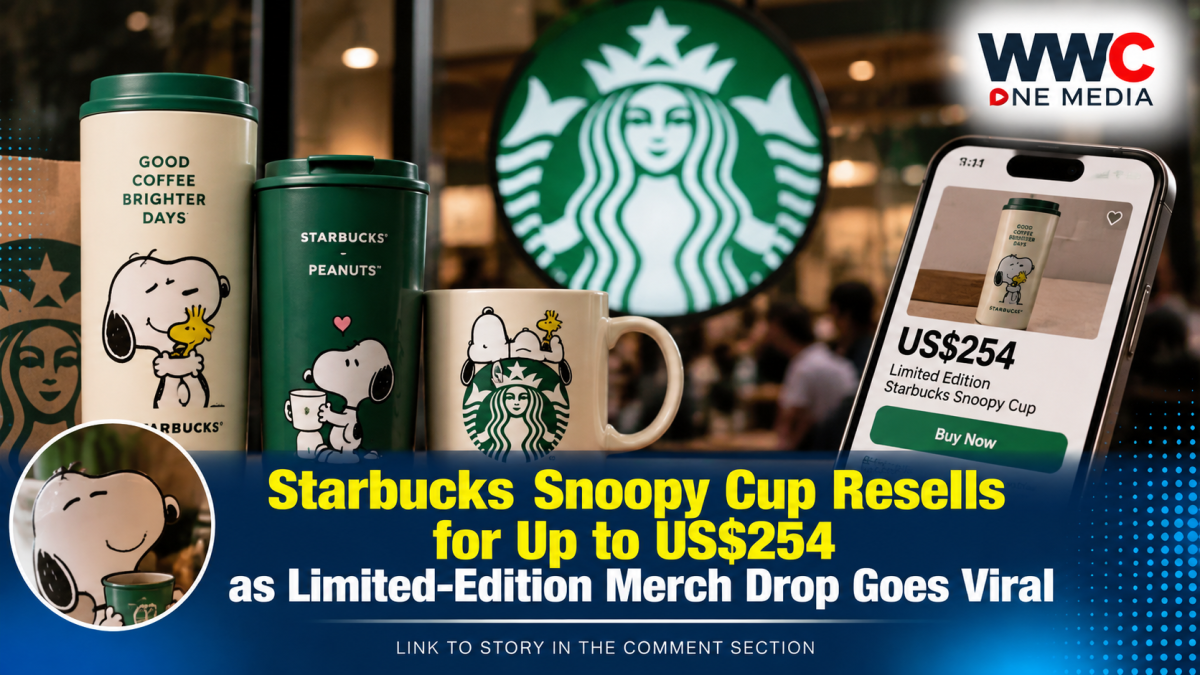
SEATTLE — A limited-edition Starbucks Snoopy cup has quickly become a hot collectible, with resale listings reaching as high as US$254—more than six times its original US$39.95 retail price—highlighting the extraordinary demand that can surround tightly limited merchandise drops.
The 20-ounce Snoopy-shaped glass cold cup was released Sept. 15 as part of Starbucks’ new Peanuts-themed collection, created around the 60th anniversary of It’s the Great Pumpkin, Charlie Brown.
From US$39.95 to Triple-Digit Resale Prices
Starbucks priced the Snoopy glass cold cup at US$39.95 and limited purchases to two per customer. But scarcity quickly transformed the cup into a sought-after resale item.
The Straits Times, citing StockX, reported that the cup had sold for as much as US$200, equivalent to about S$254, while its headline highlighted resale prices reaching S$254. Other reports found listings at different price points, demonstrating how quickly the secondary market was moving after the launch.
StockX’s current marketplace also shows the Snoopy Glass Cold Cup being offered above its original retail price, although resale prices can fluctuate substantially depending on supply and demand.
Why the Snoopy Cup Became So Popular
The cup combines several elements that frequently drive collectible merchandise: a globally recognized character, a major consumer brand, limited availability and a highly recognizable design.
The Snoopy glass features the character wearing a green scarf and orange beanie, along with a Woodstock straw topper. Starbucks released it alongside nine other Peanuts-themed products, including drinkware, apparel, accessories and toys.
The collection also connects to a major anniversary for the Peanuts franchise. It’s the Great Pumpkin, Charlie Brown first aired in 1966 and reaches its 60th anniversary in 2026.
Starbucks Is Using the ‘Merch Drop’ Playbook
The frenzy illustrates how Starbucks is increasingly using the strategy associated with sneaker, streetwear and collectible brands: release desirable products in limited quantities and create urgency around the launch.
The approach can generate attention beyond the products themselves. Google searches for “Starbucks Snoopy” surged around the release, according to The Straits Times, while social-media users shared images of store lines, sold-out products and successful purchases.
For Starbucks, the attraction extends beyond selling a cup. Limited merchandise can encourage customers to visit stores, interact with the brand and participate in a broader cultural moment.
Fans Report Long Lines and Empty Shelves
The demand has also produced frustration.
The Independent reported that some customers visited multiple Starbucks locations without finding the Snoopy merchandise. Others described arriving before stores opened and encountering long queues, while some online shoppers faced difficulties accessing the merchandise.
That scarcity is part of what makes limited-edition merchandise powerful—but it can also create customer dissatisfaction when demand substantially exceeds available inventory.
A Familiar Pattern After Starbucks’ Bearista Craze
The Snoopy release follows Starbucks’ earlier viral Bearista merchandise, which similarly generated intense demand and a resale market.
The company previously acknowledged that excitement surrounding the Bearista merchandise exceeded its expectations and that some items sold out rapidly.
The latest Snoopy launch shows that the phenomenon was not limited to the earlier bear-shaped products. Starbucks has again managed to turn drinkware into something customers treat as a collectible.
But a High Resale Price Doesn’t Mean Everyone Is Paying It
The US$254 figure should be viewed carefully.
A resale listing or individual transaction does not establish a permanent value for the cup. Prices can change rapidly as more merchandise enters the secondary market, and different platforms can show substantially different asking prices and completed sales.
That means the headline-making resale figure demonstrates scarcity and demand at a particular moment, rather than proving that every Snoopy cup is now worth hundreds of dollars.
The Bigger Business Lesson
The Starbucks Snoopy craze demonstrates the power of limited-edition merchandise to turn an ordinary consumer product into a social-media event.
For Starbucks, the strategy creates a conversation around the brand without relying solely on traditional product promotions. For collectors, however, the difference between retail price and resale price also shows how quickly scarcity can reshape consumer demand.
The bigger question now is whether the Snoopy cup will maintain its resale premium—or whether prices will fall once the initial launch frenzy fades.
For the moment, one thing is clear: a US$39.95 Starbucks cup has become the latest example of how powerful a carefully timed merch drop can be.
WWC ONE MEDIA G.A



Leave a Reply