
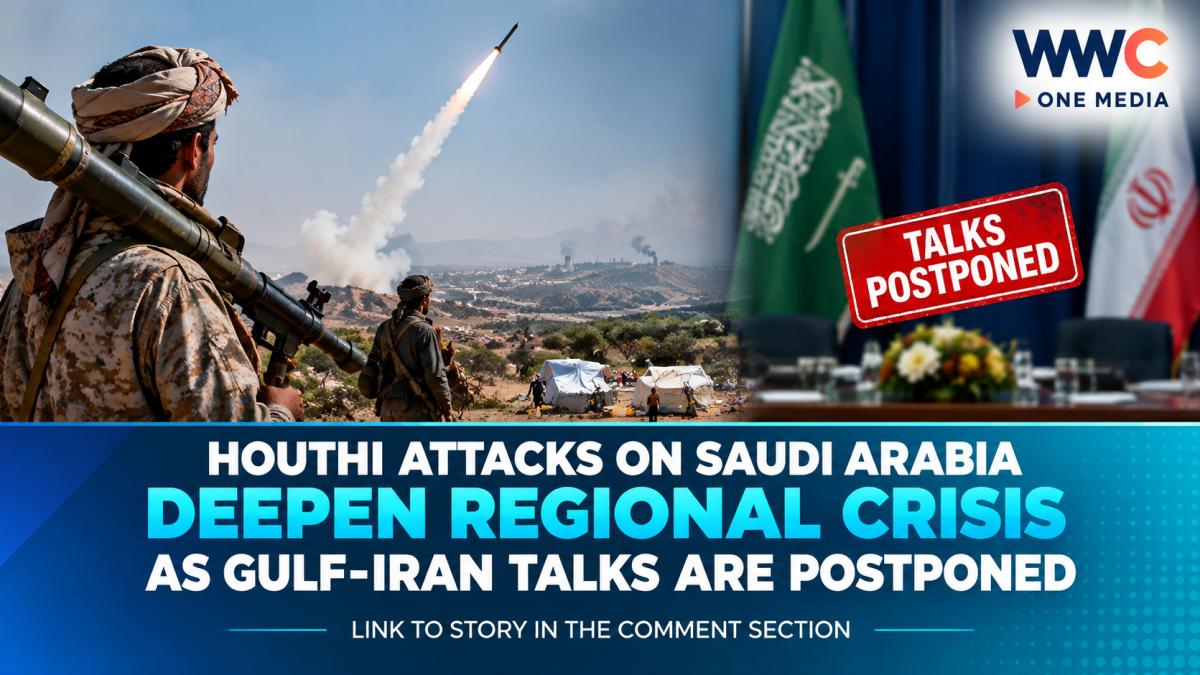
Tensions across the Middle East intensified after Yemen’s Iran-aligned Houthi forces launched a fresh wave of missile and drone attacks against Saudi Arabia, while planned talks between Iran and Gulf Arab states on reopening the Strait of Hormuz were postponed.
The developments have raised fresh concerns that the widening regional conflict could further threaten oil supplies, shipping routes and diplomatic efforts to contain the fighting.
The latest Houthi strikes targeted a Saudi military airbase in Khamis Mushait and other locations, with Saudi authorities reporting that 13 civilians were injured.
The attacks came as Gulf states delayed a meeting with Iran that had been expected to focus on a temporary arrangement for commercial shipping through the Strait of Hormuz, one of the world’s most important energy corridors.
Houthi attacks put Saudi Arabia under renewed pressure
The Houthis claimed responsibility for launching missiles and drones toward Saudi targets, adding another layer to the growing conflict involving Iran, Saudi Arabia and their respective allies.
Saudi air defences have intercepted numerous attacks during the conflict, but the renewed Houthi campaign is creating additional pressure on the kingdom’s southern border and its critical energy infrastructure.
The Houthis have also expanded their presence along Yemen’s Red Sea coast, including taking control of strategic islands near the Bab el-Mandeb Strait.
The strategic waterway connects the Red Sea with the Gulf of Aden and is vital for international shipping.
Any prolonged disruption could force more vessels to take longer routes around Africa, increasing shipping costs and putting additional pressure on global energy markets.
Gulf-Iran talks postponed
The planned meeting between Iran and several Gulf Arab countries was intended to discuss a possible temporary commercial shipping route through the Strait of Hormuz.
Instead, the talks were postponed as disagreements among Gulf states grew and tensions with Iran escalated.
The delay represents another setback for diplomatic efforts aimed at easing pressure on one of the world’s most important maritime chokepoints.
Iran has maintained control over the Strait of Hormuz during the conflict, while Gulf states have pushed for arrangements that would allow commercial vessels to resume more predictable passage.
Saudi Arabia was reported to have pushed for the postponement as attacks by Iran-aligned forces intensified.
Saudi oil infrastructure faces growing risks
The latest escalation comes after attacks disrupted Saudi Arabia’s East-West oil pipeline, which transports crude from the country’s eastern oil-producing region to Red Sea export terminals.
The pipeline’s disruption has added to concerns about the ability of Saudi Arabia and other Gulf producers to maintain oil exports while the Strait of Hormuz remains effectively blocked.
The East-West pipeline normally provides Saudi Arabia with an alternative route that allows some crude to bypass the Strait of Hormuz.
With that infrastructure damaged and the Red Sea also facing security threats, Riyadh has fewer options for moving oil to international markets.
The situation has already pushed crude prices sharply higher as traders assess the possibility of prolonged supply disruptions.
Strait of Hormuz remains the biggest concern
The Strait of Hormuz is one of the world’s most strategically important waterways, with a substantial share of global oil and liquefied natural gas shipments normally passing through it.
A prolonged closure would therefore have consequences well beyond the Middle East.
Higher shipping and insurance costs could feed into fuel prices, transportation expenses and inflation in economies that depend heavily on imported energy.
The risks are particularly serious for Asian economies, which account for a large share of global crude oil demand.
Iran’s regional alliances complicate diplomacy
The Houthi attacks are adding to an increasingly complicated network of conflicts involving Iran and its regional allies.
Tehran has long supported the Houthis, although Iran has denied directly controlling their military operations.
The group has nevertheless become one of the most capable Iran-aligned armed movements in the region, possessing missiles and drones capable of threatening targets far beyond Yemen.
Its growing control along Yemen’s western coastline also gives it leverage over shipping routes linking the Red Sea to the Indian Ocean.
For Saudi Arabia, the development is particularly sensitive because Riyadh has spent years trying to contain the Houthi threat while also pursuing a broader strategy of regional economic development.
Diplomatic window begins to narrow
The postponement of the Gulf-Iran meeting comes at a critical moment.
Gulf governments face the difficult task of protecting their territory and energy infrastructure while avoiding a direct confrontation that could further destabilise the region.
Iran, meanwhile, is under pressure from the United States and its regional opponents while seeking leverage over the reopening of the Strait of Hormuz.
The Houthis’ latest attacks could make compromise even more difficult.
Each additional strike raises the risk of retaliation, while attacks on oil infrastructure and shipping create new economic incentives for governments to harden their positions.
Global energy markets remain on edge
Oil markets have responded sharply to the latest developments because traders are increasingly focused on how much supply can continue reaching international buyers.
The combination of the Hormuz disruption, damage to Saudi pipeline infrastructure and threats around the Red Sea has created a much more fragile energy-supply picture.
If the fighting continues to spread or key shipping routes remain closed for an extended period, the effects could extend to fuel prices, inflation and global economic growth.
For now, the postponed Gulf-Iran talks and renewed Houthi attacks point to a regional crisis moving in the opposite direction from de-escalation.
Instead of opening a diplomatic path toward safer shipping through the Strait of Hormuz, the latest violence has reinforced fears that the Middle East conflict could become longer, wider and increasingly damaging to the global economy.




Leave a Reply