
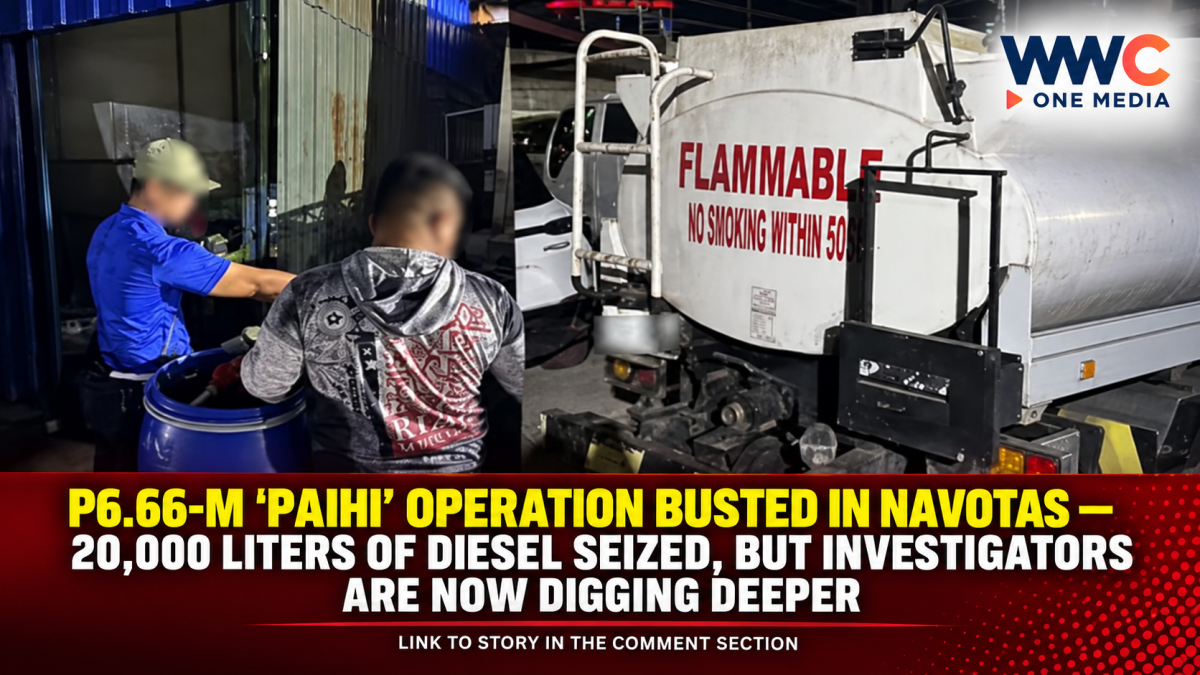
NAVOTAS CITY, Philippines — A suspected illegal fuel-pilferage operation worth an estimated P6.66 million has been dismantled in Navotas City, with three men arrested and more than 20,000 liters of diesel among the evidence seized, according to the Philippine National Police–Criminal Investigation and Detection Group (PNP-CIDG).
The operation was carried out at around 11:45 p.m. on Saturday, September 12, in Barangay NBBS Kaunlaran, where CIDG personnel reportedly caught the suspects allegedly involved in what authorities call a “paihi” scheme.
The term “paihi” generally refers to the unauthorized siphoning or transfer of petroleum products from larger tankers, trucks or storage facilities into smaller containers or vehicles for illegal sale or distribution.
According to CIDG-NCR chief Police Colonel John Guiagui, authorities confiscated petroleum products, storage tanks, tanker trucks and other pieces of evidence with a combined estimated value of P6.66 million. GMA News reported that the seized diesel alone exceeded 20,000 liters.
Suspects allegedly had no DOE authorization
Police said the three suspects were allegedly engaged in the sale and trading of petroleum products without the required permits or authority from the Department of Energy (DOE). Investigators also found what authorities described as makeshift facilities and containers, including drums and buckets, allegedly being used to transfer fuel.
The alleged operation raises both legal and public-safety concerns. Improper storage and handling of large quantities of diesel and other petroleum products can create significant fire, explosion and environmental hazards.
The Philippine Star’s reporting likewise identified the seized fuel and equipment as part of an operation involving the unauthorized transfer of more than 20,000 liters of diesel.
Why the “paihi” operation is a serious offense
Philippine law specifically prohibits illegal trading in petroleum and petroleum products. Batas Pambansa No. 33, as amended by Presidential Decree No. 1865, covers prohibited activities involving petroleum products, including illegal trading.
Under the law, illegal trading includes the sale or distribution of petroleum products for profit without the required government license or authority. Regulations also require authorization for businesses engaged in petroleum-related activities.
This means that authorities are not simply looking at the physical transfer of fuel. Investigators can also examine the source of the petroleum, documentation, permits, transportation, storage arrangements and intended buyers to determine how the alleged operation functioned.
Navotas has faced repeated fuel-pilferage operations
The latest arrest is not an isolated incident.
In June 2026, authorities arrested 10 men in another Navotas “paihi” operation and seized around P12 million worth of petroleum products, equipment and transport assets, including diesel drums, a fuel tanker, a truck and motorboats. Police said the suspects allegedly siphoned fuel from motorboats and transferred it to a tanker truck.
The Philippine National Police has also previously ordered an investigation into possible links between illegal fuel operations in Navotas and Laguna, amid concerns that seemingly separate fuel-pilferage activities could be connected to a broader network.
That history makes the latest Navotas case particularly significant.
CIDG now looking beyond the three arrests
The CIDG said its investigation is continuing and that authorities are looking into whether other individuals may have been involved.
Guiagui said investigators would examine possible links to people who may have provided protection to the alleged operation, including the possible involvement of local officials or police personnel. He emphasized that investigators intend to dig deeper into the case.
At this stage, however, the three arrested men remain suspects, and any allegation against additional individuals would still have to be established through investigation and due process.
What happens next?
The immediate focus will likely be on determining the origin of the seized diesel, the ownership of the vehicles and storage equipment, the identities of the intended buyers, and whether the suspects were part of a larger illegal fuel-distribution network.
Authorities will also have to establish the appropriate criminal and administrative violations based on the evidence recovered during the operation.
The case underscores a continuing problem for law enforcement: illegal fuel trading is not only a potential source of lost government revenue and unfair competition for legitimate businesses, but can also create serious safety risks when petroleum products are transferred or stored outside regulated facilities.
And with previous multi-million-peso “paihi” raids already recorded in Navotas this year, the latest P6.66-million seizure could be more than another isolated bust — it may become another lead in the authorities’ effort to uncover how illegal fuel moves through Metro Manila.




Leave a Reply