
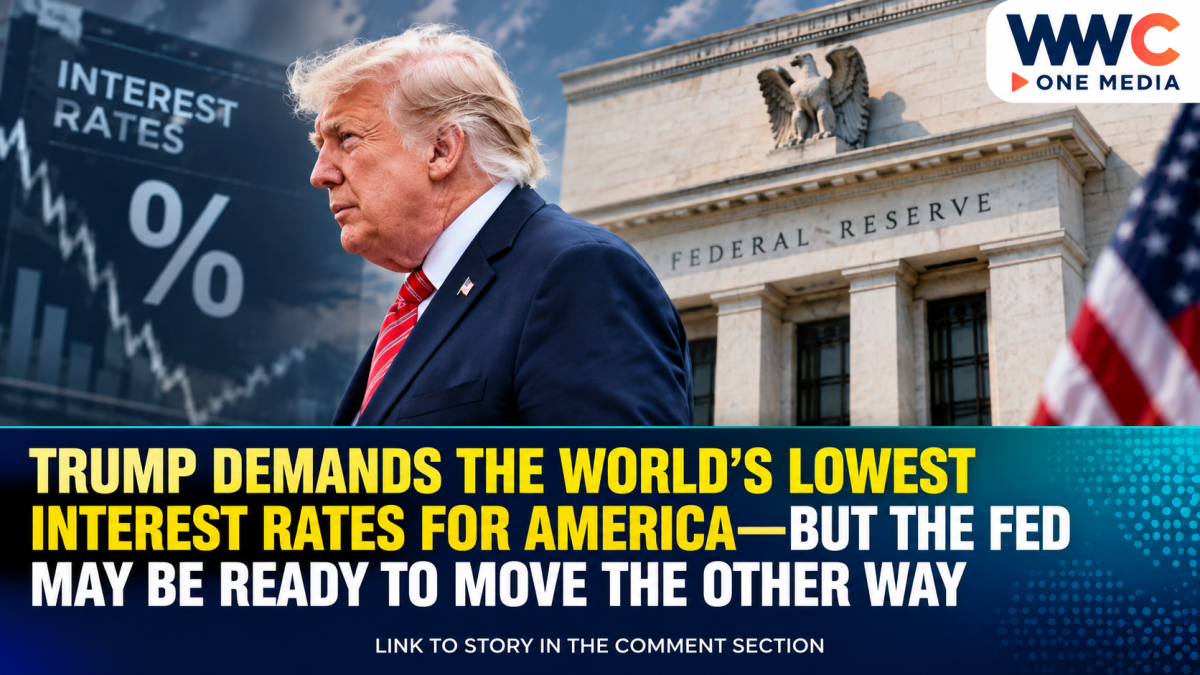
WASHINGTON/DOONBEG, Ireland — US President Donald Trump has renewed his push for dramatically lower interest rates, declaring that the United States should have the lowest borrowing costs in the world just days before a closely watched Federal Reserve policy decision.
Trump made the remarks while in Ireland on Sunday, September 13, intensifying pressure on the US central bank as policymakers prepare to decide whether interest rates should move higher, lower or remain unchanged.
“No country should have lower interest rates than the United States,” Trump said, arguing that America should benefit from cheaper borrowing costs rather than allowing other countries to enjoy more favorable rates.
But the timing of Trump’s demand has set up a potentially dramatic clash between the White House’s preference for lower rates and the Federal Reserve’s battle against persistent inflation.
Trump Wants Cheaper Money—But Inflation Is Still a Problem
Lower interest rates can make mortgages, car loans, business borrowing and other forms of credit cheaper. They can also stimulate consumer spending and economic growth.
However, cutting rates too aggressively while inflation remains elevated could create another problem: prices could begin rising faster again.
Recent US inflation data has kept that risk firmly on the Federal Reserve’s radar. Reuters reported that consumer prices rose 0.4% in August, bringing annual inflation to about 3.4%, still well above the Fed’s long-term 2% target. Core inflation, which strips out volatile food and energy costs, has also remained a key concern for policymakers.
Rising energy prices have added further pressure, with global oil markets affected by geopolitical tensions and disruptions to major shipping routes. Higher fuel costs can eventually spread through the economy, increasing transportation, food and business expenses.
Markets Are Watching the Fed for a Surprise
The Federal Reserve’s upcoming meeting is now shaping up to be one of the most closely watched economic events of the month.
Financial markets have increasingly priced in the possibility of a rate increase as policymakers confront stubborn inflation and elevated energy costs. Reuters and other financial reports have pointed to growing expectations that the Fed could take a tougher stance despite Trump’s repeated calls for lower borrowing costs.
That creates a major political and economic question:
Will the Federal Reserve follow market concerns about inflation—or will Trump’s calls for dramatically lower rates influence the debate?
The Fed is designed to operate independently from the White House, and economists closely watch any sign that political pressure could affect monetary policy decisions.
A Test of Federal Reserve Independence?
Trump’s latest comments are part of his broader campaign for cheaper borrowing costs. He has repeatedly argued that high interest rates hurt the US economy and place America at a disadvantage compared with other countries.
But critics and market analysts warn that the Federal Reserve faces a more complicated calculation.
If rates are lowered while inflation remains above target, policymakers could risk reigniting price pressures. On the other hand, keeping rates high—or raising them further—could increase borrowing costs for households and businesses and potentially slow economic activity.
Reuters commentary has noted that the growing pressure on the Fed could make the upcoming decision an important test of the central bank’s independence and credibility.
Why the Fed’s Decision Could Affect Americans—and the World
The Federal Reserve’s interest rate decisions extend far beyond Washington.
Changes in US rates can influence:
- Mortgage and consumer loan costs
- Credit card and business borrowing
- Stock and bond markets
- The value of the US dollar
- Global capital flows
- Emerging-market currencies and debt
- Oil and commodity prices
US Treasury yields have already been volatile, with investors concerned about inflation, government borrowing and the possibility that interest rates could stay elevated for longer. Recent reports showed the benchmark 10-year Treasury yield moving close to 5% before easing back.
That means the Federal Reserve’s next move could trigger reactions far beyond the United States.
Global Central Banks Face the Same Inflation Problem
The US is not alone in confronting renewed inflation concerns.
Central banks in other major economies are also reassessing their policies as energy prices rise and borrowing costs remain a major concern. The European Central Bank recently raised interest rates, while markets have also closely watched potential policy tightening in Japan.
The growing global pressure suggests that Trump’s demand for the world’s lowest interest rates may be heading directly against a broader trend: central banks are increasingly worried that inflation could make cheap money difficult to sustain.
The Bottom Line
Trump wants the United States to have the lowest interest rates in the world.
But with inflation still above the Federal Reserve’s target, energy costs creating fresh pressure and financial markets preparing for a potentially tougher Fed, the central bank’s upcoming decision could become a major showdown between politics and monetary policy.
The question now is whether the Fed will deliver the lower rates Trump wants—or send a powerful message that fighting inflation comes first.
The answer could affect everything from American mortgages and credit cards to global markets, currencies and borrowing costs around the world.




Leave a Reply