
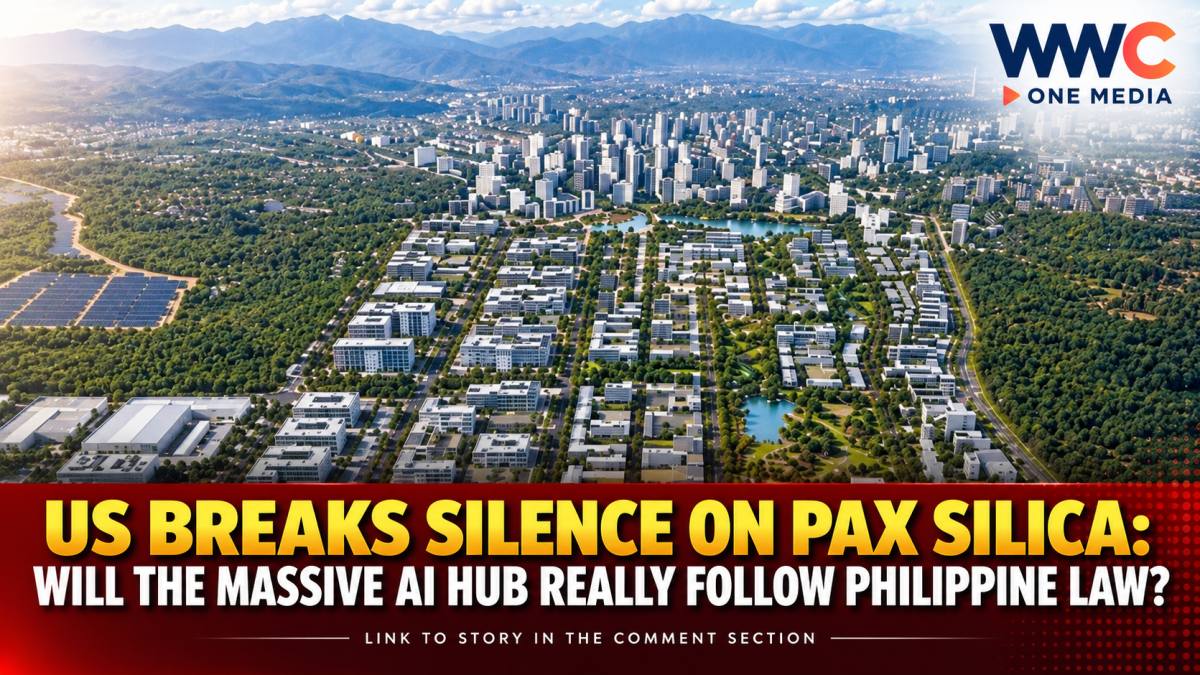
MANILA, Philippines — The United States has reiterated that the proposed Pax Silica project in Central Luzon will operate within legal boundaries, as the ambitious multibillion-dollar technology initiative continues to face intense questions over Philippine sovereignty, environmental safeguards and the project’s long-term impact on local communities.
The US State Department said the planned Pax Silica development — a massive 4,000-acre technology and industrial hub proposed for New Clark City — is expected to operate in accordance with applicable laws and regulations.
The project is being positioned as a major gateway for the Philippines into the global supply chains for semiconductors, artificial intelligence and other critical technologies. But while government officials highlight its potential economic benefits, concerns surrounding legal jurisdiction and foreign involvement have kept the controversial project under close public scrutiny.
What Is Pax Silica?
The Philippines formally joined the US-led Pax Silica initiative in April 2026, becoming part of an international effort to build more secure and resilient supply chains for semiconductors, AI technology and critical minerals.
Under the proposal, a 4,000-acre or roughly 1,620-hectare industrial development is planned within New Clark City in Capas, Tarlac. The site has been described as the first AI-native industrial acceleration hub under the Pax Silica initiative.
The Philippine government sees the project as part of a broader strategy to move the country higher in the global technology value chain and strengthen the Luzon Economic Corridor.
According to government projections, the proposed development could attract between $40 billion and $70 billion in investments and potentially generate more than 130,000 high-quality jobs once fully developed.
President Ferdinand Marcos Jr. has also promoted the project as a potential source of jobs and industrial growth, particularly for Filipino engineers, researchers and technology professionals.
However, the project remains a long-term proposal rather than an immediately operational industrial zone. BCDA officials said initial site development could begin within three to five years, while the full project is envisioned over a much longer period.
The Sovereignty Controversy That Sparked Public Concern
Questions surrounding Pax Silica intensified in May after reports emerged that the United States had sought special legal arrangements for the proposed development.
Philippine officials confirmed at the time that a request involving the application of US law and diplomatic immunity for American personnel had been raised but was not accepted by the Philippine government.
BCDA President and CEO Joshua Bingcang stressed that the proposed development would instead operate under Philippine law and existing legal frameworks.
Philippine officials have repeatedly said no special arrangement granting the US government diplomatic immunity was approved for the project.
The issue became one of the biggest sources of public concern surrounding Pax Silica, with critics warning that any arrangement perceived as weakening Philippine jurisdiction could raise serious sovereignty questions.
The latest assurance from the US State Department is therefore being closely watched as Manila and Washington continue discussions surrounding the project’s framework.
Government: Philippine Laws and National Interests Must Be Protected
Malacañang and Philippine government agencies have repeatedly maintained that Pax Silica will not operate outside Philippine law.
The Bases Conversion and Development Authority has said the project must comply with domestic and international legal requirements, while the Palace has assured the public that Philippine sovereignty and national interests will be protected.
Officials have also sought to address concerns involving environmental damage, water consumption and the possible displacement of communities.
The Presidential Communications Office has said the proposed hub is expected to support the country’s push into advanced manufacturing and emerging technologies, while BCDA officials insist the development could help transform the Philippines into a stronger player in the global technology economy.
The government has also clarified that the proposed Pax Silica area represents only a portion of the broader New Clark City and Clark development area.
Critics Still Demand More Details
Despite official assurances, critics and some observers continue to call for greater transparency on the project’s final legal structure, environmental impact and economic benefits.
Concerns have been raised about whether surrounding communities could face increased pressure on water and other natural resources, as well as whether the Philippines will gain high-value technological capabilities or remain largely focused on lower-value segments of the global supply chain.
Others have questioned how much control foreign investors and governments could have over strategic industries involving semiconductors, artificial intelligence and critical minerals.
Government officials, however, insist that the project is still subject to Philippine laws and regulatory requirements.
The DOST has also emphasized that Pax Silica should not be viewed simply as a giant AI facility. Officials have described the planned development as an advanced manufacturing ecosystem with a strong focus on semiconductors and other technologies supporting AI-driven industries.
A Massive Opportunity — But the Biggest Questions Remain
Pax Silica could become one of the largest and most ambitious technology developments ever proposed in the Philippines.
If government projections are realized, the project could bring tens of billions of dollars in investment, create thousands of high-skilled jobs and strengthen the country’s role in semiconductor and advanced technology supply chains.
But the project also comes with major questions that have yet to disappear.
How will the final agreement define legal jurisdiction?
What safeguards will protect Philippine sovereignty?
How will environmental and community concerns be addressed?
And most importantly, how much of the promised economic and technological value will actually remain in the Philippines?
For now, both Philippine and US officials are insisting that Pax Silica will operate within the law.
But as negotiations and planning continue, the real test will be whether the final agreements can convince Filipinos that the country’s technology ambitions will not come at the expense of its sovereignty, environment or communities.
Pax Silica may promise to transform the Philippines into a global technology powerhouse — but before the first semiconductor facility rises, the country is demanding answers about exactly whose rules will govern the future.




Leave a Reply