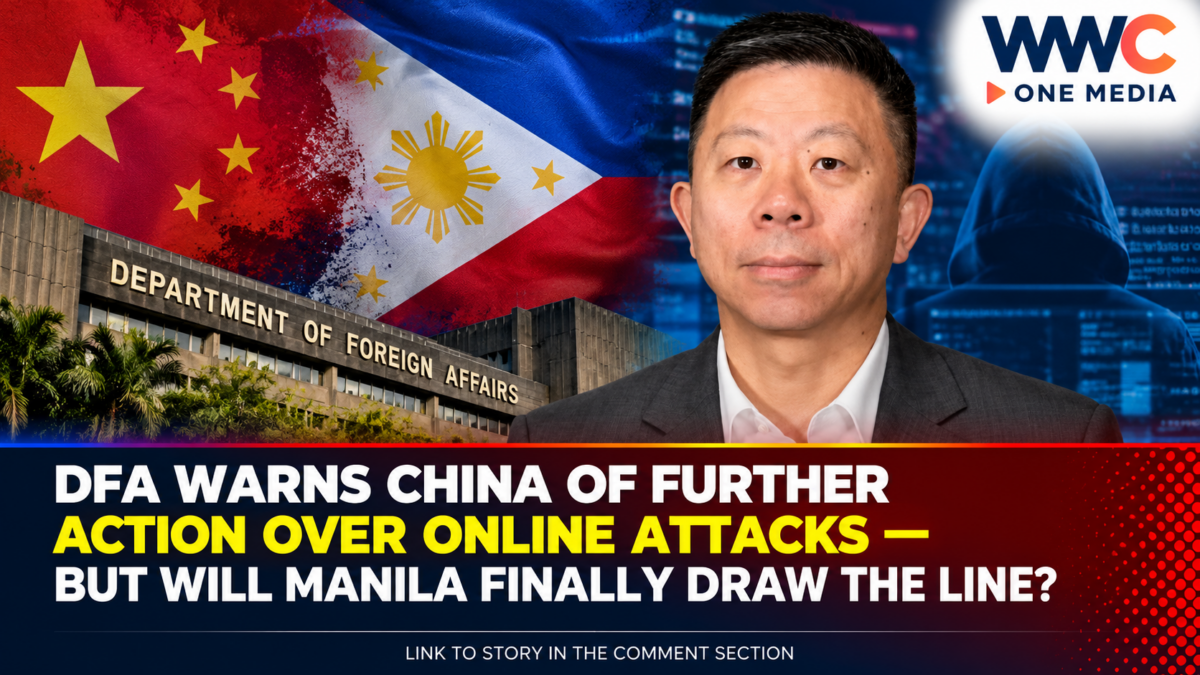
MANILA, Philippines — The Department of Foreign Affairs (DFA) has warned that the Philippines could pursue further diplomatic action against China as tensions intensify over controversial statements by Chinese Ambassador Jing Quan and the Chinese Embassy’s public attacks on Filipino officials and lawmakers.
The dispute has placed diplomatic conduct, freedom of expression and the Philippines’ response to Beijing under renewed scrutiny, raising questions about how far Manila is prepared to go to defend its officials and national interests.
The DFA has stressed that foreign diplomatic missions must exercise restraint and respect the role of Philippine officials, particularly when disagreements involve sensitive national security and foreign policy issues.
DFA Pushes Back Against Embassy’s Public Attacks
The latest controversy centers on the Chinese Embassy’s social media statements challenging Filipino lawmakers who criticized Ambassador Jing following his remarks about a possible confrontation between China and the Philippines.
The DFA said it was inappropriate for a foreign diplomatic mission to publicly criticize or taunt Philippine officials and legislators who were performing their duties.
It also emphasized that the Philippines, as a democratic country, protects freedom of expression and a diversity of opinions. The government, it said, would not accept attempts by a foreign envoy to intimidate officials exercising their democratic rights.
The department has reserved the right to take further diplomatic action as it considers necessary, although it has not publicly committed to a specific additional measure.
The warning comes amid increasingly sharp exchanges between Manila and Beijing over the disputed South China Sea and the conduct of their respective officials.
The Remark That Triggered the Diplomatic Dispute
The controversy escalated after Jing made remarks on October 15, 2026, responding to Philippine Defense Secretary Gilberto Teodoro Jr.’s criticism of China’s regional conduct.
During an exchange with reporters in Quezon City, Jing said China could easily win if it chose to use force, while insisting that Beijing preferred peace.
The statement drew immediate criticism from Philippine officials, who viewed the language as threatening and inappropriate for a diplomat representing a neighboring country.
President Ferdinand Marcos Jr. said the remarks sounded like a threat, while the DFA initially urged the ambassador to exercise greater restraint in his public statements.
On October 19, Foreign Secretary Ma. Theresa Lazaro formally summoned Jing to convey the Philippine government’s serious concern and strong objection to his remarks.
According to the DFA, Lazaro described the statement as “provocative and unacceptable” and warned that such language could further strain bilateral relations.
The department reiterated that sensitive disagreements should be addressed through established diplomatic channels rather than public exchanges that could undermine trust.
China Rejects the Criticism
The Chinese Embassy has defended Jing, arguing that his comments were taken out of context and subjected to selective quotation and overinterpretation.
Jing also denied intending to threaten the Philippines, maintaining that China did not intend to use force and that the two countries should pursue dialogue and cooperation.
Beijing has separately criticized Filipino politicians over their statements about China, arguing that their rhetoric could damage bilateral relations.
These competing positions underscore the widening communication gap between the two governments. Manila views the ambassador’s language and the embassy’s public responses as damaging to diplomatic engagement, while Beijing maintains that its position has been misrepresented.
Lawmakers Push for Stronger Action
The controversy has prompted calls from some Philippine lawmakers to consider declaring Jing persona non grata—a diplomatic designation indicating that a foreign representative is no longer welcome in the host country.
Senator Erwin Tulfo filed Senate Resolution No. 739 urging action against the ambassador in response to the controversy.
Other lawmakers have also called for a formal apology or retraction, arguing that diplomatic representatives should avoid language that could be interpreted as intimidation.
However, the Marcos administration has signaled a preference for managing the dispute through diplomatic engagement rather than immediately pursuing the ambassador’s removal.
Palace officials said the President did not want to declare Jing persona non grata at this stage, while recognizing the concerns raised by legislators.
That position leaves Manila balancing two priorities: demonstrating resolve in defending Philippine interests and preventing a diplomatic confrontation from further damaging relations with China.
Why the Dispute Matters to the Philippines
The controversy comes against the backdrop of the longstanding territorial and maritime dispute between the Philippines and China in the South China Sea, including waters within the Philippines’ exclusive economic zone that Manila calls the West Philippine Sea.
The two countries continue to disagree over maritime rights, sovereignty claims and activities in contested waters. These disputes have repeatedly produced diplomatic protests and confrontations involving government and maritime personnel.
The latest exchange adds another layer of tension because it concerns not only competing territorial claims but also how government representatives communicate with one another.
Diplomatic language can influence public perceptions, affect confidence between governments and complicate efforts to resolve disagreements peacefully.
For the Philippines, the challenge is to protect its sovereignty, uphold international law and defend the right of its officials to speak without intimidation while maintaining channels for negotiation.
What Happens Next?
The DFA has made clear that it retains the option of further diplomatic action. However, that warning should not be interpreted as confirmation that the government has decided to expel Jing or impose another specific penalty.
For now, the administration appears intent on keeping communication open while firmly objecting to statements and conduct it considers unacceptable.
The next steps will depend on how both governments handle subsequent exchanges and whether diplomatic engagement can prevent the dispute from escalating.
The bigger question remains: Will the DFA’s warning be enough to restore restraint in the relationship, or will further public confrontations force Manila to consider tougher diplomatic measures?
As tensions continue, the Philippines faces a delicate test of diplomacy—one that could shape not only its relationship with China but also its broader approach to protecting national interests in the West Philippine Sea.